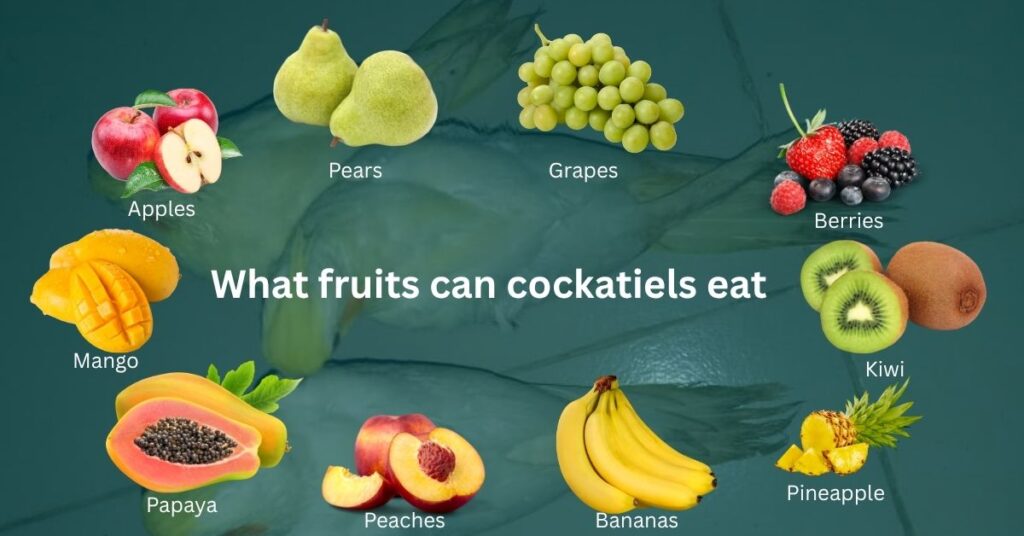


Cockatiels can eat a variety of fruits, but not all fruits are safe. While fruits like apples, bananas, and berries provide essential vitamins, others can be harmful. In this guide, you can learn about What Fruits Can Cockatiels Eat, which to avoid, and how to feed them safely.
Related Articles:
1. What Food Attracts Birds
2. What can I feed my cockatiel besides seeds
Safe Fruits for Cockatiels (Quick Table)
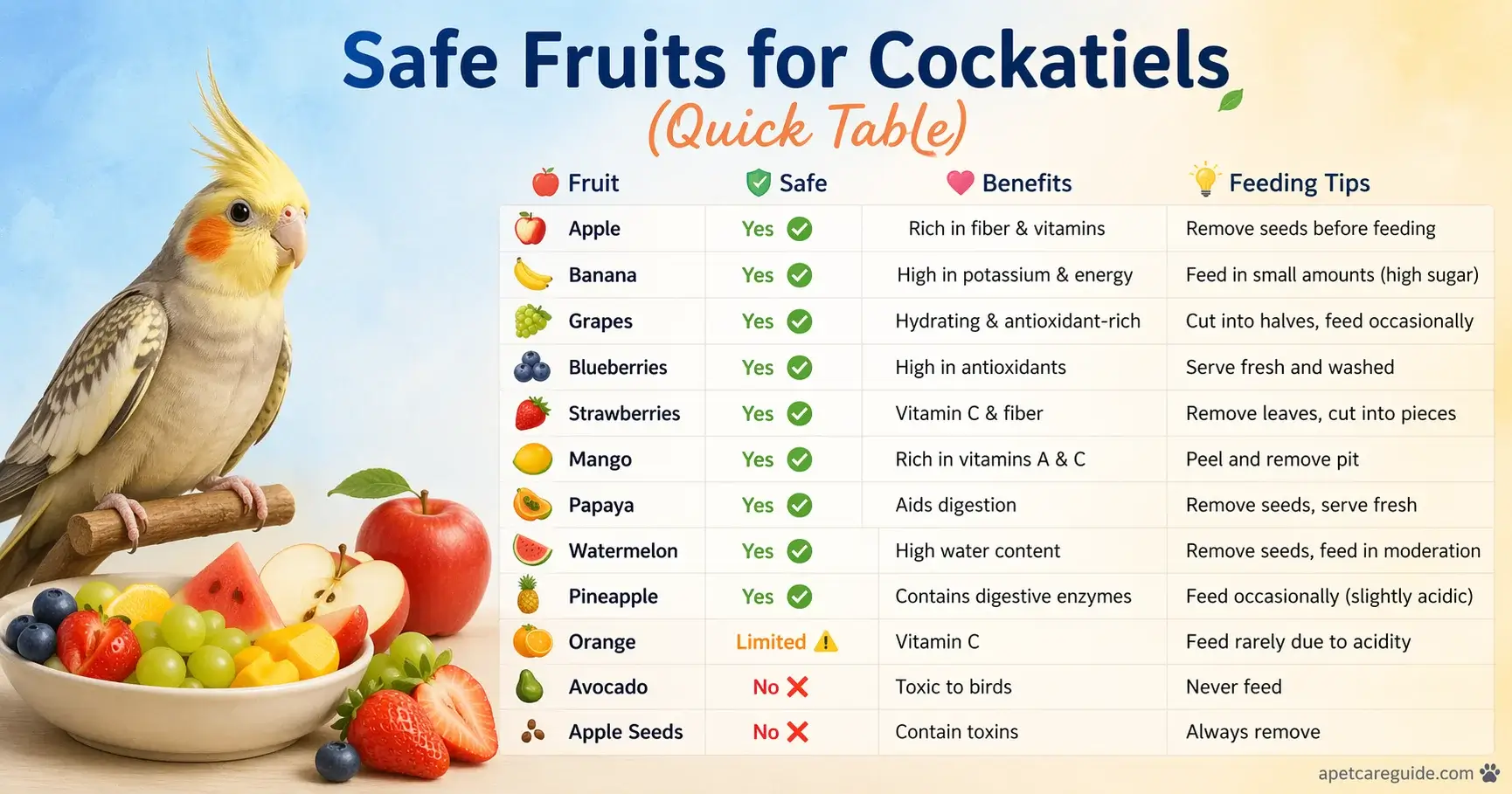
Safe Fruits for Cockatiels
Be sure to remember that fruits should be only 5–10% of your bird’s diet.
Fresh Fruits
For a balanced diet for cockatiel birds, fresh fruits play an important role.
Apples
An apple is a wonderful treat for your bird because it contains fiber and vitamin C, which support digestion. You must be extremely careful about one thing, though: the seeds and the core are highly toxic to birds. For that reason, always remove the seeds and core before slicing a thin piece for your little friend to enjoy safely.
Bananas
The potassium in bananas helps keep your bird’s heart healthy, making it a beneficial treat. Since bananas are quite sweet, you shouldn’t offer too much. For a perfect portion, slice a small, bite-sized wheel for your bird. It will eat it with joy, and the amount will be just right.
Grapes
Grapes have a high water content, which helps keep your bird hydrated, especially on warm days. However, always choose seedless grapes and offer them sparingly because of their sweetness. Slicing a grape in half is a great idea to prevent any risk of choking. Read More
Mangoes
Sweet and juicy mangoes are an amazing source of vitamins A and C, which are very important for your bird’s eye health and immune system. Before giving this delicious fruit to your bird, be sure to remove the large pit and the skin. Afterward, cut it into small pieces so it can be eaten easily.
Kiwi fruit
This fruit is loaded with vitamin C and antioxidants, making it a fantastic choice for your bird’s overall health. Many birds love its sweet-and-sour taste. Before serving, you must peel off the fuzzy skin and slice it into thin pieces to make it easy for your bird to handle.
Pears
A pear is a low-calorie, high-fiber fruit that can be a healthy snack for your bird. Just like with apples, the seeds and core of a pear are harmful. So, carefully remove these parts and cut the fruit into small chunks for your bird.
Cherries
Bright red cherries are full of vitamins A and C, which are very good for your bird. But you must remember that cherry pits are extremely toxic and should never, ever be given to your bird. For this reason, carefully remove the pit before cutting the cherry into small, safe pieces.
Pomegranates
Pomegranates are a powerhouse of antioxidants and various vitamins. Birds often love picking at the bright red seeds (arils). You should only offer the inner seeds. Placing a few seeds in a separate small bowl will let it happily peck at them with interest.
Apricots
This fruit is a good source of vitamin A and potassium, which help improve your bird’s health. Like other stone fruits, its pit is also toxic to birds. For this reason, always remove the pit before cutting the fleshy part into small pieces.
Blackberries
Blackberries are a delicious fruit full of antioxidants and fiber that can add wonderful variety to your bird’s diet. Offering them in moderation helps with digestion. You can give the whole fruit or cut it in half after washing it well.
Strawberries
Strawberries are a fantastic source of vitamin C and antioxidants, helping to boost your bird’s immune system. Before offering this lovely fruit, wash it well, remove the green leafy top, and slice it into smaller pieces.
Papaya
Papaya contains a special enzyme called papain, which aids in a bird’s digestion. Since it’s a soft fruit, it’s also very easy for birds to eat. Just don’t forget to remove the black seeds and peel the skin before cutting it into small chunks.
Pineapple
Pineapple contains bromelain, an enzyme that is beneficial for digestion. Its tangy-sweet flavor can be a new and exciting experience for your bird. Since it is quite acidic, you should only offer it in very small amounts. Remove the tough outer skin and the hard central core, then cut the soft flesh into tiny pieces.
Melon (Watermelon or Cantaloupe)
Juicy melons are wonderful for keeping your bird refreshed and hydrated, especially during hot weather. It’s important to remove the seeds from these fruits, and because they are sweet, it’s best to offer only a small amount. Cutting them into small cubes will let your bird enjoy them with delight.
Guava
Guava is an amazing source of vitamin C, even more than oranges. It helps build a strong immune system in birds. However, the hard seeds inside can cause digestive issues, so it’s best to offer the soft, fleshy parts cut into small pieces.
Bonus Other Fruits
Other fruits like figs, nectarines, and citrus fruits (like oranges or mandarins) can also be given in moderation. Figs and nectarines are full of nutrients. On the other hand, citrus fruits are a great source of vitamin C, but giving too much can upset a bird’s stomach. That’s why offering them occasionally and in small amounts is the best approach.
Dried Fruits
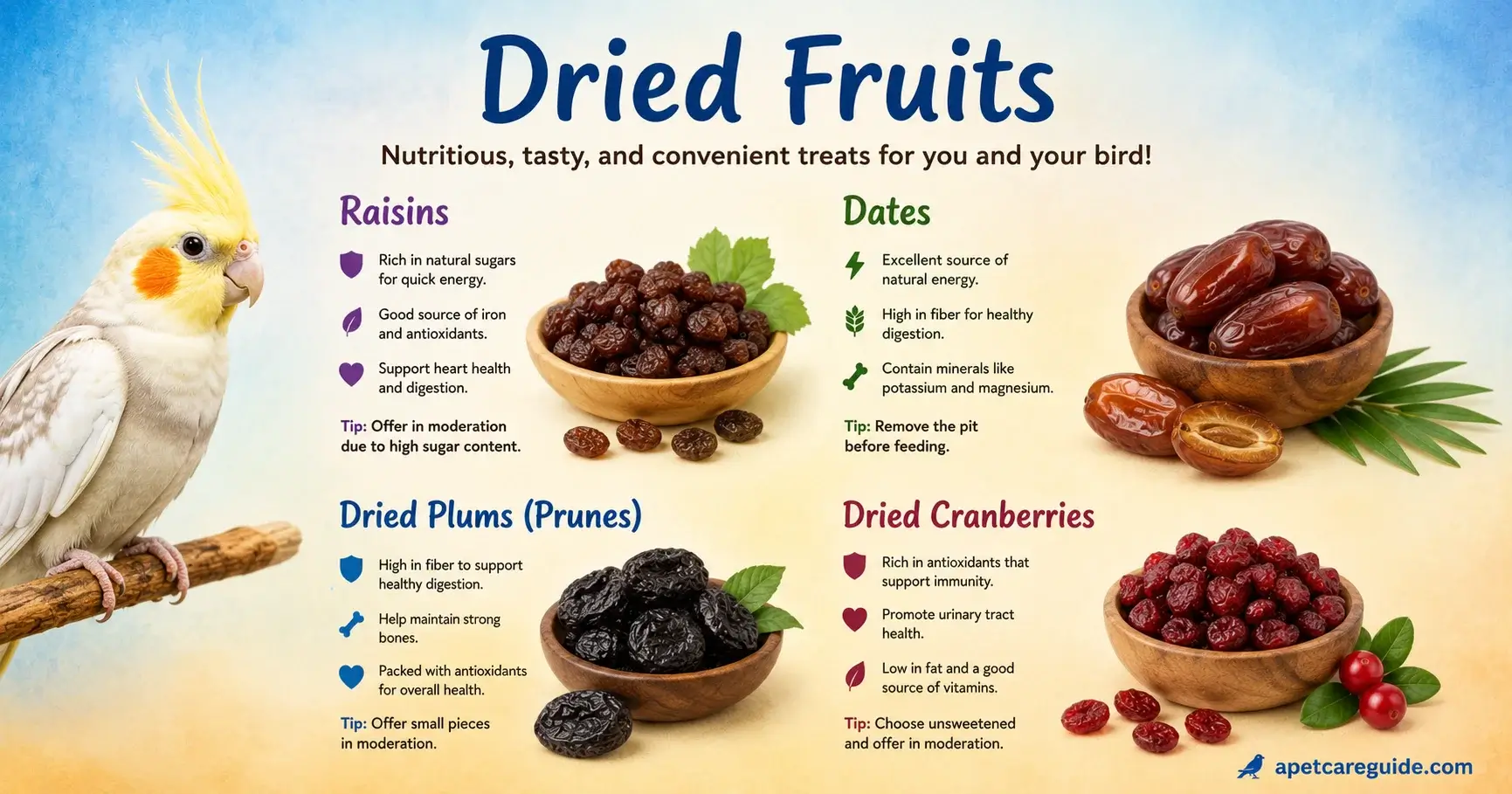
Raisins: Raisins are a good source of energy, and many birds enjoy their sweet taste. They are, however, very high in sugar, so they cannot be a regular part of the diet. You can offer one or two raisins occasionally as a special reward or during training.
Dates: They are an extremely sweet and energy-dense fruit, containing a lot of natural sugar and fiber. Too much sugar can lead to obesity and other health problems in birds. For that reason, you should think of a date only as a very special treat, offering a tiny piece no more than once or twice a month.
Dried Plums (Prunes): Prunes contain fiber and some vitamins, but just like other dried fruits, they are loaded with sugar. Eating too much can cause digestive problems for your bird. If you do offer it, give only a very tiny piece on a rare occasion.
Dried Cranberries: While dried cranberries have antioxidants, most of the store-bought versions have a lot of added sugar. You should only offer one or two as a reward if you can find unsweetened dried cranberries. They are not a regular part of the diet.
Toxic Fruit for Cockatiels
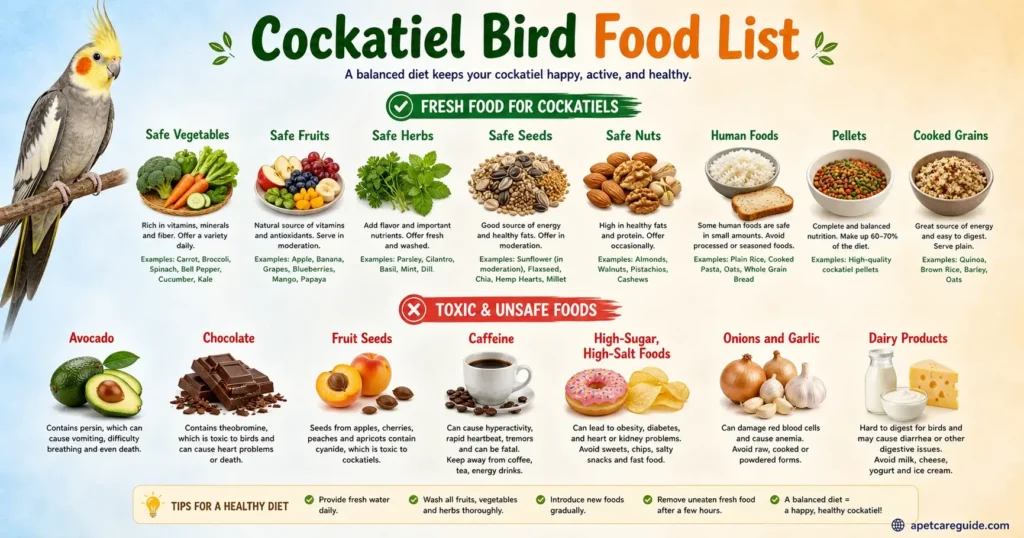
Some fruits and parts of fruits can be seriously harmful to your bird. Avocado is extremely toxic to birds and should be avoided at all costs. The seeds of apples, cherries, pears, and apricots contain cyanide, which can be fatal. Fruits with too much sugar, like very ripe bananas or lots of grapes, can lead to weight gain. Similarly, too much citrus fruit, like oranges or lemons, can cause stomach acid problems. Lastly, stay away from any rotten, old, or moldy fruit, as it can cause severe illness.
Avocado (all parts)
Let’s talk about a heartbreaking hazard. Specifically, feeding avocados causes terrifying health failures. Because the skin, flesh, and leaves contain persin, this chemical damages fragile organs quickly. Therefore, keep your beloved pet far away from guacamole. In fact, the ASPCA officially lists this green plant as highly deadly to our feathered friends.
Apple seeds
Imagine offering a crisp, yummy treat, only to realize you made a fatal mistake. Even though the white part tastes great, those black cores hide deadly cyanide. Because of this, your little buddy could suffer from a serious illness. So, always cut the middle out completely. According to veterinary science, even one speck brings unwanted sorrow.
Cherry pits
We love sharing juicy summer snacks. However, the hard rock inside hides another frightening dose of cyanide. Rather than risking your pet’s life, simply remove that center before sharing. Due to this hidden toxin, a fun playtime easily becomes a tragic emergency room visit. Just toss those hard pieces in the trash immediately.
Peach pits
Nothing beats a fresh bite on a warm day. Still, that giant, bumpy stone holds bad chemicals. If your parrot cracks it open, it might swallow terrible poison. Thus, you must slice the soft sections off carefully. Always protect your precious companion by keeping the hazardous material far out of reach.
Plum pits
Plums taste wonderfully tart. Yet, the core remains incredibly unsafe for small animals. Since these big objects contain lethal compounds, chewing them causes severe harm. As a result, parents of pets need to stay extremely alert. In short, offer only the squishy parts and throw the scary middle away fast.
Apricot pits
You might think a smaller snack means less worry. Unfortunately, the casing inside carries the same terrifying poison as bigger fruits do. Because cyanide builds up quickly in little bodies, the outcome feels devastating. For this reason, knowledgeable owners strictly avoid giving their animals anything except the safe, fleshy outer layers.
Nectarine pits
Similar to peaches, this smooth-skinned treat brings huge joy. But the center stone presents a massive threat. Whenever a curious beak breaks into that shell, disaster strikes fast. Therefore, we highly suggest chopping the food into bite-sized pieces yourself. By doing this, you keep your family member happy, healthy, and completely secure.
Mango seed (pit)
Tropical flavors always bring big smiles. Regardless, the gigantic, flat middle section creates terrible choking hazards and blocks tiny intestines. Plus, chewing on it introduces nasty toxins. Instead of dealing with painful surgery, scrape the yellow meat off completely. By doing so, your darling bird enjoys tropical goodness without scary risks.
Unripe (green) tomatoes
We sometimes pick veggies early from our gardens. Actually, feeding raw green pics leads to sad, upset tummies. Since these plants belong to the nightshade family, the vines carry the harmful tomatine. So, wait until they turn bright red. Only then can your cute buddy eat them safely without facing terrible aches.
Excess citrus fruits (orange, lemons, limes, grapefruit)
A little tangy juice sounds refreshing. However, offering too many acidic sections causes painful stomach burns and nasty diarrhea. Since little digestive systems struggle with harsh acids, heavy feeding makes them miserable. In other words, moderation keeps your pal cheerful. Just offer one tiny squirt weekly to prevent an agonizing bellyache.
How to Safely Prepare Fruits
You can feel completely at ease when you follow a few simple steps to prepare fruit for your little friend.
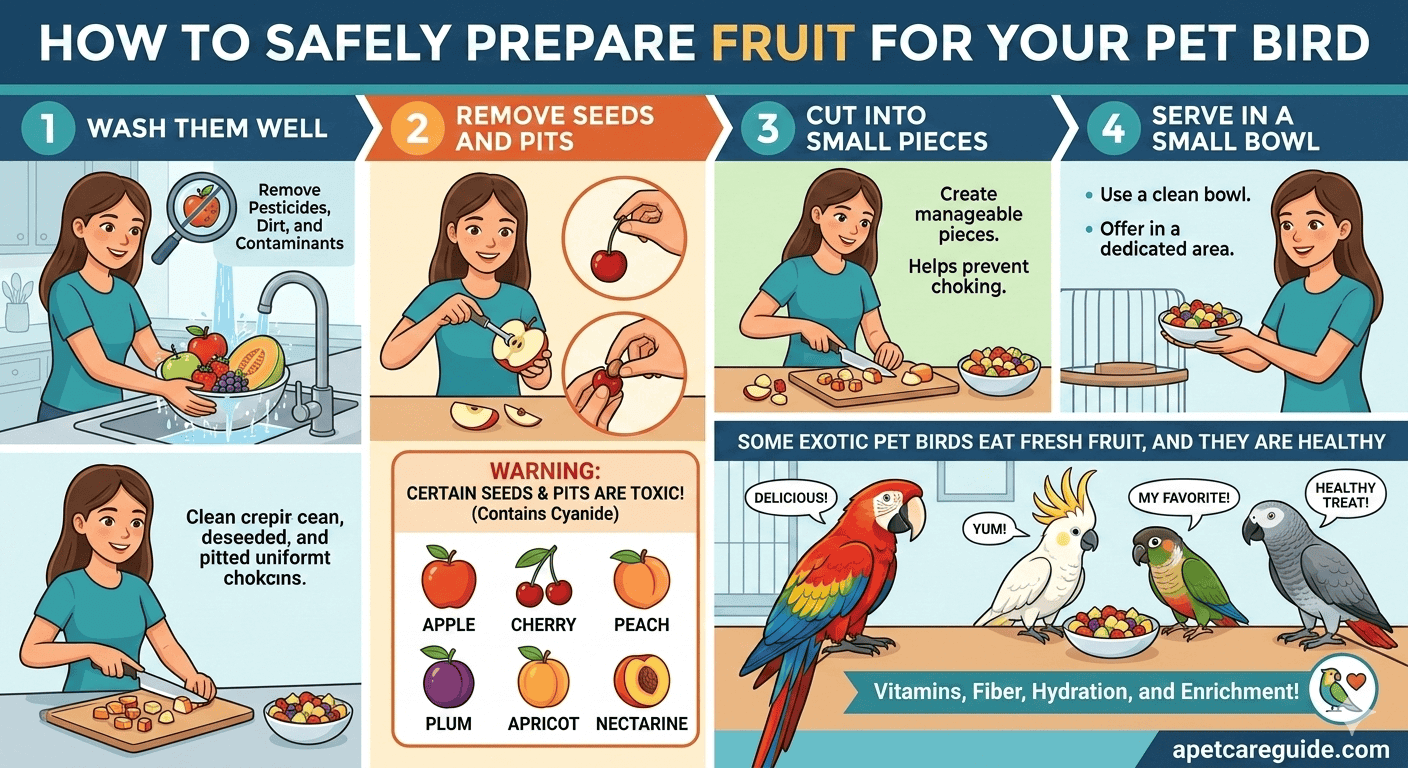
- Wash Them Well. It’s very important to wash fruits under running water to remove any pesticides and chemicals from their surface.
- Remove Seeds and Pits: As mentioned before, many fruit seeds are poisonous to birds. So, please do this step very carefully.
- Cut into Small Pieces: Just imagine if a large piece of fruit got stuck in your tiny bird’s throat! That’s why you should always cut fruit into small, manageable pieces that match its beak size.
- How to Serve: You can serve fruit in a small bowl, hang it on a fruit skewer, or mix it with its seed mix. This will spark its interest in eating.
- Introduce New Fruits Slowly: When offering a new fruit for the first time, start with a very small amount and watch their reaction. This lowers the risk of any digestive upset.
The Right Amount of Fruit
Moderation is the key. Remember, fruit is only a supplement to your cockatiel’s main diet, not the entire meal. Fruits can make up about 10-15% of their diet. Offering a small amount of fruit three to four times a week is more than enough. Depending on the size of your bird, it’s best not to offer more than a teaspoon of fruit in a single day.
Common Preferences and Reactions
Every bird has its own personality. Your cockatiel might absolutely love one type of fruit and not even touch another. Have fun experimenting with different safe fruits to see which ones it truly enjoys. This can be a wonderful way to strengthen the bond between you two. If you notice any unusual changes in its droppings, see that it seems sluggish, or notice it throwing the fruit out of the cage, you’ll know that it either doesn’t like the fruit or the fruit isn’t sitting well with its system.
Potential Risks
If not given correctly, fruits can also pose some risks. Too much fruit, especially sweet or juicy kinds, can cause diarrhea or digestive upset. Regularly feeding high-sugar fruits can lead to weight gain, which is unhealthy for your bird. Additionally, if you don’t wash fruit well, the pesticides on its skin can poison your bird.
How can I introduce new fruits to my cockatiel?
Introducing your beloved cockatiel to a new fruit can be a truly fun experience, but it does call for a little patience and a lot of love. Birds can often be fearful or suspicious of new foods. Below are a few simple steps you can follow to easily introduce your little friend to wonderful new flavors.
Easy Ways to Offer New Fruits:
1. Start Slow
Never offer a whole bunch of fruit right away. Begin with a very small amount of any new fruit, such as a tiny piece of an apple slice or just a single blueberry. This gives your bird a chance to get used to the new food and also allows you to watch for any negative reactions.
2. Pretend to Eat It Yourself
Birds learn so much by watching you. You can pretend to eat the fruit right in front of your bird, even saying something like, “Mmm, this is so yummy!” This can spark its curiosity. By seeing you “eat” it, your bird understands that the food is safe and delicious. This is a fantastic way to build its trust.
3. Mix it with familiar food.
Try mixing a tiny piece of the new fruit into its regular food bowl with its usual seeds or pellets. By encountering the new smell and taste alongside its familiar meal, it might just get curious enough to try it.
4. Make it fun.
Instead of just placing the food in a plain bowl, try serving it more excitingly. For example:
- Fruit Kabobs: Thread small pieces of different fruits onto a bird-safe skewer and hang it inside the cage.
- Clip it to the cage: You can use a small clip to attach a thin slice of apple or pear to the bars of the cage.
- Hide it in a toy: You can place small fruit pieces inside a foraging toy or a food puzzle. This turns snack time into playtime, and they might eat the fruit while having fun.
5. Be Consistent
Your bird might not eat the new fruit on the very first day. Please don’t get discouraged. Keep offering the fruit in its bowl in the morning for several days in a row, and be sure to remove it after a few hours. It’s important to keep an eye out for any uneaten fruit so it doesn’t spoil inside the cage. With consistent effort, your bird will eventually show some interest.
6. Observe Their Reaction
When your bird finally tries the new fruit, pay close attention to its behavior. Notice if there are any changes in its droppings or if it seems less energetic than usual. If you spot any unusual signs, stop offering that fruit and, if you’re concerned, have a conversation with your vet.
The most important thing of all is to have patience. Not every bird will like every fruit, and that’s perfectly normal. Your effort itself is the truest expression of your love and care for your companion.
How do I know if my cockatiel is allergic to a fruit?
As a caring owner, it’s so important to recognize if your dear cockatiel is having a bad reaction to a fruit, and thankfully, there are some clear signs you can watch for. After your bird tries something new, the most common clues often relate to its digestion, showing up as problems like loose droppings, vomiting, or an odd change in the color of its stool. In addition to this, you might also notice signs on your bird’s body, such as constant scratching, a sudden habit of pulling out its feathers, or even red, irritated skin around its eyes and beak.
FAQ About What Fruits Can Cockatiels Eat
Can cockatiels eat citrus fruits every day?
No, you shouldn’t give citrus fruits (like oranges) every day. Their acidic content can upset a bird’s stomach if eaten in large amounts. It’s best to offer a small piece once or twice a week.
Are there any fruits that cockatiels should never eat?
Yes, avocado is extremely toxic to birds. In addition, you should never give them the seeds from fruits like apples, cherries, and apricots.
How can I tell if my cockatiel is having an allergic reaction to a fruit?
If you see signs like restlessness, difficulty breathing, vomiting, diarrhea, or sluggishness after your bird eats a new fruit, it might be a sign of an allergic reaction. If this happens, stop giving the fruit immediately and consult a veterinarian.
Can cockatiels eat dried fruits like raisins or dates?
Yes, they can, but only in very small amounts. Dried fruits are very high in sugar, so they should be given as an occasional treat, like one or two pieces, rather than as a regular part of their diet.
Can cockatiels eat oranges?
Yes, cockatiels can eat oranges as a treat in moderation, but they should be fresh, and the seeds should always be removed. You shouldn’t give it to your pet birds every day.
Can cockatiels eat blueberries?
Yes, cockatiels eat it safely as part of a balanced diet, but in moderation. Because of its high sugar content.
Final Thoughts about What Fruits Can Cockatiels Eat
Choosing and preparing fruits correctly can bring so much joy and nutrition into your cockatiel’s life. It adds wonderful variety to their diet and helps keep them healthy and active. We encourage you to experiment with different safe fruits while keeping a close eye on your bird’s reaction. Every bird is unique, so discovering your little friend’s personal favorites is part of the fun of being a bird owner. And finally, if you have any questions about your bird’s diet, it’s always best to talk with an experienced veterinarian. Share your experiences with others so we can all take better care of our cherished birds!