

Can Birds Eat Grapes?
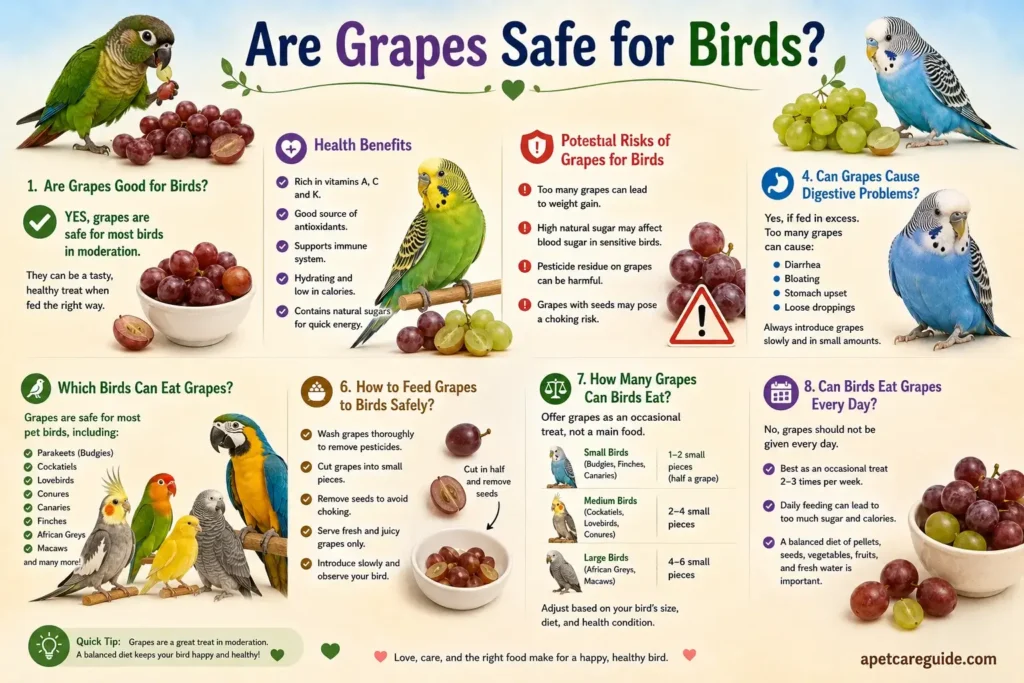
Yes, grapes are safe for many pet birds when you serve them in moderation. Portion size, preparation methods, and the specific bird species all matter. People worry about the high sugar content and whether seeds pose a safety hazard. I also hear concerns about choking risks and whether these fruits work well as a daily treat.
Are grapes good for birds?
Key Nutrients in Grapes for Birds
Grapes contain vital nutrients like vitamin C, vitamin K, and potassium that support avian health.
- Vitamins and Antioxidants in Grapes: They contain vitamins C and K. These fruits pack a solid punch of antioxidants, protecting cells from damage and keeping your bird feeling energetic.
- Water Content: Grapes hold 80% water, which helps keep your feathered friend hydrated, and this makes them highly refreshing.
- Natural sugars and hydration benefits: The natural sugars offer quick energy. The high water content keeps active birds well-hydrated during warm days, and the high moisture adds extra fluids to their diet.
Do grapes provide real health benefits?
Yes, they act as a quick energy source and offer some mild immune support from antioxidants. The high moisture content also keeps active birds well-hydrated. I noticed these fruits really perk up a tired bird during playtime.
High Sugar Content: Good or Bad for Birds?
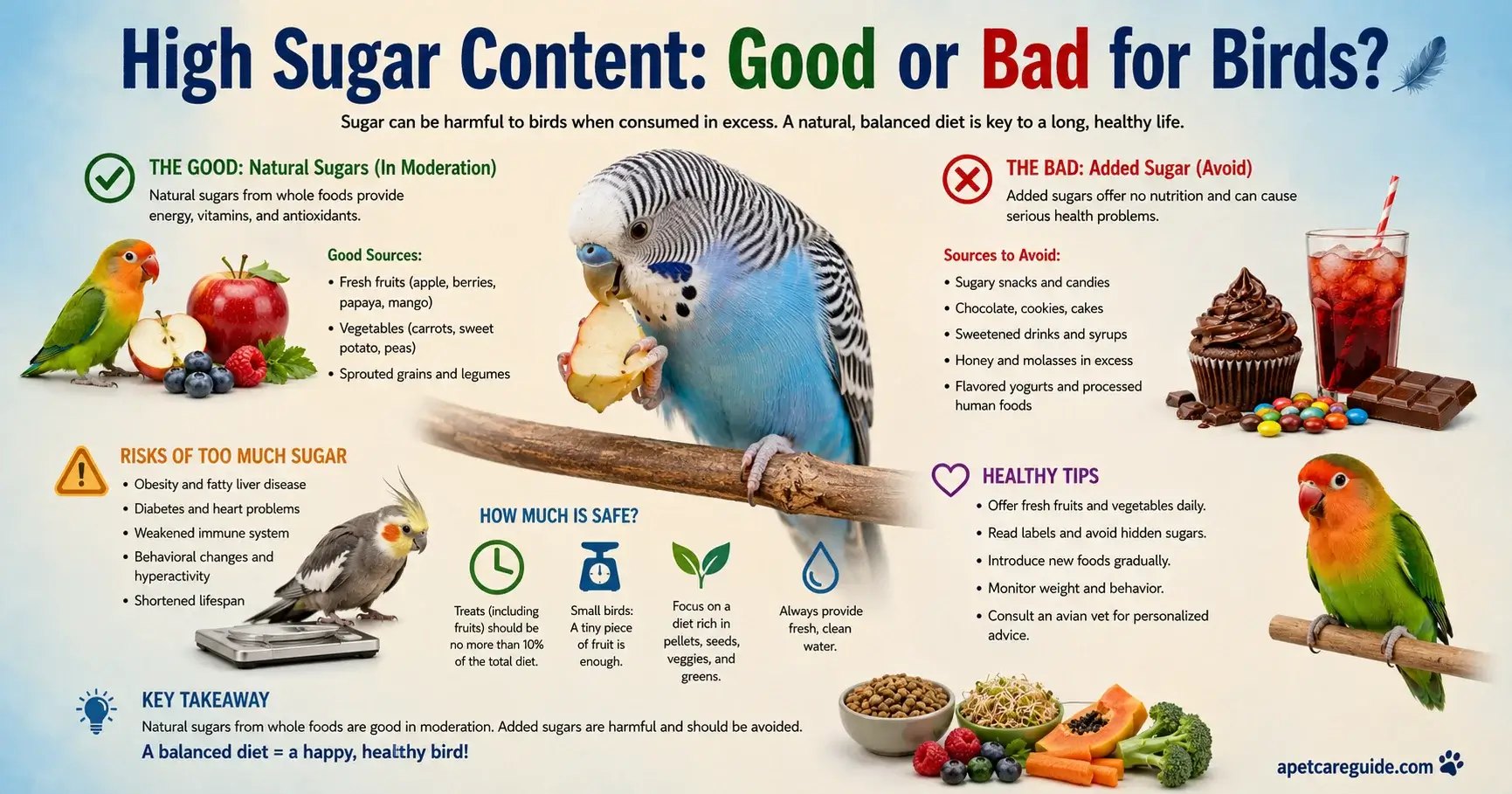
High sugar content is bad for pet birds. I always warn bird owners that extra sugar causes rapid weight gain. Wild birds burn off sweet foods quickly because they fly long distances outdoors. Our indoor pets burn far fewer calories. Giving them sweet treats regularly adds dangerous fat around their organs. This causes serious health issues like fatty liver disease. Keep their sugar intake very low to keep your bird safe. (Reference: The Association of Avian Veterinarians warns that high-sugar diets directly cause severe metabolic diseases in companion parrots.)
Health Benefits of Grapes to Birds
A Tasty Enrichment Treat
In my experience, grapes add exciting variety to a boring food bowl. Hiding a few small pieces inside foraging toys provides excellent mental stimulation. This stops boredom and keeps your feathered friend happily engaged.
Support for Picky Eaters
Some pets may refuse healthy vegetables. I personally prefer offering sweet fruits like grapes first to tempt them. Once a stubborn bird accepts a tasty grape, you can easily encourage healthy eating habits.
Useful as a Training Reward
I use small grape pieces as positive reinforcement during training sessions. Birds work hard for a tiny taste of this sweet snack.
Potential Risks of Grapes for Birds
Too Much Sugar and Weight Gain
Feeding too many sweet fruits directly links to fatty liver disease in birds. Overfeeding sugary snacks puts your pet at a severe risk of weight gain.
Choking Hazard in Small Birds
Serving whole grapes is entirely unsafe. You must cut them into tiny pieces so smaller beaks can chew and swallow them without choking.
Pesticides on Grapes
Farms heavily spray this crop, making it one of the most chemically treated fruits available. You always need to wash them thoroughly or buy organic options instead.
Can Grapes Cause Digestive Problems?
You will notice loose droppings if you overfeed this watery fruit. Keep in mind that sensitive birds react differently, so watch their cage floor closely.
Which Birds Can Eat Grapes?
Can Parrots Eat Grapes? (Budgies, Cockatiels, conures, lovebirds, and Macaws)
These are a popular treat among parrots. They remain perfectly safe as long as you keep the portions small.
Can Small Birds Eat Grapes? (Finches, Canaries)
These tiny eaters face a higher choking risk. You must finely chop the flesh before putting it in the bowl.
Can wild birds eat grapes?
Yes, especially fruit-eating species like mynas and bulbuls. Foraging for soft fruits fits their natural feeding behavior outdoors.
Can Sensitive Digestion Birds?
Some individuals tolerate the sugar and water better than others. Always introduce new foods slowly to avoid upsetting their stomachs.
How to Feed Grapes to Birds Safely
How to Prepare Grapes for Birds
- Wash thoroughly: Scrub the skin under cold running water to remove dirt and chemicals.
- Cut into halves/quarters: Slice them up to prevent choking.
- Remove seeds if present: Pick out the hard seeds to protect their tiny throats.
Can Birds Eat Grape Skin and Seeds?
The skin is fine if you clean it well. However, you should avoid giving seeds to small birds because they struggle to digest them.
Fresh vs Frozen Grapes for Birds
Here is a breakdown of fresh versus frozen grapes for feeding birds. Both are excellent, safe treats, but they serve slightly different purposes depending on the weather and the birds you are feeding.
| Feature | Fresh Grapes | Frozen Grapes |
| Best Used For | Everyday treats, quick hydration, and smaller birds. | Hot weather relief and longer-lasting treats in outdoor feeders. |
| Texture | Soft and easy to pierce, even for birds with smaller or weaker beaks. | Hard initially. Birds may wait for them to thaw slightly or scrape at them like a suet treat. |
| Hydration | Provides immediate, high-volume water intake. | Provides hydration slowly as the grape thaws and is consumed. |
| Feeder Longevity | Spoils quickly, especially in the sun. Can attract wasps, ants, and bees rapidly. | Lasts much longer outdoors. Won’t attract insects until it fully thaws and juices start to seep. |
| Preparation | Wash thoroughly and cut into halves or quarters. | Wash, cut into halves or quarters, and then freeze. (Whole frozen grapes are too hard and slippery to cut safely. |
How Many Grapes Can Birds Eat?
- Small birds: Feed 1 to 2 tiny chopped pieces max. Their small bodies process sugar slowly.
- Medium birds: Offer 2 to 4 small slices. This gives them a sweet taste without upsetting their digestion.
- Large parrots: Give up to half a grape. Even massive birds do not need full portions.
How Often Can Birds Eat Grapes?
Only serve them 1 to 2 times per week, never daily.
Can Birds Eat Grapes Every Day?
No. Eating them daily causes a massive nutritional imbalance and sugar overload.
Can Baby Birds Eat Grapes?
No, baby birds should not eat grapes. Their digestive systems are extremely delicate and can not process the high sugar or water content found in this fruit. I always recommend sticking to professional hand-rearing formulas to ensure they get the specific nutrients they need to grow without getting sick. (Reference: Specialized avian neonatal care protocols emphasize high-protein, easily digestible formulas over solid fruits for developing chicks.)
What Should Baby Birds Eat Instead?
Offer a high-quality, species-specific formula instead of solid fruits. Always rely on vet-approved feeding schedules to keep chicks healthy and growing strong.
Are Grapes Safe for Chicks or Nestlings?
This is not recommended at all. A baby’s digestive system is just not ready for solid, sugary foods.
Other Safe Fruits for Birds
I treat my backyard birds to fresh blueberries, raspberries, and strawberries. They love pecking at seedless apples, bananas, and juicy summer melons like watermelon or cantaloupe. I also offer chunks of mango, papaya, sweet citrus slices, and bright pomegranate seeds to keep them healthy.
- Berries (Blueberries, Raspberries, Blackberries, and Strawberries)
- Melons (Watermelon, Cantaloupe, Honeydew)
- Mango
- Papaya
- Apples (Seedless)
- Bananas
- Citrus (Oranges & Tangerines)
- Pomegranate
Signs Your Bird Should Not Eat Grapes
Digestive Issues After Eating Grapes
Watch out for very watery droppings in their cage. A sudden reduced appetite for their regular seeds or pellets also signals a problem.
Behavioral Changes
Look for lethargy or unusual inactivity. A bird sitting puffed up in the corner means it feels sick.
When to Consult an Avian Veterinarian
Call your vet if you see persistent symptoms after a new food introduction. Do not wait if they act totally out of character.
Expert Tips for Feeding Grapes to Birds Safely
Introduce New Foods Slowly
Offer a tiny amount first and watch for any bad reactions. Waiting a day helps you see if their stomach handles it well.
Keep fresh water available.
Birds always need clean drinking water in their cage, even if they eat very juicy fruits.
Use Grapes as Part of a balanced diet.
Pellets, fresh vegetables, specific seeds, and limited fresh fruits should all balance correctly for your exact species.
Rotate Fruits for Nutritional Variety
Mix up their treats weekly to avoid dependency on one single fruit type.
Prioritize Pellets and Vegetables Over Fruits
Keep greens and formulated pellets as the main meal. Sweet items only act as a side dish.
FAQs About Can Birds Eat Grapes?
Can birds eat red grapes?
Yes, red varieties are entirely safe. They pack slightly more antioxidants than lighter ones. Just wash them well first.
Can birds eat green grapes?
Yes, green ones are fine. They offer a nice crunch and plenty of hydration, though they taste a bit more tart.
Can birds eat grape seeds?
Large macaws crush them easily, but you must remove them for smaller pets. Hard seeds pose a major choking hazard.
Can birds eat grape skins?
The skin is harmless and adds good fiber. You just need to scrub away any surface pesticides before feeding.
Final Verdict: Should You Feed Grapes to Birds?
Yes—But Only in Moderation. They are a safe snack, but absolutely not essential for survival. Treat grapes as an occasional enrichment food, not a daily staple.