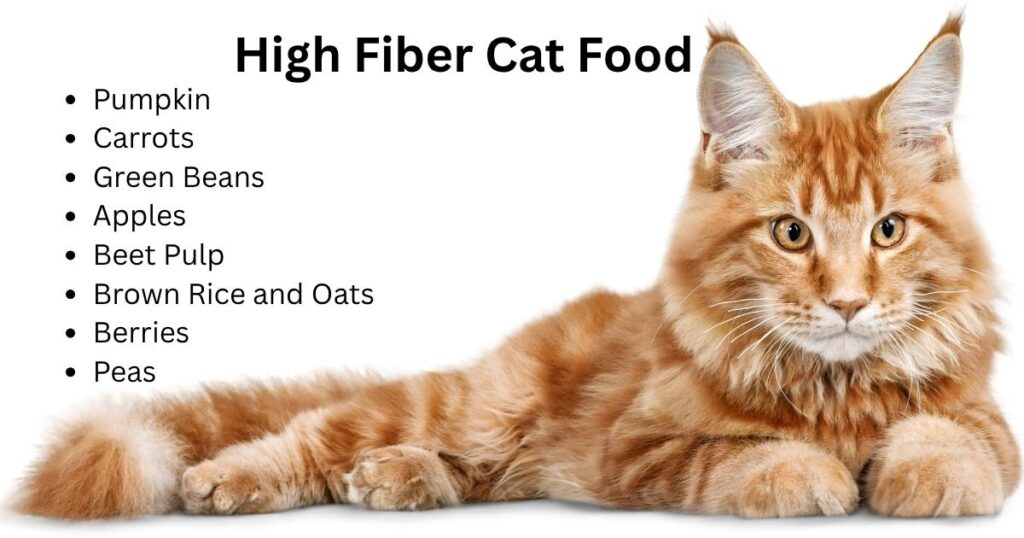


Picking the best food for your cat can be hard. In my experience, many pet owners forget about fiber. We usually focus on protein, but fiber is just as important for a healthy stomach. If your cat has a hard time in the litter box or coughs up hairballs, changing their food might help. Let’s look at what high fiber cat food actually does and how you can safely give it to your pet.
What is High Fiber Cat Food?
High-fiber cat chow provides a greater amount of indigestible carbohydrates, often between 3% and 10%. It employs components like pumpkin, cellulose, or psyllium husk to naturally promote a healthy digestive tract.
Do Cats Need Fiber in Their Diet?
Yes. While cats are dedicated carnivores, a tiny bit of fiber resembles the stomach contents of their natural food. It controls bowel motions, promotes gut flora, and avoids frequent stomach disorders.
Related Article:
Low-carb diet for cats
Persian cat nutrition
Fiber food for Cats
You can introduce more fiber into your cat’s diet through commercial foods or natural additions. Now I am sharing foods rich in fiber for your pet cats.
Commercial Fiber Food For Cats
Many trusted brands offer excellent fiber-rich cat food options. As an expert who watches what performs well, these are consistently great choices:
- Hill’s Science Diet: Their formulas, like the Adult Hairball Control, are legendary for promoting healthy digestion and reducing hairballs. They have a long history of creating effective, science-backed diets.
- Purina Pro Plan: This brand offers excellent high-fiber cat food formulas, especially for indoor cats who may be more prone to weight gain and hairballs due to a less active lifestyle.
- Royal Canin: Royal Canin is a leader in therapeutic diets. Their specific gastrointestinal formulas, like the Fiber Response diet, are often prescribed by vets for serious constipation and are incredibly effective.
Natural Foods High in Fiber
You can also supplement your cat’s current diet with natural fiber sources, but always in moderation.
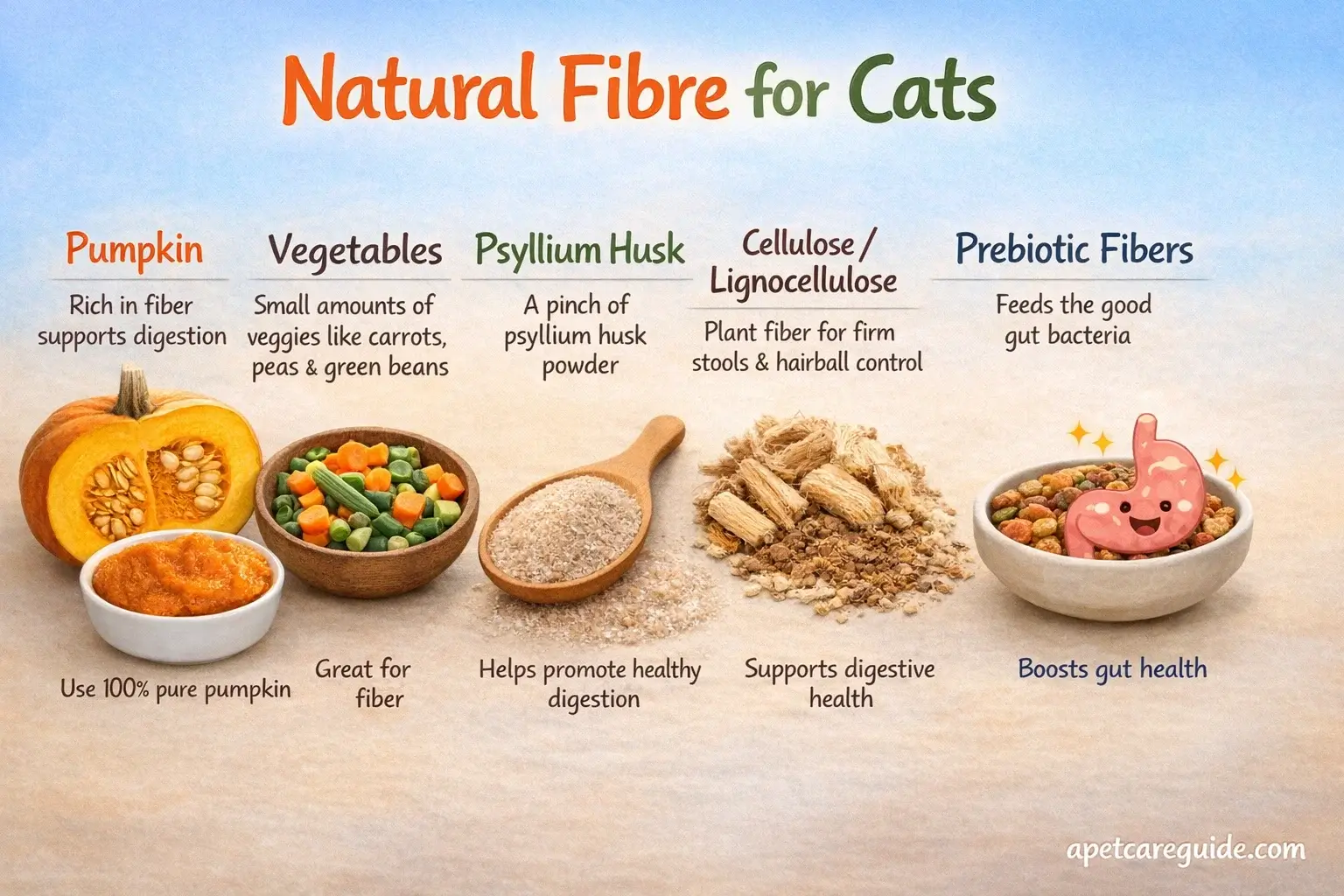
- Pumpkin: A teaspoon of canned, 100% pure pumpkin (never the sugary pie filling!) is a safe and beloved source of fiber for cats. Many cats love the taste!
- Vegetables: Tiny amounts of steamed and mashed vegetables like carrots, peas, or green beans can add a little fiber boost.
- Psyllium Husk: A small pinch of psyllium husk powder, the main ingredient in Metamucil, can be sprinkled on food. However, you must start with a tiny amount, as it’s very powerful.
Common High-Fiber Ingredients in Cat Food
In my years of raising cats, I’ve seen many owners blindly trust “high-fiber” labels. But checking the ingredient list is vital! Different fibers do different jobs—some improve digestion, while others manage hairballs or weight.
Here is a breakdown of the most common high-fiber ingredients you will find in cat food, along with what they actually do for your pet:
- Beet Pulp: You will see this in a lot of pet foods. It is a gentle, moderately fermentable fiber. Basically, it helps your cat create firm, easy-to-scoop poops. And don’t worry—it won’t turn their stool red!
- Pea Fiber: If your cat is always begging for food, this plant-based ingredient is a lifesaver. It adds bulk to their meals without adding extra calories. I noticed that when my chunky orange tabby switched to a diet with pea fiber, he finally felt full and stopped crying at his food bowl an hour before dinnertime.
- Cellulose: You will frequently find this in “indoor” or “hairball control” formulas. It is an insoluble fiber, meaning it sweeps through the digestive tract like a tiny broom to push hair and waste out. Some pets may need a little extra fresh water when eating dry foods high in cellulose to keep things moving smoothly.
- Chicory Root: I personally prefer seeing this on an ingredient list. Chicory root acts as a natural prebiotic. Think of it as fertilizer for the “good bugs” living in your cat’s gut. A balanced gut usually means a happy, healthy cat.
- Flaxseed: This ingredient is a fantastic multitasker. It provides a healthy dose of fiber to support digestion, but it also packs omega-3 fatty acids. These healthy fats are the secret to giving your kitty a soft, shiny coat.
- Oat Fiber: Oats are famously gentle on the stomach. If you have a cat with a highly sensitive tummy, oat fiber is a soothing option that helps keep their bathroom habits perfectly regular.
- Rice Bran: The outer layer of a rice grain holds a surprising amount of dietary fiber and beneficial nutrients. It is a solid, everyday ingredient that helps maintain a healthy digestive system.
- Psyllium Husk: This is the heavy lifter for stomach issues. It is a highly effective soluble fiber that absorbs water and turns into a gel. Vets often recommend formulas with psyllium husk for cats dealing with stubborn constipation because it makes passing stool much easier and less painful.
Best High-Fiber Cat Food For Constipation
Vets highly recommend Royal Canin Gastrointestinal Fiber Response. This high-fiber cat food delivers the perfect blend to help your cat pass stool easily.
Since extra water relieves constipation, wet diets like Weruva Funk in the Trunk also work wonderfully. You can even mix a small spoonful of plain, canned pumpkin into your cat’s regular meal for a quick, natural fiber boost. Always ask your vet before switching diets.
Benefits of High Fiber Cat Food
Adding more fiber to your cat’s bowl isn’t just about regular litter box trips. I personally prefer fiber-rich diets for several specific health reasons. Here is how extra roughage can improve your cat’s daily life.
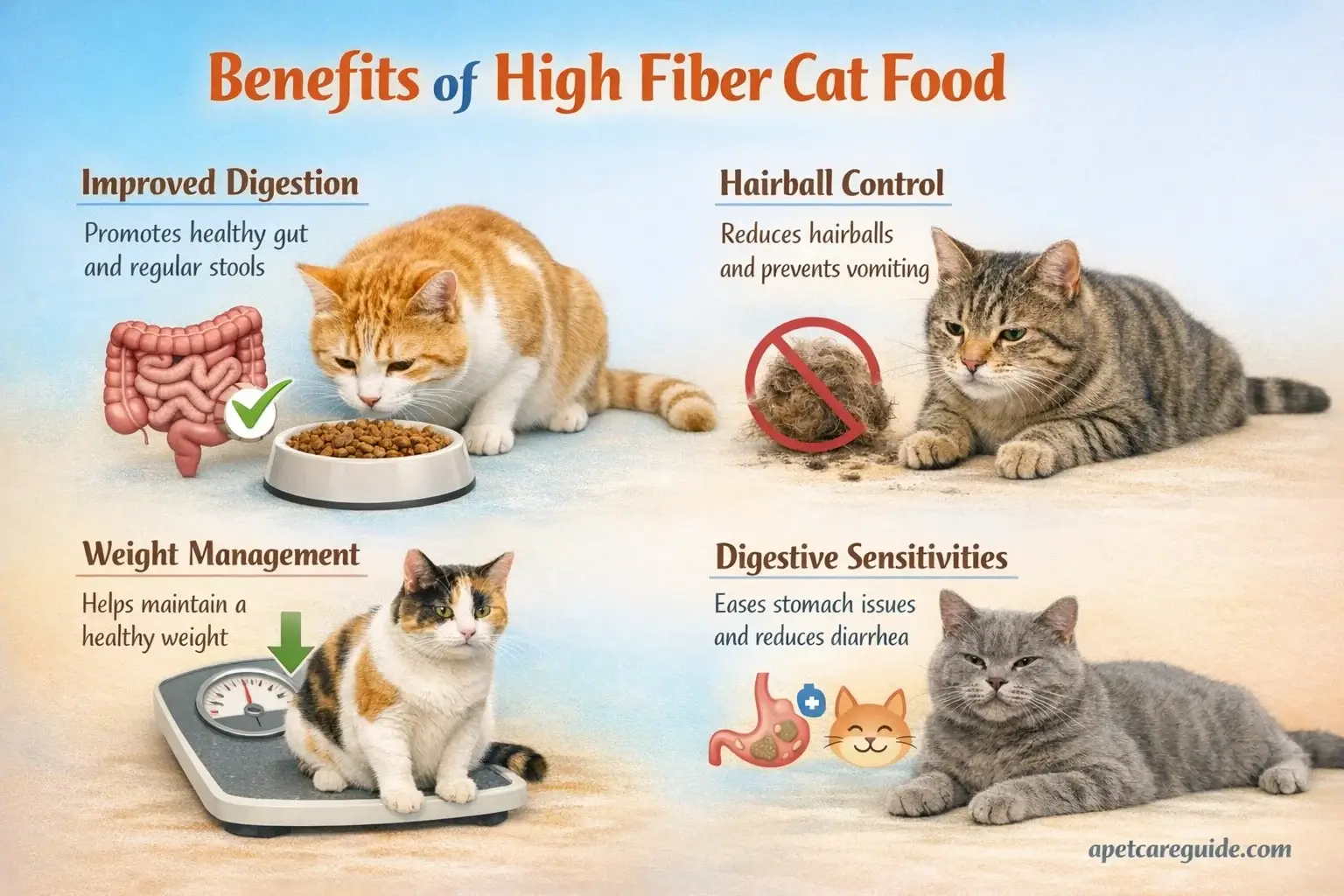
Improved Digestion
Fiber acts like a gentle broom inside your cat’s stomach. It sweeps food through the digestive tract smoothly. This keeps their bathroom habits regular and stops painful constipation. Fiber also soaks up extra water in the gut, which quickly firms up messy diarrhea, so your cat feels better. I noticed a huge difference in my own cats; regular, well-formed stools replaced occasional loose messes. Soluble fiber also feeds good gut bacteria, making your cat’s whole digestive system much stronger.
Hairball Control
Hairballs are gross, but they are also uncomfortable for your pet. Fiber helps bind loose hair swallowed during grooming and sweeps it through the digestive tract. Instead of coughing it up on your carpet, your cat simply passes it in the litter box. One mistake many pet owners make is ignoring hairballs, but fiber easily fixes this.
Weight Management
If your cat begs for food but needs to lose a few pounds, fiber is your best friend. It expands in the stomach, making your cat feel full and satisfied without adding extra calories. I’ve found this is the easiest way to manage a chubby cat’s weight. They won’t feel starved, and you avoid endless crying.
Digestive Sensitivities
Some cats have very sensitive stomachs that get upset easily. Special fiber feeds the good bacteria living in your cat’s gut. These healthy bacteria calm stomach irritation and break down food better. This gentle process stops gas, bloating, and throwing up, giving your cat a strong and happy tummy.
Soluble vs Insoluble Fiber in Cats
| Type of Fiber | What It Does (In Simple Words) | What I Noticed in Cats |
| Soluble Fiber | It mixes with water and turns a bit gel-like inside the stomach | Helps soften stool and makes digestion smoother in many cats |
| Insoluble Fiber | It doesn’t dissolve in water and adds bulk to the stool | Helps food move through the gut and can reduce constipation issues |
How Much Fiber Do Cats Need?
A cat’s fiber needs change as they grow. Knowing the appropriate amount for each life stage aids digestion and prevents stomach troubles. Here is a quick breakdown of what your feline friend requires at different ages.
| Cat Age | Recommended Fiber |
|---|---|
| Kitten | 1%-2% |
| Adult | 2%-5% |
| Senior | 3%-7% |
When Should You Consider High-Fiber Cat Food?
Knowing when to make the switch is key. Here are the most common signs that your cat could benefit from a high-fiber cat food:
- Constipation: If your cat is straining in the litter box or producing small, hard stools, it’s a clear sign they need help. The added bulk and moisture from a fiber-rich diet can bring quick relief and promote regularity.
- Hairball Management: Are you finding hairballs around the house more often? A diet rich in fiber is one of the most effective ways to help your cat pass ingested hair naturally.
- Weight Management: For an overweight cat, a high-fiber cat food can be an essential part of their weight-loss journey. It keeps them feeling full, so they aren’t begging for food all the time, making calorie restriction much easier to manage.
- Digestive Issues: Cats with conditions like megacolon or general digestive sensitivities often respond beautifully to a carefully managed high-fiber diet. It can bring stability to an otherwise unpredictable gut.
How to Add Fiber to Your Cat’s Diet
Switching your cat’s food requires care and patience. A sudden change can upset their stomach, so follow these steps for a smooth transition.
- Consult Your Veterinarian First: This is the most important step. Before you change anything, talk to your vet. They can confirm if their diet is the right choice and rule out any other underlying health problems.
- Gradual Introduction: Don’t switch the food overnight. Mix a small amount (about 25%) of the new food with their old food. Over 7-10 days, gradually increase the amount of the new food while decreasing the old food.
- Monitor for Digestive Changes: Keep a close eye on your cat’s litter box. Notice the consistency of their stool. Also, watch their overall energy and mood to make sure the new diet agrees with them.
- Increase Water Intake: Fiber works best when there’s plenty of water. A high-fiber cat food diet increases the need for hydration. Make sure your cat always has access to fresh, clean water. A water fountain can be a great way to encourage drinking.
Wet & Dry Food
High Fiber Wet Cat Food
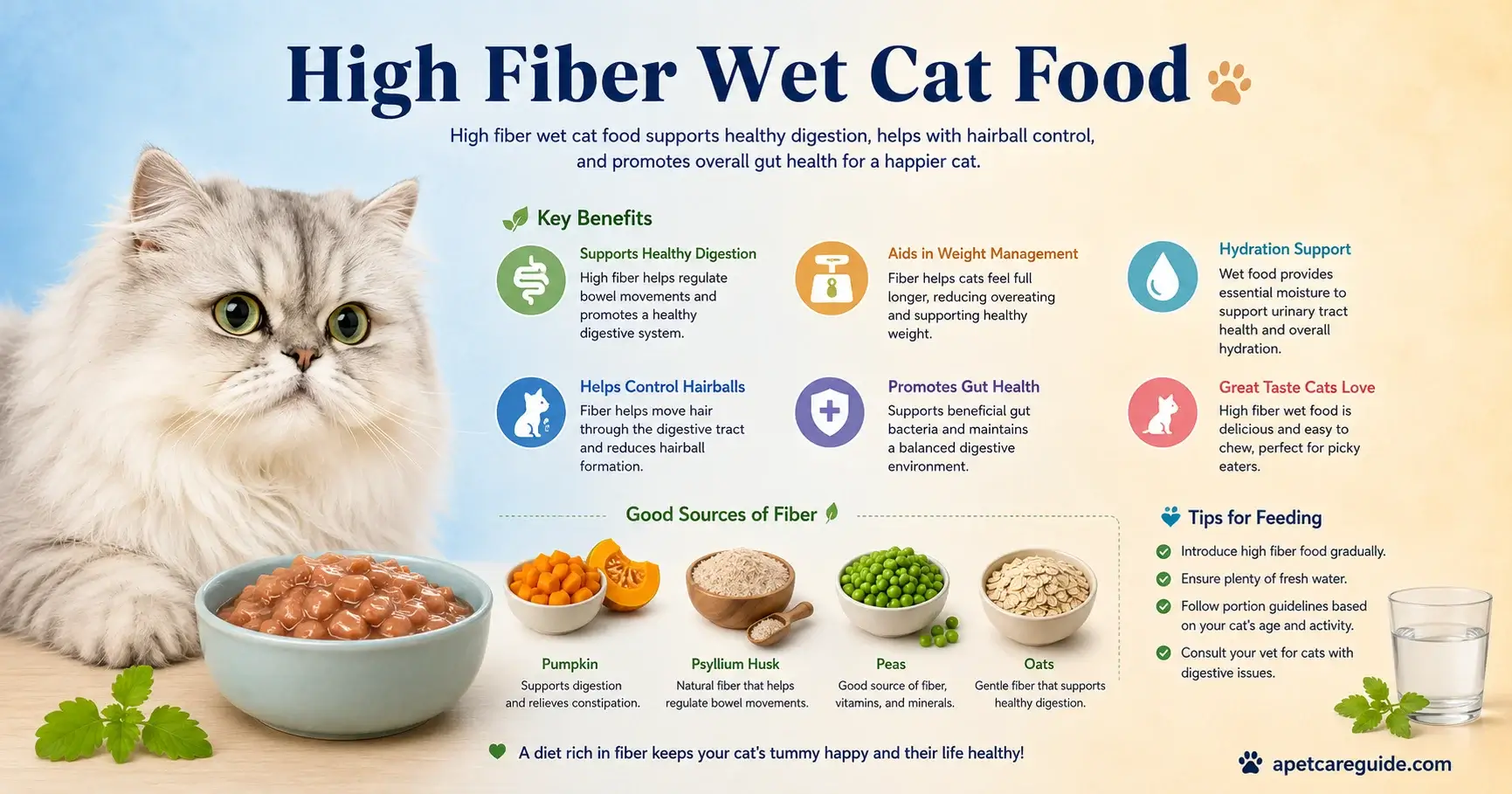
Veterinarians highly recommend Weruva Cats in the Kitchen Funk in the Trunk. It mixes lots of meat with natural pumpkin to give your cat a great fiber boost.
You can also try Wellness CORE Grain-Free Indoor or Purina Beyond Indoor Grain-Free. Both options deliver high-quality protein and use healthy fiber sources like sweet potato. If your cat struggles with severe constipation, ask your vet for a prescription diet like Royal Canin Gastrointestinal.
Fiber Dry Cat Food
Choosing a high-fiber dry food helps your cat feel full without eating too many calories. I look for kibble that includes natural sources like pumpkin, powdered cellulose, or beet pulp to keep things moving. This roughage catches loose fur in the stomach and pushes it through the gut, so your cat stops hacking up hairballs on the rug.
Higher fiber levels also keep blood sugar steady, which is perfect for indoor cats that don’t run around much. Always check that meat stays the first ingredient so your pet gets plenty of strength-building protein along with that extra digestion support. (Reference: Evidence based on AAFCO feeding protocols for feline weight and hairball management).
Both wet and dry food can be part of a high fiber cat food plan, but one often has an edge.
The Difference Between Wet and Dry Cat Food
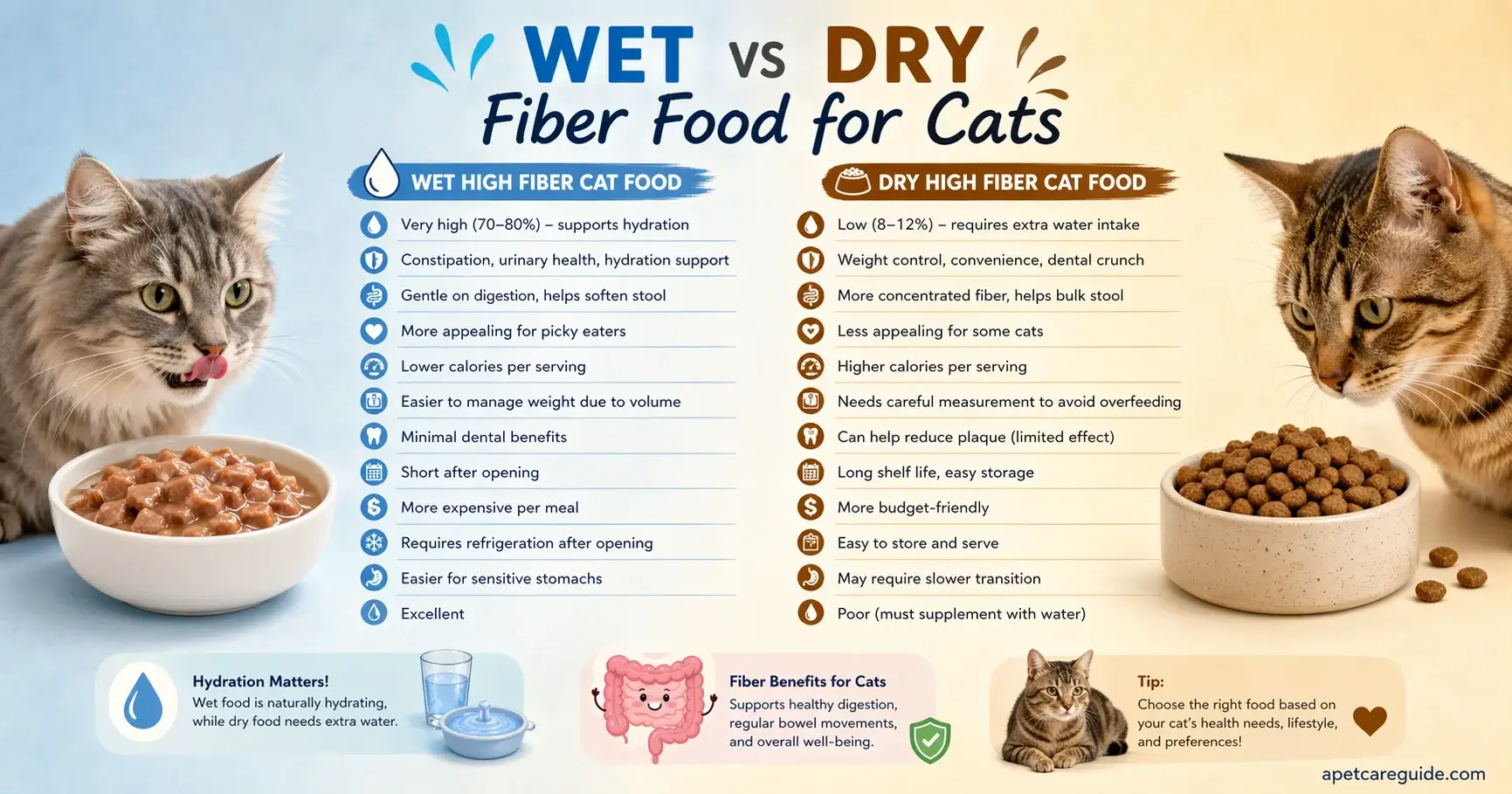
- Benefits of Wet Food: For issues like constipation, wet fiber cat food is usually the better choice. Its high moisture content is incredible for keeping your cat hydrated and helping the fiber do its job of softening the stool.
- Dry Food Considerations: While convenient, dry high-fiber cat food lacks moisture. If you feed a dry diet, it is essential to ensure your cat is drinking enough water to prevent the high fiber from making constipation worse.
Which is better for cats
Wet food is usually best for cats. Cats rarely drink enough water, so wet food keeps them hydrated and protects their kidneys. It also packs more meat and fewer carbs. Dry food costs less and stays fresh longer. For the best health, feed your cat mostly wet food mixed with a little dry food.
When Choosing Fiber Cat Food (Important Considerations)
Choosing a food can feel like a huge decision, but you can be confident by following a few guidelines.
- Reading Labels Carefully: Look at the ingredient list and the Guaranteed Analysis panel. Check the crude fiber percentage. Ensure that a high-quality protein source, like chicken or fish, is listed as the first ingredient. A good high-fiber cat food should not sacrifice protein.
- Consult with Your Vet: I can’t say this enough. Your vet is your partner. They can recommend the best high-fiber cat food for your cat’s specific situation, whether it’s an over-the-counter option or a prescription diet.
- Individual Cat Needs: Remember, every cat is an individual. The high fiber cat food that works wonders for your neighbor’s cat might not be the perfect fit for yours. Be prepared to try a couple of options to find the one that makes your cat thrive.
Potential Risks of High Fiber Diets
While beneficial for many, a high-fiber diet isn’t without potential downsides if not managed correctly.
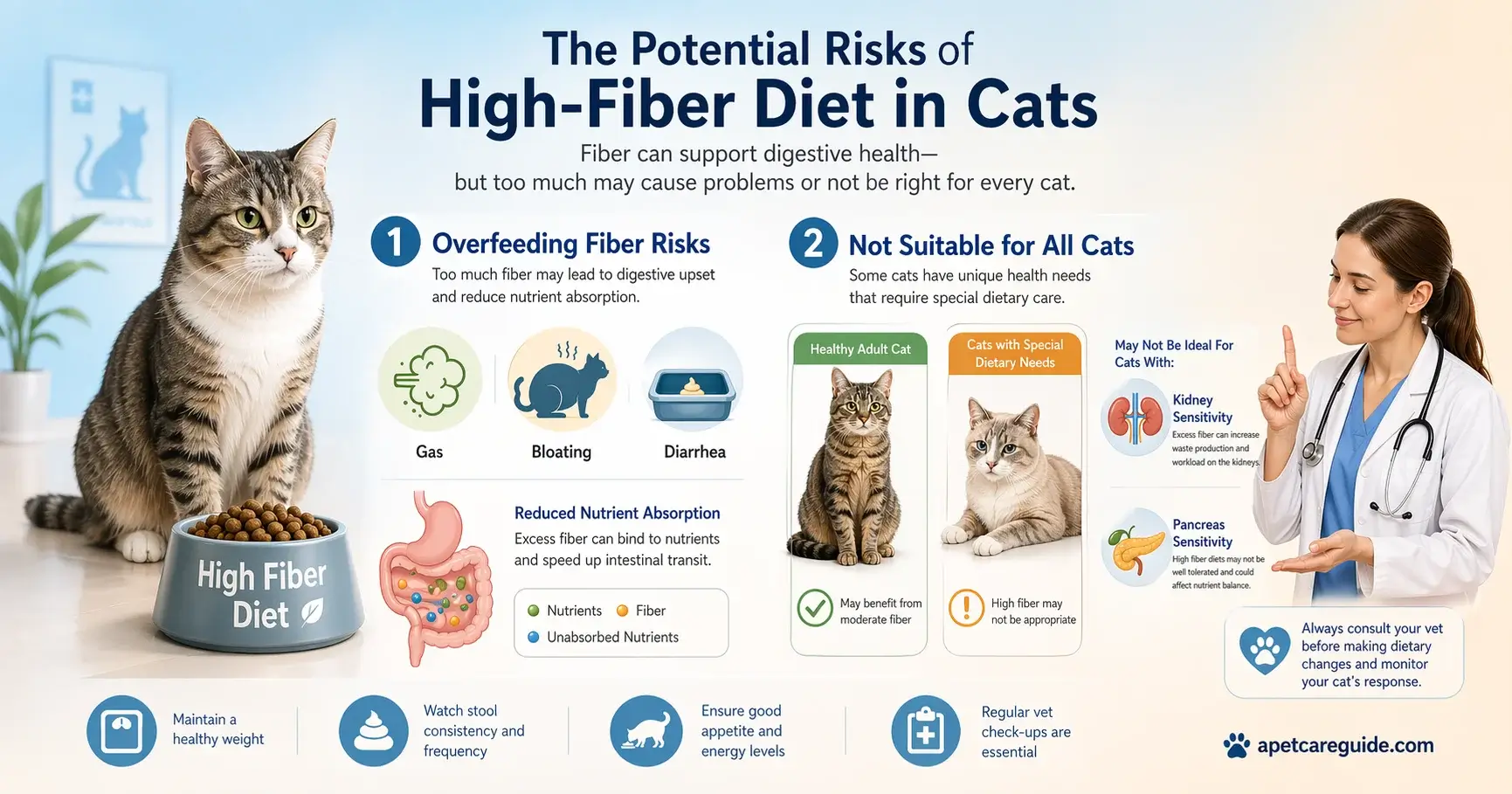
- Overfeeding Fiber: Too much of a good thing can be bad. An excessive amount of fiber can interfere with the absorption of other essential nutrients. It can also cause gas, bloating, and diarrhea. This is why following your vet’s advice is so important.
- Not Suitable for All Cats: A high fiber cat food is not a one-size-fits-all solution. It may not be appropriate for cats with certain health issues like kidney disease or pancreatitis, as these conditions require tightly controlled diets.
Top Vet-Recommended Cat Food
Navigating the pet food aisle can be tough. Let this section of A Pet Care Guide simplify it for you. Here’s a look at brands vets trust and how to pick the right one.
A Curated List:
| Brand | Formula Name | Use Case | Type |
| Hill’s Science Diet | Hairball Control Adult | Hairball & digestion | Over-the-counter |
| Purina Pro Plan | Indoor Care | Weight & digestive support | Over-the-counter |
| Royal Canin | Gastrointestinal Fiber Response | Constipation & sensitive stomachs | Prescription |
The AAFCO Standard:
When you’re looking at a bag of cat food, search for this statement: “formulated to meet the nutritional levels established by the AAFCO Cat Food Nutrient Profiles.” The Association of American Feed Control Officials (AAFCO) doesn’t approve foods, but it sets the nutritional standards. A food that meets these standards is complete and balanced. It’s a non-negotiable mark of quality.
Tailoring to Your Cat’s Specific Needs:
Choosing the best high-fiber cat food means matching it to your cat’s life.
- For Age: Kittens and senior cats have different nutritional needs than adults. Look for a formula designed for their life stage.
- For Health Conditions: If your cat has diabetes, a high-fiber diet might help regulate blood sugar, but the type of fiber and overall recipe are critical. For a cat with inflammatory bowel disease (IBD), some fibers might help while others could cause a flare-up. This is where your vet’s guidance is priceless.
For the Problem: Are you fighting hairballs or constipation? The ideal fiber blend might be different. A food for constipation might have more insoluble fiber, while one for diarrhea might have more soluble fiber.
Final Thoughts about High Fiber Cat Food
Adding fiber completely changed how I manage my cats’ health. It naturally solves hairballs, weight gain, and tummy troubles. Just remember to introduce changes slowly and keep their water bowls full. Always check with your vet before making major dietary adjustments to ensure your furry friend stays happy.
FAQ about High fiber cat food
Can I feed my cat homemade fiber supplements like pumpkin regularly?
Yes, you can feed a small amount of plain, pureed pumpkin (1-2 teaspoons daily). Never use pumpkin pie filling, as the added sugars and spices are dangerous for your cat’s digestion.
How much fiber does my cat need per day?
Most healthy adult cats need about 2% to 5% crude fiber in their daily diet. Senior cats or those with specific digestive issues might require between 5% and 10%.
What’s the best high-fiber cat food for indoor cats?
Formulas like Hill’s Science Diet Indoor or Purina Pro Plan Indoor Advantage are excellent. They specifically balance high fiber for hairball control with lower calories to prevent indoor weight gain.
Can a high-fiber diet cause my cat to become constipated?
Yes, ironically, it can. If you add too much fiber too quickly, or if your cat doesn’t drink enough water, the extra bulk can dry out and severely block their intestines.