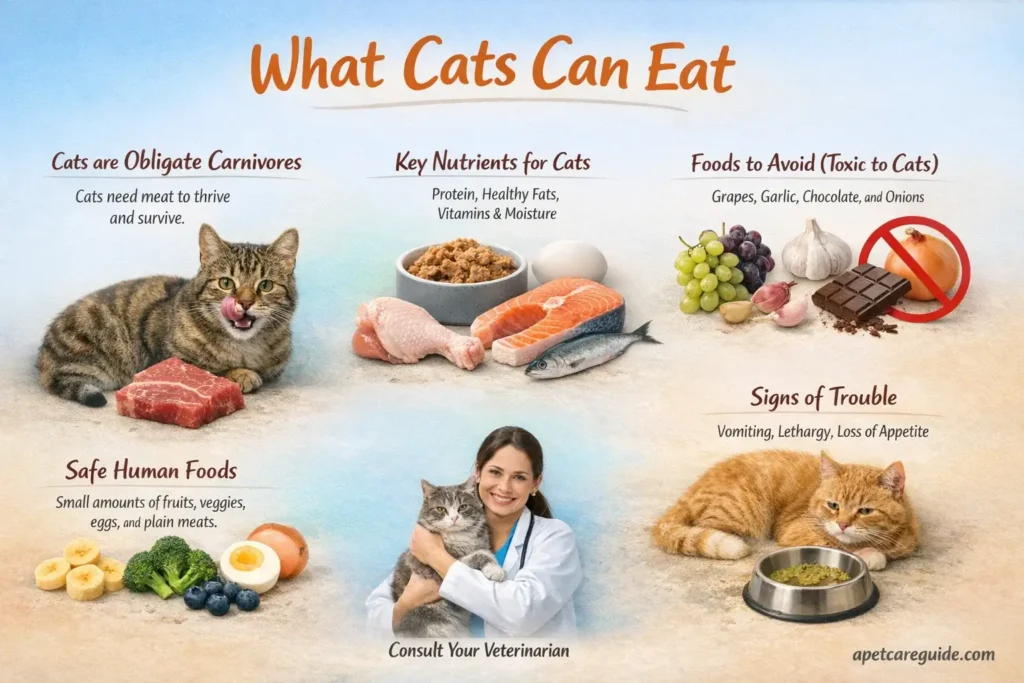


Cats can safely eat cooked chicken, turkey, fish, and eggs as their main protein sources. They can also eat some fruits and vegetables in small amounts, like carrots and apples (without seeds). However, many foods are dangerous—cats must avoid chocolate, onions, garlic, alcohol, and grapes. Inside A Pet Care Guide, you will discover safe snacks, dangerous ingredients, and smart feeding methods about what can cats eat.
Safe and Toxic Foods for Cats at a Glance
| ✅ Safe Foods for Cats | ❌ Toxic Foods for Cats |
|---|---|
| Cooked Chicken | Chocolate |
| Cooked Turkey | Onions |
| Cooked Fish | Garlic |
| Cooked Eggs | Grapes |
| Pumpkin | Raisins |
| Green Beans | Alcohol |
| Broccoli | Coffee |
| Carrots | Macadamia Nuts |
| Apples (without seeds) | Dog Food (long-term diet) |
| Pears (without seeds) | Large Amounts of Dairy Products |
| Strawberries | Xylitol-Sweetened Foods |
| Bananas (small amounts) | Raw Dough with Yeast |
| Rice (plain, cooked) | Certain Wild Mushrooms |
| Oatmeal (plain, cooked) | Excessive Salted Snacks |
| Shrimp (cooked, plain) | Excessive Fatty Foods |
Safe food for cats
Seeing those big, begging eyes melts our hearts instantly. Because we love them, sharing snacks feels wonderful. Yet, we must choose treats wisely to protect their fragile tummies. Fortunately, several wholesome items straight from your pantry offer safe, tasty rewards when given properly.
Safe Foods Cats Can Eat by Category
| Protein Sources | Fruits | Vegetables | Other Safe Foods |
|---|---|---|---|
| Chicken | Apple | Pumpkin | Rice |
| Turkey | Pear | Broccoli | Oatmeal |
| Fish | Banana | Carrots | Bread (occasionally) |
| Eggs | Strawberries | Green Beans | Plain Cereal |
| Shrimp | Melon | Lettuce | Dates (small amounts) |
| Beef | Blueberries | Celery | Cheese (occasionally) |
What fruits can cats eat?
Felines lack sweet taste buds, so sugary snacks rarely excite them. Even so, certain fresh choices provide harmless bites. Because natural sugars pack heavy calories, you must serve these treats rarely. Indeed, tiny, peeled portions make a safe summer snack for curious pets.
Can cats have strawberries?
Yes, cats can eat strawberries in moderation. These berries contain vitamin C and antioxidants, although cats do not require fruit to meet their nutritional needs. Wash strawberries thoroughly and remove the stem before serving. A small piece or two is usually enough for a safe treat.
Can cats eat bananas?
Yes, bananas are safe for most cats when offered in small amounts. They contain potassium and other nutrients, but they are also relatively high in natural sugar. For that reason, bananas should only be given occasionally. A small slice is generally plenty for a curious cat.
Can cats eat coconut?
Fresh coconut is not toxic to cats, but it is not an ideal snack either. The high fat content may cause digestive upset in some cats, especially if they eat too much. If you choose to offer coconut, keep the portion very small and watch for any signs of stomach discomfort.
Can cats eat pears?
Yes, fresh pears can be a safe treat when prepared correctly. Always remove the seeds and core before serving, as the seeds contain compounds that may be harmful. Peeled, bite-sized pieces are the safest option and help reduce the risk of choking.
Can cats eat melon?
Many cats enjoy melon, particularly cantaloupe. Its high water content can make it a refreshing treat on warm days. Remove the rind and seeds before serving, and offer only a few small pieces at a time.
Can cats eat berries?
Blueberries and raspberries are generally safe for cats. They contain antioxidants and can be offered as an occasional snack. Since cats are obligate carnivores, berries should never replace their regular food. One or two washed berries are usually enough.
What vegetables can cats eat?
While greens never replace meat, some veggies provide excellent roughage. Because indoor pets often struggle with digestion, safe greens help move things along. Yet, you must always cook these plants thoroughly. Otherwise, raw greens cause severe gas and terribly painful bloating.
Can cats eat broccoli?
Yes, cats can eat plain, cooked broccoli in small amounts. Broccoli contains fiber and may help some cats pass hairballs more comfortably. Steamed broccoli is usually the easiest form to digest. Offer only a few small florets at a time.
Can cats eat lettuce?
Yes, lettuce is generally safe for cats. Because it is mostly water, it can provide a little extra hydration while adding some crunch. Wash it thoroughly before serving and avoid dressings or other toppings. Romaine lettuce is usually a better choice than iceberg lettuce because it contains more nutrients.
Can cats eat pumpkin?
Yes, plain pumpkin is one of the most commonly recommended vegetables for cats. It contains fiber that may help with both constipation and mild digestive upset. Choose plain canned pumpkin or freshly cooked pumpkin without sugar, spices, or pie filling ingredients. A small spoonful is often enough.
Can cats eat celery?
Yes, celery is safe for most cats when served in moderation. Some cats enjoy the crunchy texture, while others ignore it completely. Cut celery into small pieces before serving to reduce the risk of choking and make it easier to chew.
Can cats eat green beans?
Yes, green beans are a healthy, low-calorie snack for cats. They contain fiber and can help add bulk to meals without significantly increasing calories. Serve them plain and cooked or steamed. Avoid canned green beans that contain added salt or seasonings.
Can cats eat mushrooms?
Store-bought white button mushrooms are generally considered safe when fully cooked. However, mushrooms provide very little nutritional value for cats. Wild mushrooms should always be avoided because some varieties can be highly toxic. If you’re unsure about a mushroom, it’s best not to offer it at all.
What can cats eat from the fridge?
Your refrigerator holds plenty of tempting, human-grade surprises. Because felines love cold, smelly items, they often beg loudly near the door. Fortunately, several basic staples offer wonderful, protein-rich rewards. However, you must always verify safety before tossing them a chilly bite.
Can cats eat eggs?
Cooked eggs provide wonderfully powerful protein boosts. Because they contain essential amino acids, they mimic natural prey nutrients perfectly. Yet, you absolutely must scramble or boil them thoroughly. Since raw eggs carry terrifying salmonella bacteria, undercooked versions risk severe, life-threatening sickness.
Can cats eat cheese?
Many felines go completely crazy for a tiny cheese shred. However, adult kitties are severely lactose intolerant. Because their bodies cannot process dairy, heavy cheese causes explosive diarrhea. Thus, an incredibly small piece of hard cheddar is the absolute maximum safe limit.
Can cats eat bread?
Plain, baked bread won’t kill your sweet pet. Because it offers empty carbohydrates, it provides absolutely zero nutrition. Furthermore, raw yeast dough expands inside the stomach, causing agonizing, fatal tearing. Therefore, you should completely avoid giving them any type of bakery items.
Can cats eat rice?
Cooked, plain white rice safely settles an upset stomach. Because it digests incredibly smoothly, vets suggest it for sick felines. However, it completely lacks meat protein. Thus, you should only mix tiny portions into their normal food during scary digestive emergencies.
Can cats eat peanuts?
Plain, unsalted peanuts lack toxic chemicals. Because they pack heavy fats, they easily trigger painful pancreas inflammation. Furthermore, these hard legumes pose a severe choking hazard for tiny throats. Therefore, keeping the jar tightly closed remains your absolute safest option.
Can cats eat beans?
Cooked, unseasoned black or kidney beans are technically harmless. Because they contain lots of plant fiber, they might help digestion slightly. Yet, felines struggle to process heavy legumes. Consequently, feeding them too many beans guarantees a night of terrible, smelly gas.
Can cats eat oatmeal?
Plain, cooked oatmeal offers wonderfully gentle fiber. Since many commercial pet brands include oats, they are clearly safe. However, you must strictly prepare it with simple water, completely avoiding milk or sugar. Thus, a warm spoonful makes a pleasant, harmless winter treat.
Can cats eat ginger?
Tiny amounts of fresh ginger safely cure mild nausea. Because it calms the stomach naturally, some holistic vets suggest it. Yet, the strong, spicy flavor usually makes kitties run away instantly. Therefore, forcing them to eat it causes unnecessary stress and fear.
Can cats eat cereal?
Dry, unsweetened flakes won’t immediately harm your furry friend. Because cereals consist purely of grains, they hold no nutritional value. Furthermore, sugary kids’ brands cause terrible tooth decay. Thus, you should definitely keep your breakfast bowl completely away from their eager paws.
Can cats eat dates?
Sweet dates are technically safe but horribly unhealthy. Because they stick to tiny teeth, they promote severe dental rotting. Moreover, their massive sugar content spikes blood glucose dangerously. Therefore, sharing this sticky fruit easily leads to scary weight gain and sad vet visits.
Can cats eat graham crackers?
Plain graham crackers lack deadly poisons. Yet, because they rely heavily on sugar and carbohydrates, they offer terrible nutrition. Furthermore, the crumbs easily irritate tiny throats. Thus, feeding them these sweet baked goods only encourages bad habits and painful belly aches.
What meat and fish can cats eat?
Meat brings absolute joy to every feline heart. Because they literally need flesh to survive, serving plain muscle meat makes sense. Naturally, cooking destroys dangerous parasites. Thus, offering unseasoned, roasted cuts provides the safest, most amazing flavor experience for your little predator.
Can cats eat beef?
Lean, cooked beef provides fantastic, muscle-building protein. Because it matches their natural diet closely, kitties completely adore the taste. However, you must absolutely trim away all heavy fat. Otherwise, rich beef chunks trigger incredibly painful vomiting and severe digestive distress.
Can cats eat chicken?
Boiled, plain chicken breasts are wonderfully perfect treats. Because poultry digests incredibly easily, vets always recommend it. Yet, you must strictly remove every single bone before serving. Splintered, cooked bones easily puncture delicate intestines, causing terrifying, bloody emergencies and agonizing death.
Can cats eat turkey?
Roasted, skinless turkey brings massive joy to hungry pets. Since it remains incredibly lean, it suits their tiny bodies perfectly. However, holiday birds often carry deadly garlic and onion seasoning. Thus, only plain, unseasoned slices guarantee a safe, happy Thanksgiving snack.
Can cats eat fish?
Fish provides fabulous omega acids for incredibly shiny fur. Because felines love the smell, they always beg for bites. Yet, heavy fish diets deplete vital vitamin B levels dangerously. Therefore, you should only offer cooked, plain fillets as an extremely rare luxury.
Can cats eat tuna?
Canned tuna water makes cats incredibly happy. Because they obsess over the salty smell, they eat it rapidly. However, human-grade tuna lacks essential taurine and contains scary mercury levels. Thus, daily feeding causes heartbreaking malnutrition and severe neurological poisoning.
Can cats eat cooked meat?
Thoroughly cooked meat remains the absolute best treat imaginable. Because heat kills terrifying bacteria, boiling or baking protects their health completely. Yet, you must strictly avoid frying anything in butter or oil. Plain, roasted protein always delivers wonderful joy without stomach pain.
Can cats eat raw meat?
Raw diets pose incredibly scary risks. Because uncooked flesh carries deadly Salmonella and E. coli, it threatens both pets and families. Although wild hunters eat raw prey, domestic tummies struggle. Therefore, safely cooking all proteins prevents sad, terrifying trips to the animal hospital.
Can cats eat bacon?
The sizzling smell of bacon drives kitties absolutely wild. However, the massive salt and grease levels are terribly dangerous. Because their tiny organs cannot filter heavy sodium, bacon easily causes fatal heart issues. Thus, you absolutely must deny them this crispy temptation.
Can cats eat shrimp?
Plain, boiled shrimp acts as a wonderful, low-calorie delight. Because it packs huge amounts of iodine and protein, it supports great health. Yet, you must completely remove the sharp tail and hard shell. Otherwise, those crunchy pieces cause terribly painful throat injuries.
Can cats eat pork meat?
Cooked, lean pork bits offer a perfectly safe protein variation. Because it provides different amino acids, it adds a nice variety. However, heavily processed ham contains terrifying sodium levels. Therefore, strictly serving unseasoned, plain pork chops keeps your lovely companion totally safe.
Can cats eat liver?
Tiny liver bites provide incredibly powerful vitamin A boosts. Because they love the metallic taste, felines gobble it up. Yet, eating too much liver causes extremely painful bone deformities. Thus, limiting this rich organ meat prevents toxic, life-threatening vitamin overdoses perfectly.
Foods to Avoid (Toxic or Harmful)
Protecting your sweet companion requires strict vigilance. Because many common pantry items hold deadly chemicals, accidental poisoning happens quickly. According to the ASPCA, sharing the wrong snack easily triggers terrifying organ failure. Thus, memorizing this dangerous list saves their precious lives completely.
Foods poisonous to cats
Certain daily ingredients hide incredibly deadly secrets. Because feline livers process enzymes differently, simple human spices act like pure venom. Therefore, keeping these items locked away prevents tragic accidents. Sadly, even microscopic amounts of these toxic foods guarantee a frantic veterinary emergency.
Unsafe fruits
While some berries are harmless, other fruits are terrifyingly lethal. Because plants develop natural defenses, their skins and seeds often contain severe toxins. Thus, leaving fruit bowls unguarded invites terrible danger. You absolutely must memorize which juicy snacks cause agonizing sickness.
Can cats eat grapes?
Grapes are absolutely, terrifyingly toxic to felines. Because scientists still cannot identify the exact poison, the danger remains incredibly high. Even eating one single grape triggers catastrophic, irreversible kidney failure. Thus, you must rigorously keep these fruits completely away from your pet.
Can cats eat avocado?
Avocados contain a dangerous fungicidal toxin called persin. Because this chemical easily upsets their digestive tract, it causes severe, messy vomiting. Furthermore, the massive fat content triggers terribly painful pancreatitis. Therefore, this trendy human food ruins your kitty’s health instantly.
Can cats eat tomatoes?
Green tomatoes and their leafy vines hold a deadly poison called solanine. Because this chemical disrupts their nervous system, it causes terrifying tremors. Although fully ripe, red tomatoes lack this toxin; skipping the entire plant keeps your sweet baby completely safe.
Can cats eat oranges?
Citrus fruits bring absolute misery to delicate felines. Because the essential oils and acidic juices are extremely harsh, they burn tiny mouths. Furthermore, even licking an orange peel causes severe central nervous depression. Thus, you must hide all citrus perfectly.
Can cats eat cherries?
Cherry pits, stems, and leaves contain lethal cyanide. Because this chemical blocks oxygen absorption, it literally suffocates cells. Although the fleshy red part is technically safe, the risk remains incredibly huge. Therefore, never let your sweet companion near a bowl of cherries.
Can cats eat plums?
Similar to cherries, plum pits hide massive amounts of deadly cyanide. Because the hard center easily splinters, it also causes agonizing intestinal blockages. Furthermore, the sugary flesh causes instant diarrhea. Thus, keeping plums away prevents terrifying, expensive surgeries completely.
Unsafe vegetables
Most root vegetables from the allium family act as pure poison. Because these plants naturally destroy feline red blood cells, they are shockingly dangerous. Thus, feeding them savory dinner scraps often introduces lethal toxins. You must strictly ban these veggies completely.
Can cats eat onions?
Onions easily cause terrifying, life-threatening anemia. Because their chemical compounds literally explode feline blood cells, the damage happens internally. Whether powdered, cooked, or raw, even tiny amounts bring absolute disaster. Thus, onion rings remain incredibly deadly for your precious little friend.
Can cats eat garlic?
Garlic is shockingly five times more toxic than onions. Because it concentrates the dangerous chemicals heavily, it destroys blood cells extremely fast. Therefore, feeding them garlic-seasoned meats causes terribly pale gums, extreme weakness, and frantic, heartbreaking trips to the emergency vet.
Other Unsafe Foods
Our favorite comforting snacks often conceal terrible feline dangers. Because human treats contain artificial chemicals, they overwhelm tiny organs easily. Furthermore, stimulants that wake us up easily cause fatal heart attacks in pets. Thus, guarding your junk food saves their lives.
Can cats eat chocolate?
Chocolate hides a lethal stimulant called theobromine. Because cats process this chemical incredibly slowly, it builds up fatally. Dark chocolate triggers terrifying seizures, explosive vomiting, and sudden death. Thus, you absolutely must lock all chocolate securely away from curious paws.
Can cats drink milk?
Despite popular myths, cow’s milk causes terrible misery. Because adult felines stop producing lactase enzymes, they cannot digest dairy. Consequently, a single saucer triggers explosive, painful diarrhea. Thus, offering clean water always remains the only loving, safe hydration choice.
Can cats eat popcorn?
Air-popped kernels aren’t strictly poisonous. However, unpopped pieces pose incredibly terrifying choking hazards for tiny throats. Because movie popcorn swims in heavy butter and toxic salt, it causes agonizing belly aches. Therefore, keep your movie snacks completely hidden and safely away.
Can cats eat ice cream?
Ice cream combines horrible lactose with massive sugar loads. Because their stomachs violently reject dairy, the sweet treat guarantees a messy, painful night. Furthermore, artificial sweeteners like xylitol cause fatal liver failure. Thus, you absolutely must deny those adorable, begging eyes.
Can cats eat pistachios?
Pistachios pack massive amounts of heavy, dangerous fats. Because their tiny pancreas cannot handle rich nuts, agonizing inflammation occurs rapidly. Furthermore, the hard shells cause terrifying throat tears. Therefore, feeding them these salty snacks invites terrible suffering and huge vet bills.
Can cats eat nuts?
Macadamia nuts and walnuts are shockingly poisonous to kitties. Because they contain unknown toxins, they cause severe lethargy and scary tremors. Furthermore, all nuts carry terrible choking risks. Thus, you should definitely keep every single nut jar sealed incredibly tight.
Can cats eat raisins?
Like fresh grapes, dried raisins remain completely, terrifyingly lethal. Because the drying process concentrates the unknown poison, even one tiny raisin destroys their kidneys. Thus, leaving trail mix on the counter risks absolute tragedy for your wonderfully sweet companion.
Can cats eat crackers?
Salty crackers provide absolutely terrible nutrition. Because felines struggle to process heavy sodium, salty snacks severely stress their tiny kidneys. Furthermore, the empty carbohydrates lead to scary obesity. Therefore, skipping these crunchy treats keeps their little bodies wonderfully healthy.
Can cats eat turkey bacon?
Although it seems healthier, turkey bacon hides massive salt levels. Because factories pump it full of dangerous preservatives, it severely damages tiny feline organs. Thus, this processed meat easily triggers fatal heart disease. You must absolutely choose plain, boiled turkey instead.
Can cats eat banana bread?
Banana bread is incredibly dangerous for multiple reasons. Because it contains toxic raw yeast, heavy sugars, and possibly deadly nuts, it ruins their health. Furthermore, the hidden xylitol sweetener causes instant death. Thus, baked human goods are terribly unsafe for your pet.
Can cats eat cookies?
Cookies perfectly combine deadly chocolate, toxic macadamia nuts, and horrible sugars. Because a single bite might hold lethal ingredients, you must never share them. Thus, keeping the cookie jar firmly closed prevents terribly sad, frantic rushes to the animal hospital.
Can cats drink coffee or caffeinated products?
Caffeine acts as a terrifying, deadly stimulant for felines. Because it forces their tiny hearts to beat incredibly fast, it causes fatal cardiac arrest. Therefore, letting them lick your morning mug brings absolute disaster. You must rigorously protect your coffee cups.
Can cats drink alcohol?
Alcohol poisoning happens unbelievably fast in tiny feline bodies. Because their livers cannot filter ethanol, even a microscopic drop causes terrifying brain damage and sudden comas. Thus, you absolutely must guard your cocktail glasses to prevent a highly tragic, heartbreaking death.
Can cats eat dog treats?
Canine snacks lack the specific vitamins kitties desperately need. Because dogs require different protein levels, their treats often contain harmful grains. Therefore, feeding them dog biscuits causes severe taurine deficiency over time. Thus, strictly buy appropriate, species-specific rewards.
Can cats eat dog food?
Emergency dog food won’t kill a feline instantly. Yet, because it lacks vital taurine and arachidonic acid, long-term feeding causes terrible blindness and fatal heart disease. Thus, you absolutely must maintain separate bowls to protect your sweet pet’s precious life.
Other Unsafe human foods
Beyond the obvious poisons, daily pantry staples hide scary threats. Because highly processed items contain artificial dyes and horrible preservatives, they overwhelm tiny kidneys. Thus, sharing random scraps easily introduces slow, invisible damage. You must remain incredibly protective of their diet.
Can cats eat biscuits?
Flaky human biscuits contain heavy butter and empty flour. Because they provide absolutely zero meat protein, they only cause terribly rapid weight gain. Furthermore, the massive sodium levels stress their internal organs. Thus, these bread products make horribly unhealthy snacks.
Can cats have honey?
Thick, sticky honey easily coats their tiny throats, causing scary choking. Because it delivers massive sugar spikes, it severely strains their pancreas. Furthermore, raw honey carries dangerous botulism spores. Thus, offering this natural sweetener brings unnecessary, terrifying risks to your pet.
Commercial Cat Food vs Human Food
Because felines require incredibly precise vitamin ratios, balanced cat food is essential for survival. While wet food provides wonderful hydration, dry kibble offers amazing convenience. Sometimes, plain human meat can safely supplement their diet. However, replacing their main meals completely with human groceries risks terrible, life-threatening malnutrition. Thus, commercial diets always win.
| Commercial Cat Food | Human Food |
|---|---|
| Balanced nutrition designed for cats | Often nutritionally incomplete for cats |
| Contains essential nutrients like taurine | Usually lacks key nutrients required for cats |
| Formulated and tested by veterinarians | Not formulated for feline dietary needs |
| Consistent and complete daily nutrition | Varies widely and may be unbalanced |
| Safer as a primary diet | Suitable only as occasional treats |
Common Mistakes Cat Owners Make
Loving owners often make terribly dangerous errors unintentionally.
- Overfeeding treats: Giving too many snacks ruins their healthy appetite easily.
- Feeding toxic foods unknowingly: Sharing garlic-laced meats causes accidental, heartbreaking poisoning.
- Ignoring portion sizes: Guessing amounts leads to terribly sad, obese pets rapidly.
- Switching foods too quickly: Changing brands instantly triggers explosive, painful diarrhea.
FAQs: What can cats eat
Can cats eat human food every day?
No. Daily human food easily ruins their perfect nutritional balance. Because felines need specific vitamins, treats should never happen every single day.
Is tuna safe for cats daily?
No, daily tuna causes terrifying mercury poisoning. Because it lacks vital taurine, it causes severe, heartbreaking malnutrition rapidly.
Can cats be vegetarian?
Absolutely not. Because they are strict carnivores, plant-based diets guarantee a horribly painful, tragic death.
What is the healthiest food for cats?
Premium, meat-based commercial wet food offers the absolute best, most amazing nutrition for your sweet companion.
Final Thoughts on What Cats Can Eat
Feeding your beloved pet safely requires wonderful dedication. Because some foods heal while others kill, understanding safe versus unsafe ingredients prevents tragedy. By strictly emphasizing balanced nutrition, you protect their precious lives perfectly. Always encourage responsible feeding habits to keep them wonderfully happy.