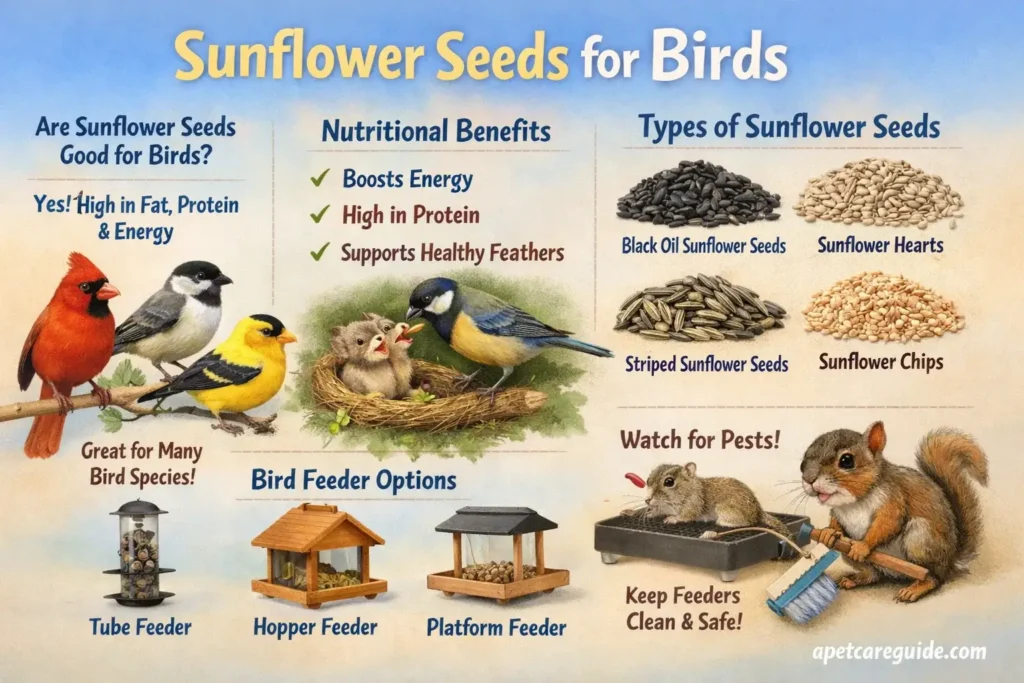


Yes, they absolutely are one of the best available options you can offer. Naturally, experts widely recommend them because these little snacks pack incredible power. Without a doubt, you can confidently use them for both wild flocks and casual backyard visitors. Specifically, these dark kernels provide massive amounts of fat, protein, and endless energy that keep your winged friends singing joyfully.
Nutritional Benefits of Sunflower Seeds for Birds
High Fat Content for Energy
According to the Cornell Lab of Ornithology, black oil types feature a stunning 40% oil content. Consequently, this massive calorie boost acts like magic fuel. During freezing winters and brutal migrations, these flyers desperately need this exact fat to stay alive and warm.
Rich in Protein and Essential Nutrients
Besides giving instant heat, these treats contain heavy amounts of protein. Because of this, songbirds quickly build strong muscles and grow beautiful, durable feathers. Most importantly, breeding parents rely heavily on these specific nutrients to feed their hungry, growing babies in the nest.
Supports Healthy Feathers and Skin
Naturally, looking good matters just as much as feeling good. The heavy fats found inside every shell directly create smooth skin and shiny coats. As a result, you get a beautiful flock that looks stunning and stays completely protected against harsh weather.
Year-Round Energy Source for Wild Birds
Interestingly, you do not just serve these treats during the snowy season. Throughout the entire calendar, wild flocks constantly burn calories flying, dodging predators, and building homes. Therefore, they eagerly eat these little power-ups all year long to maintain their non-stop, highly active lifestyles.
Types of Sunflower Seeds for Birds
Black Oil Sunflower Seeds (Best Choice)
As a matter of fact, these dark gems represent the absolute best option on the market. They feature incredibly thin outer layers that tiny beaks can crack open instantly. Because of this easy access, you will easily attract the absolute widest variety of flying friends to your yard.
Sunflower Hearts (Shelled Seeds)
Sometimes, you just want a perfectly clean patio. If you hate sweeping up discarded trash, these totally shell-free kernels solve your problem perfectly. Plus, they act as the ideal, no-mess snack for tiny visitors who struggle with hard objects.
Sunflower Chips
Similarly, you can buy these pre-chopped pieces for an even faster meal. Because they come in tiny bits, hungry visitors can quickly grab a bite and fly away safely. Therefore, they work wonderfully when you have a mixed crowd of different sizes sharing one single dining spot.
Striped Sunflower Seeds
On the other hand, you might notice larger versions with distinct gray stripes. Sadly, these have much thicker, tougher exteriors that frustrate tiny beaks. However, bigger species absolutely love the satisfying crunch and actively seek out these larger bites.
What Birds Eat Sunflower Seeds?
Common Backyard Birds Attracted
Amazingly, just a handful of this food brings a stunning parade of colors right to your window. For example, brilliant red cardinals, cheerful chickadees, and sunny finches will arrive instantly. Along with them, you will spot busy nuthatches and playful titmice eagerly grabbing their favorite treat.
Larger Birds That Enjoy Sunflower Seeds
At the same time, heavier visitors will eagerly join the morning feast. You will happily watch beautiful woodpeckers tapping away happily. Also, noisy jays and stunning grosbeaks will proudly land to claim their share of the delicious bounty.
Why Sunflower Seeds Attract So Many Species
Basically, the secret formula comes down to pure convenience mixed with high reward. When you combine completely easy access with unbelievable calories, you create an irresistible magnet. Thus, practically every flying species finds this specific meal totally impossible to ignore.
How to Feed Sunflower Seeds to Birds
Choosing the Right Bird Feeder
Choosing the correct container changes everything completely. Long, clear tube feeders work like magic for tiny friends. Meanwhile, big hopper feeders hold massive amounts for hungry crowds. Also, flat platform feeders beautifully serve ground-eating visitors who prefer walking while they dine.
Where to Place Bird Feeders
Naturally, safety always comes absolutely first. You must place your stations in completely quiet spots far away from creeping cats and hawks. In addition, keep the stations close to dense bushes or trees so your terrified visitors can hide quickly if danger suddenly appears.
How Often to Refill Feeders
To build true trust, you must keep your stations consistently stocked full of food. However, you should constantly adjust your pouring schedule based on how fast the visitors empty the container. If they eat faster, simply pour more frequently to keep them incredibly happy.
Keeping Feeding Areas Clean
Sadly, dirty dining spots spread terrible sicknesses quickly. To completely prevent disease and deadly mold, you must maintain excellent hygiene. Regularly remove old, soggy leftovers so your beloved flock stays amazingly healthy and perfectly safe.
Black Oil vs Striped Sunflower Seeds
Key Differences in Shell Thickness
Basically, the main difference lies entirely in the outer protective jacket. The dark variety boasts a paper-thin exterior. In contrast, the striped versions wear thick, hard armor.
Oil Content and Nutritional Value
From a health perspective, the totally black ones win easily. They pack significantly higher amounts of fat. Therefore, they deliver a much bigger blast of pure fuel compared to the striped alternatives.
Which One Is Better for Your Birds?
Truthfully, your final choice completely depends on your exact visitors. If you want everyone to join the party, definitely buy the dark, thin-shelled option. Conversely, if you strictly want big, strong-beaked visitors, the tough striped kind works perfectly.
Sunflower Hearts vs Whole Seeds
Benefits of Sunflower Hearts
Without a doubt, buying pre-peeled treats saves you endless frustration. Because the outer trash is gone, you completely avoid terrible messes. Thus, they make a stunningly great choice for apartment balconies, neat patios, and incredibly tight spaces.
Cost vs Convenience
Admittedly, you will pay significantly more money at the cash register for peeled hearts. Yet, this high price tag brings unbelievable efficiency. Every single penny goes toward actual food, meaning you get zero wasted weight in discarded trash.
Which Option Should You Choose?
Ultimately, you must look closely at your wallet and your yard layout. If you have extra cash and hate sweeping, buy the hearts immediately. Otherwise, if you have a huge, wild yard and a tight budget, the regular intact versions perform amazingly well.
Are There Any Risks of Feeding Sunflower Seeds to Birds?
Overfeeding and Imbalanced Diet
Surprisingly, too much of a good thing causes serious harm. Because these kernels hold massive amounts of grease, non-stop snacking easily causes terrible obesity. Just like us, flying friends need a well-rounded dinner to stay totally fit.
Moldy or Wet Seeds
Another terrifying danger comes directly from rain and humidity. When kernels sit in puddles, they rapidly grow deadly fungus. Sadly, eating this wet rot gives your visitors fatal fungal infections, so you must always keep everything bone dry.
Attracting Unwanted Pests
Unfortunately, wild animals love this same snack. Before you know it, sneaky rodents and clever squirrels will aggressively invade your yard. They will quickly steal every single bite, leaving your feathered guests completely hungry.
Salted or Flavored Seeds (Danger)
Most importantly, never share human snacks from your pantry. You must only offer 100% raw, completely plain kernels. Any salty or barbecue-flavored treats act like literal poison, bringing massive pain and danger to tiny kidneys.
Best Practices for Feeding Sunflower Seeds
To act like a true expert, always buy the freshest, highest-quality bags from trusted stores. Also, constantly rotate in different types of grains so everyone gets a balanced, healthy plate. Always watch their eating habits closely to track their overall joy and health. Moreover, securely store your extra supplies inside hard, airtight plastic bins to block out moisture. Reading a pet care guide easily confirms that these exact steps keep your winged friends incredibly safe.
Best Feeder Types
- Tube Feeders: Ideal for smaller birds like finches and chickadees.
- Hopper Feeders: Good for attracting a variety of birds.
- Tray/Platform Feeders: Best for ground-feeding birds and easy access.
Are Sunflower Seeds Good for Birds in Winter?
During freezing blizzards, your backyard friends burn calories at an unbelievable speed just to survive the shivering nights. Because of this massive demand, these fatty kernels stand out as the absolute top winter bird food available. To achieve total cold-weather feeding success, keep your stations completely snow-free and filled to the top every single morning.