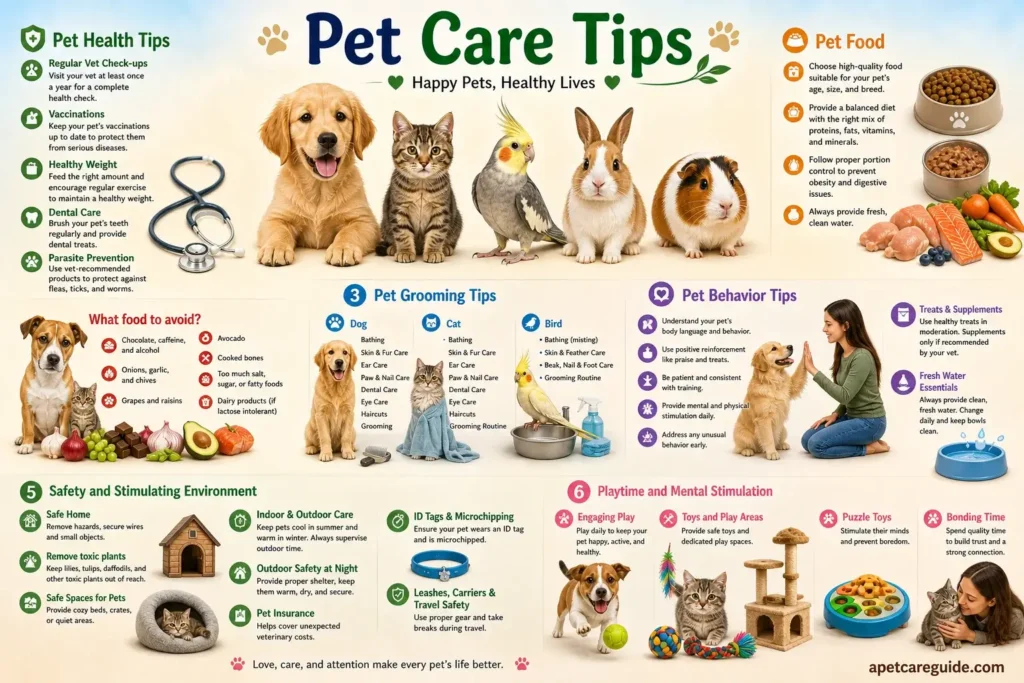
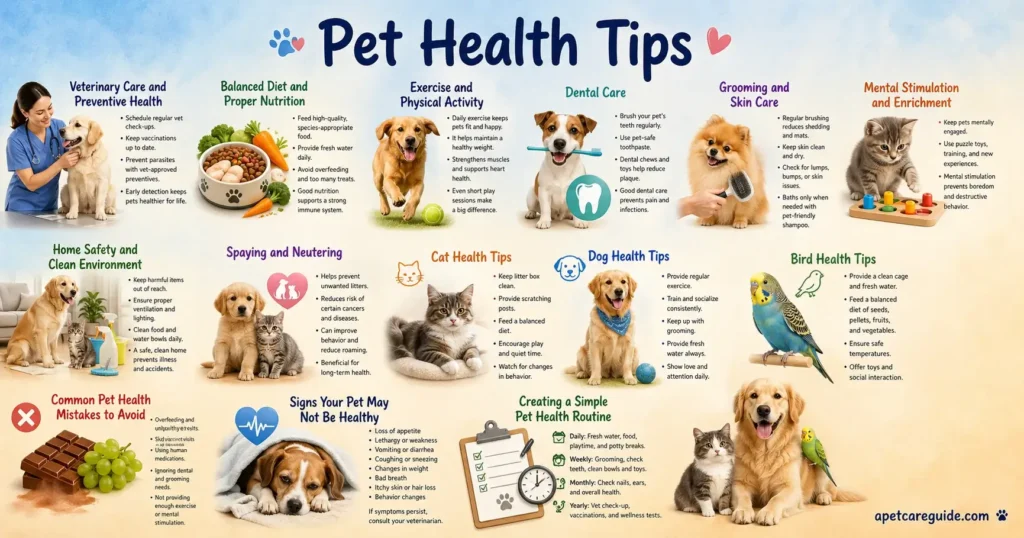


Feed your pet good food every day. Give them clean water. Play with them to keep them active. Take them to the vet for regular check-ups. Keep their teeth and fur clean.
These pet health tips explain how to care for your pet’s body and mind. You will learn the facts about food, exercise, vet visits, grooming, and safety.
Veterinary Care and Preventive Health
Why regular vet check-ups are essential
Vets find small health problems before they become big ones. Yearly visits keep your pet healthy and save you money on big medical bills later.
Vaccinations, deworming, and parasite control
Shots protect your pet from deadly diseases. Medicines kill worms, fleas, and ticks that make your pet sick and itchy.
When pets need a veterinary visit right away
Take your pet to the vet fast if they stop eating, throw up a lot, bleed, breathe hard, or cannot stand up.
Balanced Diet and Proper Nutrition
Feeding high-quality pet food
Buy food made for your pet’s exact age and size. Puppies need different nutrients than older dogs. Look for real meat as the first ingredient on the label.
Portion control and weight management
Measure your pet’s food with a cup. Do not leave a full bowl out all day. Heavy pets get sick easily and live shorter lives.
Treats, table scraps, and feeding mistakes to avoid
Limit treats to 10% of their daily food. Never give them chocolate, grapes, onions, or cooked bones from your dinner.
Hydration and fresh water intake
Wash the water bowl every day and fill it with fresh, cool water. Keep extra bowls around the house so they always drink enough.
Exercise and Physical Activity
How exercise supports muscle, joints, and heart health
Moving around makes your pet’s heart strong. It keeps their joints loose and builds muscles, so they stay active as they get older.
Exercise ideas for dogs and cats
Walk your dog, play fetch, or go hiking. Use a laser pointer or feather wands, or climb trees to make your cat run and jump.
Adjusting activity for senior or arthritic pets
Take shorter, slower walks with older pets. Let them swim, because water does not hurt their sore joints.
Dental Care
Why oral hygiene is part of pet health care
Bad teeth cause pain and make eating hard. Bacteria from dirty teeth can damage your pet’s heart and kidneys.
How to brush your pet’s teeth safely
Use a soft pet brush and special pet toothpaste. Gently lift their lip and rub the teeth in small circles. Never use human toothpaste.
Signs of dental disease in pets
Watch out for very bad breath, red gums, broken teeth, or dropping food from the mouth while eating.
Professional dental exams and cleanings
Your vet puts your pet to sleep safely to clean under their gums and pull out dead or rotten teeth.
Grooming and Skin Care
Regular brushing and coat maintenance
Brush your pet a few times a week. This stops tangles, spreads healthy skin oils, and keeps your house clean from loose fur.
Bathing, nail care, and ear cleaning
Wash your pet only when they get dirty or smell bad. Trim their nails so they do not click on the floor. Wipe the outer part of their ears with a damp cotton ball.
Checking for parasites, lumps, or skin irritation
Run your hands over your pet while you brush them. Feel for strange bumps, bald spots, or tiny black specks that might mean fleas live in their fur.
Mental Stimulation and Enrichment
Why pets need more than food and exercise
Bored pets chew on furniture and bark a lot. Using their brain keeps them happy and stops bad behavior.
Toys, puzzles, and training activities
Hide treats in puzzle toys so they have to work for their food. Teach them new tricks like “spin” or “high five” for fun.
Building a healthy daily routine
Feed, walk, and play with your pet at the same time every day. They feel safe when they know what happens next.
Home Safety and Clean Environment
How to pet-proof your home
Put away cleaning chemicals, human medicines, and poisonous plants. Hide electrical cords so your pet cannot chew them.
Safe spaces indoors and outdoors
Give them a quiet bed away from loud noises. Fix broken fences outside so they cannot escape the yard.
Microchips, ID tags, and lost pet prevention
Put a collar with a name tag on your pet. Ask the vet to put a tiny microchip under their skin so the animal shelter can call you if they get lost.
Clean bedding, litter boxes, and feeding areas
Wash their bedsheets often. Scoop cat litter boxes every day to stop bad smells and germs from spreading.
Spaying and Neutering
Health and behavior benefits of spaying/neutering
Fixing your pet stops dangerous cancers. It also stops males from roaming and fighting and stops females from bleeding.
When to discuss the procedure with a vet
Ask your vet about this surgery when your pet is a few months old. The best time changes based on the breed and size of your pet.
Specific Pet Health Tips
Tailoring care for puppies and kittens
Give young pets extra meals during the day. Teach them house rules early and take them to get their baby shots.
Health needs of adult pets
Keep their weight normal and make sure they exercise every day. Check their teeth weekly and take them for yearly vet visits.
Senior pet care essentials
Feed them soft food if their teeth hurt. Put steps next to the bed so they can climb up without jumping. Take them to the vet twice a year.
Special considerations for indoor and outdoor pets
Indoor pets need extra toys so they do not get fat. Outdoor pets need warm houses in winter and strong flea medicine all year.
Cat health tips
Feed your cat wet food to help them get enough water. Scoop their litter box every day to keep them clean and happy. Play with them using feather wands for 15 minutes daily. Brush their fur weekly to stop hairballs. Take them to the vet once a year for a check-up and shots.
Dog health tips
Walk your dog every day to keep their heart and joints strong. Feed them high-quality food measured with a cup so they do not get fat. Brush their teeth a few times a week to stop bad breath and pain. Give them chew toys to keep their minds busy. Visit the vet yearly for vaccines.
Bird health tips
Give your bird a large cage so they can stretch their wings. Feed them a mix of seeds, special bird pellets, and fresh fruit. Change their water every single day. Let them fly outside the cage in a safe, closed room. Talk to them often so they do not get lonely or bored.
Common Pet Health Mistakes to Avoid
Skipping vet visits until a problem gets severe
Do not wait for your pet to cry in pain. Waiting makes illnesses harder and much more expensive to cure.
Overfeeding and too many treats
Giving too much food makes pets fat. Fat pets get diabetes and severe joint pain.
Ignoring dental care and grooming
Dirty teeth and matted fur cause painful infections. You must care for their outside body just as much as their inside.
Using unsafe human products
Never use human shampoo, pain pills, or bug spray on pets. These items poison animals very quickly.
Signs Your Pet May Not Be Healthy
Physical warning signs
Look out for limping, sneezing, runny eyes, bald spots, or drinking way too much water.
Behavior changes to watch for
Notice if your pet hides in dark corners, snaps at you, sleeps all day, or forgets house training.
When symptoms need urgent care
Rush to the vet for deep cuts, breathing trouble, a swollen stomach, or if you see them eat something toxic.
Simple Pet Health Routine
Daily checklist for pet owners
Feed healthy meals, give fresh water, play for 30 minutes, and scoop the litter box or pick up poop outdoors.
Weekly and monthly care tasks
Brush their coat, wash their bowls, give them heartworm medicine, and trim their nails.
Yearly health goals
Book a full vet check-up, get their teeth cleaned, update their shots, and check their body weight.
FAQ About Pet Health Tips
How often should I take my pet to the vet?
Take adult pets to the vet once a year. Take senior pets or babies to the vet twice a year or more.
What is the best diet for my pet?
The best diet matches their age, weight, and breed. Ask your vet to recommend a high-quality food brand.
How can I tell if my pet is overweight?
You should easily feel their ribs without pressing hard. They should also have a tucked-in waist when you look at them from above.
How much exercise does a pet need daily?
Most dogs need 30 minutes to two hours of walking or playing. Cats need 15 to 30 minutes of active play.
Final Thoughts on Pet Health
Doing small, healthy habits every single day keeps your pet happy and strong for a long time. Stopping problems before they start gives you peace of mind and keeps your wallet full.