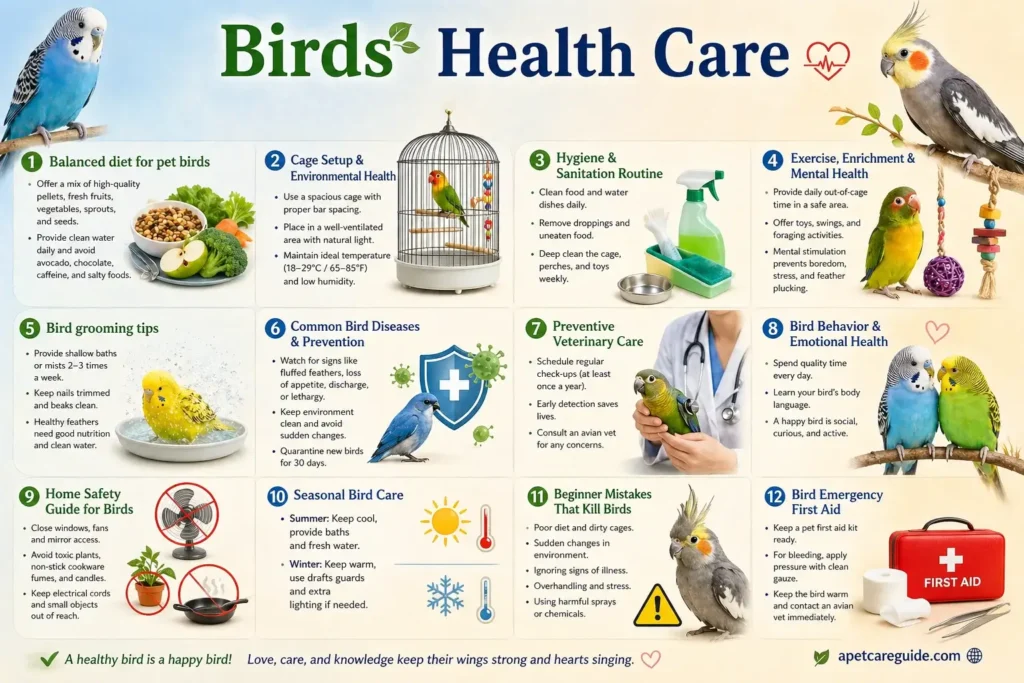


For top-notch birds health care, prioritize a diet of pellets and fresh greens over seeds. Boost pet bird health with daily water changes and a clean cage. Avoid toxic fumes like non-stick pans and scented candles. Schedule yearly avian vet visits for expert bird wellness checks. These simple steps ensure your bird thrives, stays active, and enjoys a long, vibrant life through better avian health habits.
Quick Birds Health Care Checklist
- Bright, clear, and fully open eyes
- Smooth, clean, and well-preened feathers
- Active, playful, and alert behavior
- Firm, consistent, and normal-colored droppings
- Strong daily appetite for food and water
- Quiet, effortless, and regular breathing
Signs of a Healthy vs. a Sick Bird
| Feature | Healthy Bird | Sick Bird |
| Eyes | Bright, clear, wide open | Squinting, swollen, discharge |
| Feathers | Smooth, clean, shiny | Fluffed up, messy, plucked |
| Energy | Active, vocal, playing | Lethargic, silent, sitting on cage floor |
| Droppings | Firm, mostly consistent color | Runny, discolored, undigested food |
| Breathing | Quiet, tail stays still | Wheezing, clicking, tail bobbing |
Balanced diet for pet birds
A balanced diet gives birds energy and a strong immune system. Feed them daily. Avoid all-seed diets, which cause fat buildup. Offer a mix of high-quality pellets, fresh veggies, and a tiny bit of fruit for a long, healthy life.
Ideal Daily Diet Structure
Follow this daily breakdown for ultimate health:
- 60–70% pellets (base nutrition)
- 20–30% fresh vegetables
- 5–10% fruits and treats
Seed Diet Myth
Seeds are like junk food for birds. They taste great but lack real nutrition. Feeding only seeds causes liver disease and obesity. Use seeds only as a training treat, never as the main meal. Switch your bird to pellets to extend their lifespan.
Safe & Unsafe Foods List
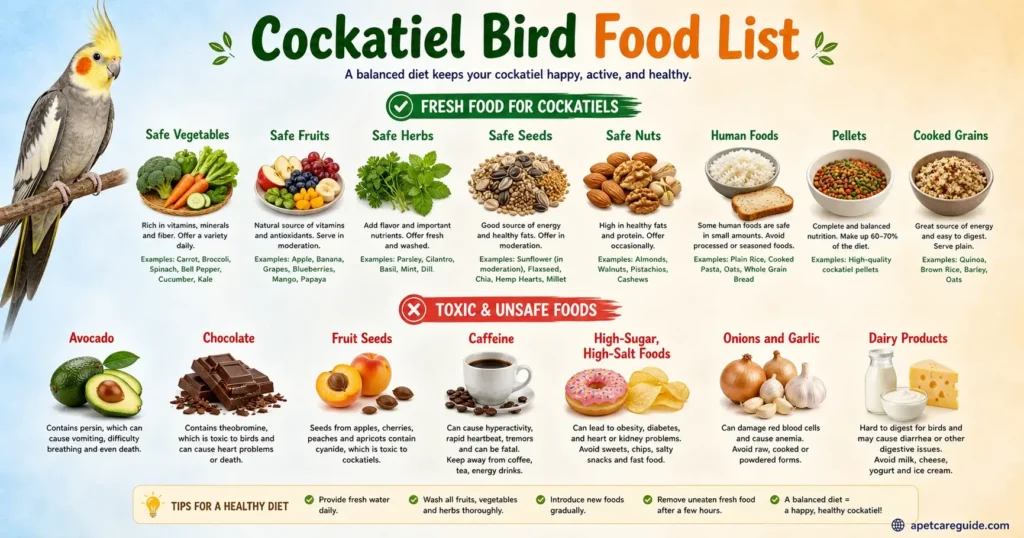
Safe: Carrots, broccoli, apples (no seeds), leafy greens, and peppers.
Unsafe: Avocado, chocolate, caffeine, onions, garlic, fruit pits, and salty snacks. Never let your bird eat these toxic foods.
Hydration & Water Hygiene
Birds need fresh, clean water every single day. Change the water bowl twice daily or whenever food falls into it. Wash the bowl with soap daily to stop slime and bacteria from growing.
Cage Setup & Environmental Health
Your bird’s cage is its bedroom and safe space. Keep it large, secure, and clean. A bad environment causes stress, feather plucking, and sickness. Set up the cage right to keep your bird happy and active.
Cage Size, Bar Spacing & Layout
Buy the biggest cage you can afford. The bird must flap its wings without hitting the sides. Check the bar spacing so your bird’s head cannot get stuck. Place perches at different heights, but never directly over bowls.
Cage Placement Psychology
Put the cage in a lively room so your bird feels part of the flock. Place it against a wall so the bird feels safe from behind. Avoid direct sunlight, drafty windows, and the kitchen.
Air Quality & Hidden Dangers
Birds have very sensitive lungs. Teflon pans, candles, air fresheners, and perfumes release fumes that kill birds instantly. Never smoke around your bird. Keep the air clean and fresh at all times.
Hygiene & Sanitation Routine
Good hygiene stops sickness before it starts. A dirty cage breeds deadly germs and mold. Stick to a strict cleaning schedule to protect your bird’s lungs and immune system.
Daily Cleaning Tasks
Change the cage liner or paper every day. Wash the food and water bowls with hot, soapy water. Wipe down any dirty perches or toys. Sweep up seeds and feathers around the cage floor.
Weekly Deep Cleaning
Once a week, take everything out. Scrub the cage bars, tray, and grate with a bird-safe cleaner or white vinegar. Wash all perches and toys. Rinse well and dry completely before putting your bird back inside.
Bacteria & Fungal Risk Prevention
Damp areas grow deadly mold. Never leave wet food or fruit in the cage for more than a few hours. Dry bowls completely after washing. Keep the cage away from dark, humid spots in your home.
Exercise, Enrichment & Mental Health
Birds are smart and active. They get bored and depressed sitting in a cage all day. They need physical play and mental puzzles to stay sane and healthy.
Why Exercise Is Critical
Flying and climbing build strong muscles and keep your bird’s heart healthy. Exercise burns off extra calories, preventing obesity and liver issues. An active bird is a happy, quiet bird.
Out-of-Cage Time Guide
Give your bird at least two to four hours outside the cage every day. Let them fly, walk, and explore in a safe, closed room. Always watch them closely so they do not chew wires or get hurt.
Mental Stimulation & Toys
Birds need to chew and solve problems. Give them wooden toys, foraging puzzles, and shredding paper. Rotate their toys every week so they do not get bored. Bored birds often scream or pull out their own feathers.
Bird grooming tips
Grooming keeps your bird looking good and feeling comfortable. Regular care prevents painful overgrown nails and dirty feathers. Learn the right way to groom your pet safely at home.
Bathing Methods
Most birds love water. Offer a shallow dish of cool water for them to splash in. You can also use a clean spray bottle to mist them gently. Let them dry naturally in a warm room. Never use soap.
Nail & Beak Care
Provide rough perches to help file down nails naturally. Give them safe wood and cuttlebone to chew, which keeps their beak sharp and healthy. If nails get too long and sharp, ask your vet to trim them.
Feather Care & Molting
Birds lose old feathers and grow new ones once or twice a year. This process is called molting. It takes a lot of energy. Give them extra protein and more baths during this time to help new feathers grow smoothly.
Common Bird Diseases & Prevention
Birds hide their sickness until it is very bad. Knowing the most common diseases helps you catch problems early. Good food and clean cages prevent most of these health issues.
Nutritional Diseases
Vitamin A deficiency and low calcium are very common. They cause weak bones, seizures, and bad breathing. Feed your bird pellets and dark leafy greens instead of an all-seed diet to stop these painful diseases.
Infectious Diseases
Psittacosis and beak-and-feather disease spread quickly. They cause breathing trouble and feather loss. Always wash your hands before holding your bird. Keep new birds in a separate room for 30 days before letting them meet your flock.
Parasites (Internal & External)
Mites and worms attack birds. Mites cause crusty beaks and itchy skin. Worms cause weight loss and bad droppings. Keep the cage very clean and visit the vet for safe parasite medicine if you notice symptoms.
Preventive Veterinary Care
Do not wait until your bird is dying to visit the doctor. Yearly vet visits catch hidden diseases early. Expert care saves you money and saves your bird’s life.
Why You Need an Avian Vet (Not a General Vet)
Birds are very different from dogs and cats. A regular vet might not know how to treat them. Avian vets study bird bodies specifically. They know exactly what medicines and tests are safe for your feathered friend.
Routine Health Check-ups
Take your healthy bird to the avian vet once a year. The vet will weigh them, check their eyes, listen to their heart, and look at their feathers. This builds a baseline record of what is normal for your pet.
Lab Tests & Diagnostics
Vets test your bird’s poop and draw a tiny bit of blood. These tests find infections, liver problems, and low vitamins long before your bird acts sick. Early tests are the best way to prevent sudden death.
Bird Behavior & Emotional Health
A bird’s mind is just as important as its body. They feel lonely, scared, and happy just like we do. Understanding their feelings stops bad behavior and builds a strong bond.
Signs of Stress & Anxiety
Stressed birds pace the cage, scream, or bite. They might even rip out their own feathers until they bleed. Loud noises, new pets, or lack of sleep cause extreme anxiety. Fix the environment to calm them down.
Social Needs of Pet Birds
In the wild, birds live in big families. They hate being alone. Talk to your bird, eat meals near them, and play with them daily. You are their flock now. Give them love and attention every single day.
Training & Bonding Techniques
Use treats and soft words to train your bird. Teach them to step onto your finger. Never yell at or hit a bird; they will lose trust in you forever. Reward good behavior to build a loving friendship.
Home Safety Guide for Birds
Your house is full of hidden traps. Ceiling fans, open toilets, and hot stoves kill birds every year. Close windows, turn off fans, and hide electrical wires before you let your bird out of the cage.
Seasonal Bird Care
Weather changes affect your bird’s health. Extreme hot or cold temperatures shock their tiny bodies. You must adjust your home environment to keep them safe as the seasons change throughout the year.
Winter Care
Keep drafts away from the cage. Cover the cage with a thick blanket at night to trap heat. If the air gets too dry from your heater, use a humidifier to protect your bird’s lungs and skin.
Summer Care
Never leave the cage in direct sunlight without a shady spot to hide. Give them extra baths to cool down. Make sure they always have fresh, cool water. Watch for panting, which means they are dangerously hot.
Bird Emergency First Aid
Accidents happen fast. Knowing what to do in the first five minutes saves lives. Stay calm, act quickly, and always have your avian vet’s phone number saved in your phone.
What to Do Before the Vet
If your bird gets hurt, wrap them gently in a warm towel to stop them from thrashing. Keep them in a quiet, dark box so they feel safe. Call the vet immediately and tell them you are on your way.
Emergency Kit Essentials
Build a small first-aid box. Include styptic powder, tweezers, sterile gauze, a clean towel, and an eyedropper. Keep a heating pad nearby to warm up a sick, shivering bird safely.
Critical Mistakes to Avoid
Never give human medicine to your bird; it is toxic. Do not squeeze a bird’s chest, or they will stop breathing. Never wait overnight to see if a sick bird gets better. Delaying care is fatal.
Beginner Mistakes That Kill Birds
New owners often make deadly mistakes by accident. Using Teflon pans, feeding avocado, leaving fans on, and ignoring subtle sickness signs are the top killers. Read up, bird-proof your house, and never guess when it comes to their safety.
Complete Bird Care Routine (Daily–Weekly–Monthly System)
- Daily: Feed fresh food, change water twice, clean the cage paper, and play for two hours.
- Weekly: Scrub the cage, wash toys, and rotate puzzles.
- Monthly: Check toy safety, trim nails if needed, and stock up on fresh pellets.
FAQs Birds Health Tips
How do I know if my bird is healthy?
A healthy bird has bright eyes, smooth feathers, and high energy. They eat well, make normal noises, and have firm droppings. If your bird acts quiet or fluffed up, call a vet.
What is the best diet for pet birds?
The best diet is 60–70% high-quality pellets, 20–30% fresh vegetables, and a small amount of fruit. Avoid all-seed diets because they lack vitamins and cause obesity.
How often should I clean a bird cage?
Change the paper and wash food bowls every day. Do a deep clean once a week by scrubbing the entire cage, bars, and perches with bird-safe soap or white vinegar.
Do birds need vet checkups?
Yes. Birds hide illnesses very well. An annual checkup with a specialized avian vet spots hidden infections and nutritional issues early, keeping your bird happy and alive much longer.
Conclusion: Pet birds health guide
Caring for a bird takes time, but it is worth it. By feeding them right, keeping the cage clean, and visiting the vet, you prevent disease before it starts. Follow this guide to give your feathered best friend a long, healthy, and joyful life.