

Switch most cats to adult food when they reach 12 months old. Large breeds, like Maine Coons, grow more slowly. They need kitten food for 18 to 24 months. Always ask your vet to verify the perfect time based on your cat’s weight.
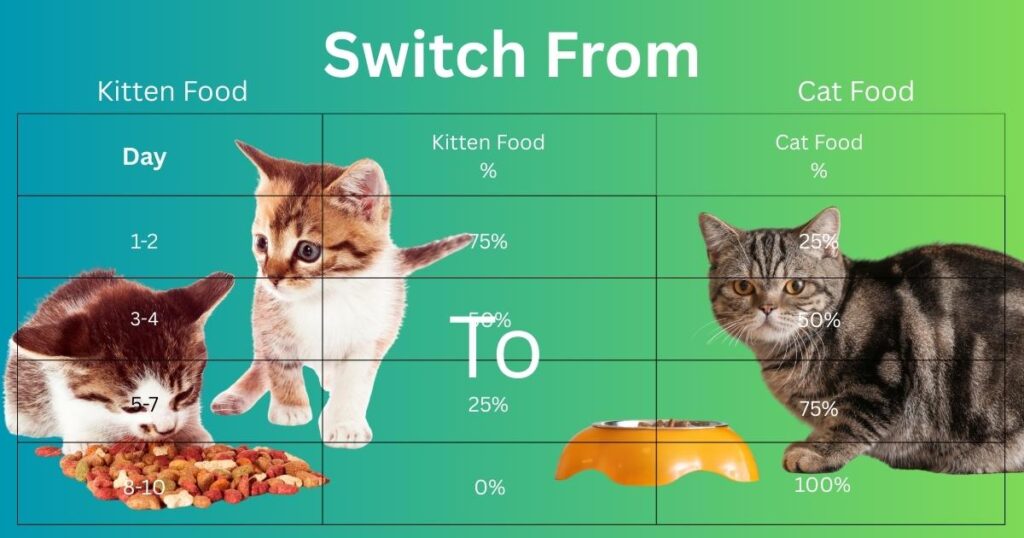
Mix the new adult food into the old kitten food. Slowly increase the adult food amount over 7 to 10 days. This slow change prevents painful stomach aches.
Quick Summary:
Average Cats: Switch at 12 months.
Large Breeds: Switch at 18 to 24 months.
The Method: Blend both foods gradually over 7 to 10 days.
Understanding Kitten Food Vs Cat Food
Watching a tiny kitten grow is one of the most amazing things. To do that, they need special fuel! One of the biggest questions new cat owners have is when to switch from kitten food to cat food. First, you have to understand why they are different.
Kitten Food
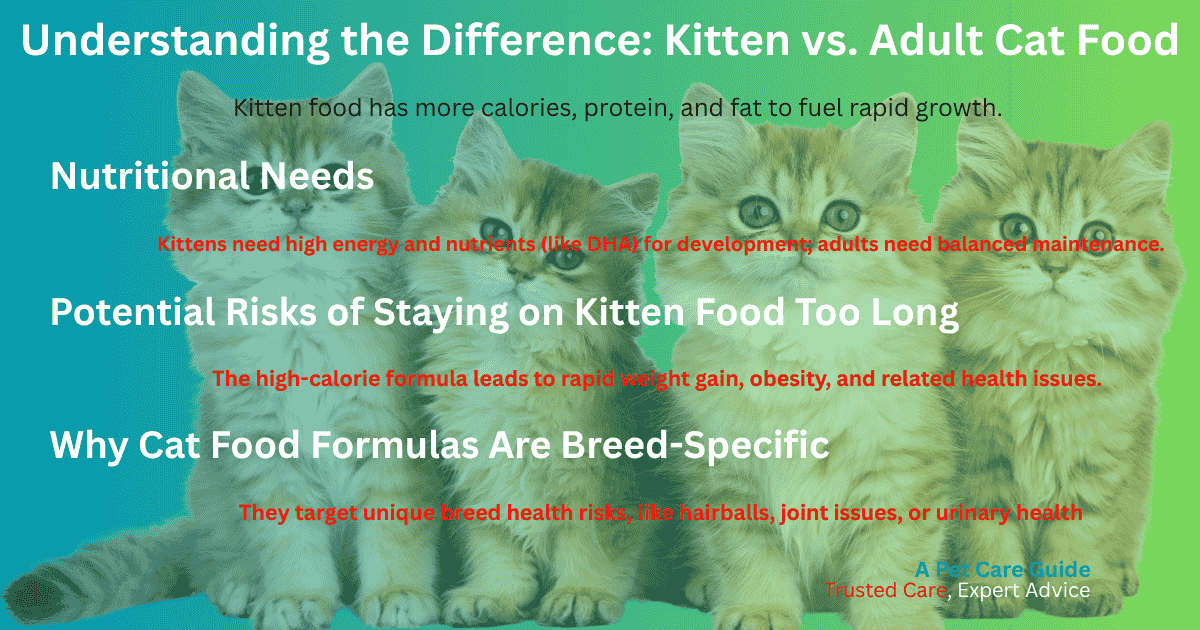
Think of kitten food as super-charged. It is packed with high amounts of calories, protein, and fat. This powerful combination gives your little furball all the energy they need to grow strong bones, build muscle, and pounce on everything they see. They grow so fast in their first year, and this food supports every single bit of that growth.
Adult Cat Food
Adult cat food, on the other hand, is all about balance. Once a cat is fully grown, they don’t need all those extra calories. Adult food is designed for maintenance. This means it helps them stay at a healthy weight, keeps their coat shiny, and supports their day-to-day energy, which is usually a lot calmer than a kitten’s!
The nutrition needs of kittens vs adult cats
The easiest way to see the change is to look at them side-by-side. A kitten’s main job is growing, while an adult cat’s main job is living a long, healthy life.
| Nutrient | Kitten Food | Adult Cat Food |
| Main Goal | Fast Growth & Development | Weight & Health Maintenance |
| Calories | Very High | Balanced / Lower |
| Protein | Very High | High, but balanced |
| Fat | High | Moderate / Lower |
| Vitamins | Extra amounts for growth | Standard amounts for maintenance |
Key Signs Your Kitten Is Ready to Switch to Cat Food
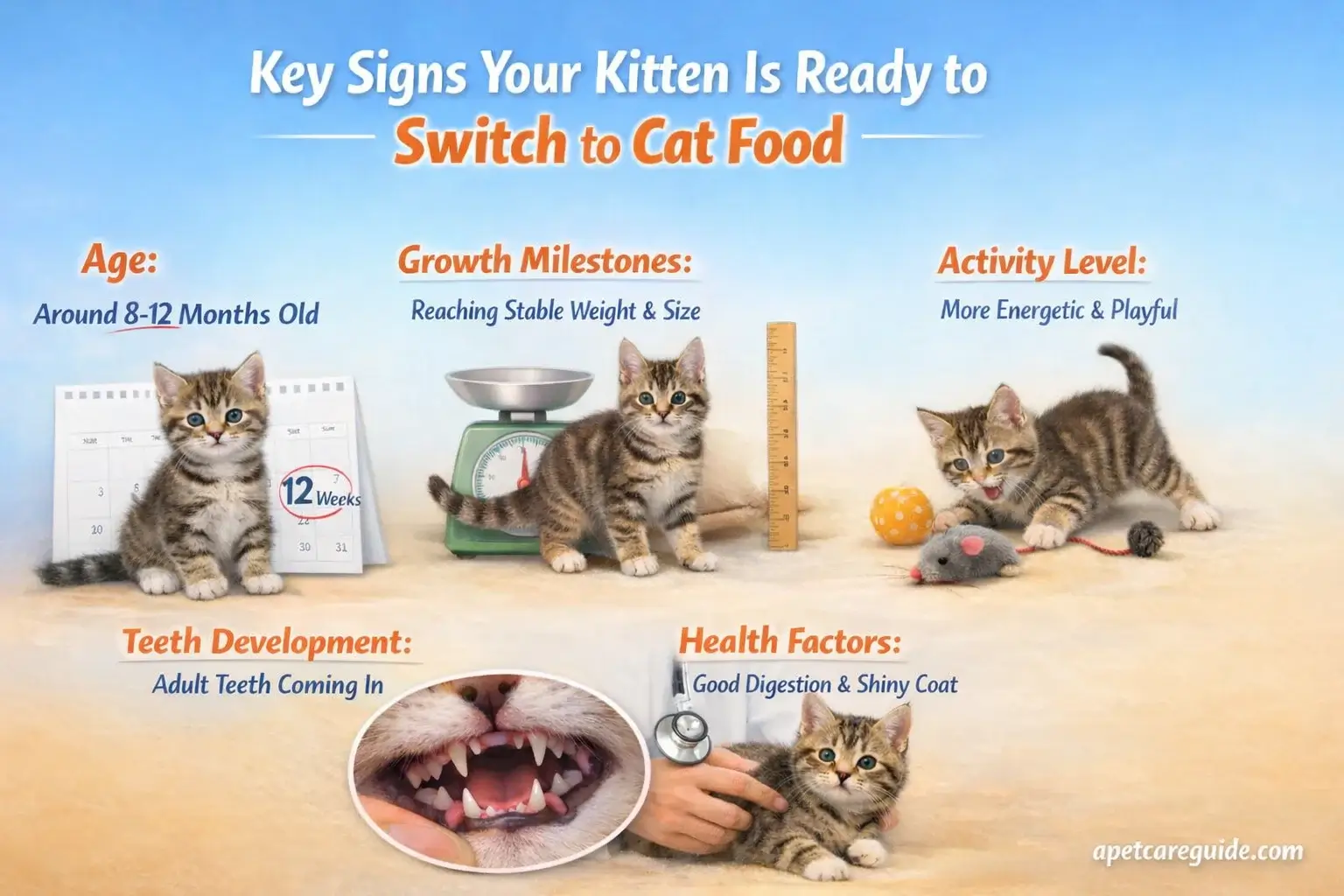
So, how do you spot the right moment? The big question of when to switch from kitten food to cat food is often answered by watching your cat. They will give you clues!
- Age: This is the biggest sign. For most cats, their first birthday (around 12 months) is the magic number. They are officially considered adults!
- Growth Milestones: You might notice your “kitten” isn’t really a kitten anymore. They have reached their full adult size and weight. They look less like a lanky teenager and more like a proper cat.
- Activity Level: Remember when they used to climb the curtains and run around like crazy? You might see them start to calm down. When the kitten starts becoming less energetic and more relaxed, it’s a sign that their body doesn’t need as much fuel.
- Teeth Development: This happens earlier, but once all their adult teeth are in, they are well on their way to being grown-ups. This change can sometimes affect how they like to eat.
- Health Factors: A huge factor is spaying or neutering. After this procedure, a cat’s metabolism slows down. Keeping them on high-calorie kitten food for too long after this can make them gain too much weight.
When to Switch
Figuring out exactly when to switch from kitten food to cat food is a crucial part of A Pet Care Guide for any cat parent.
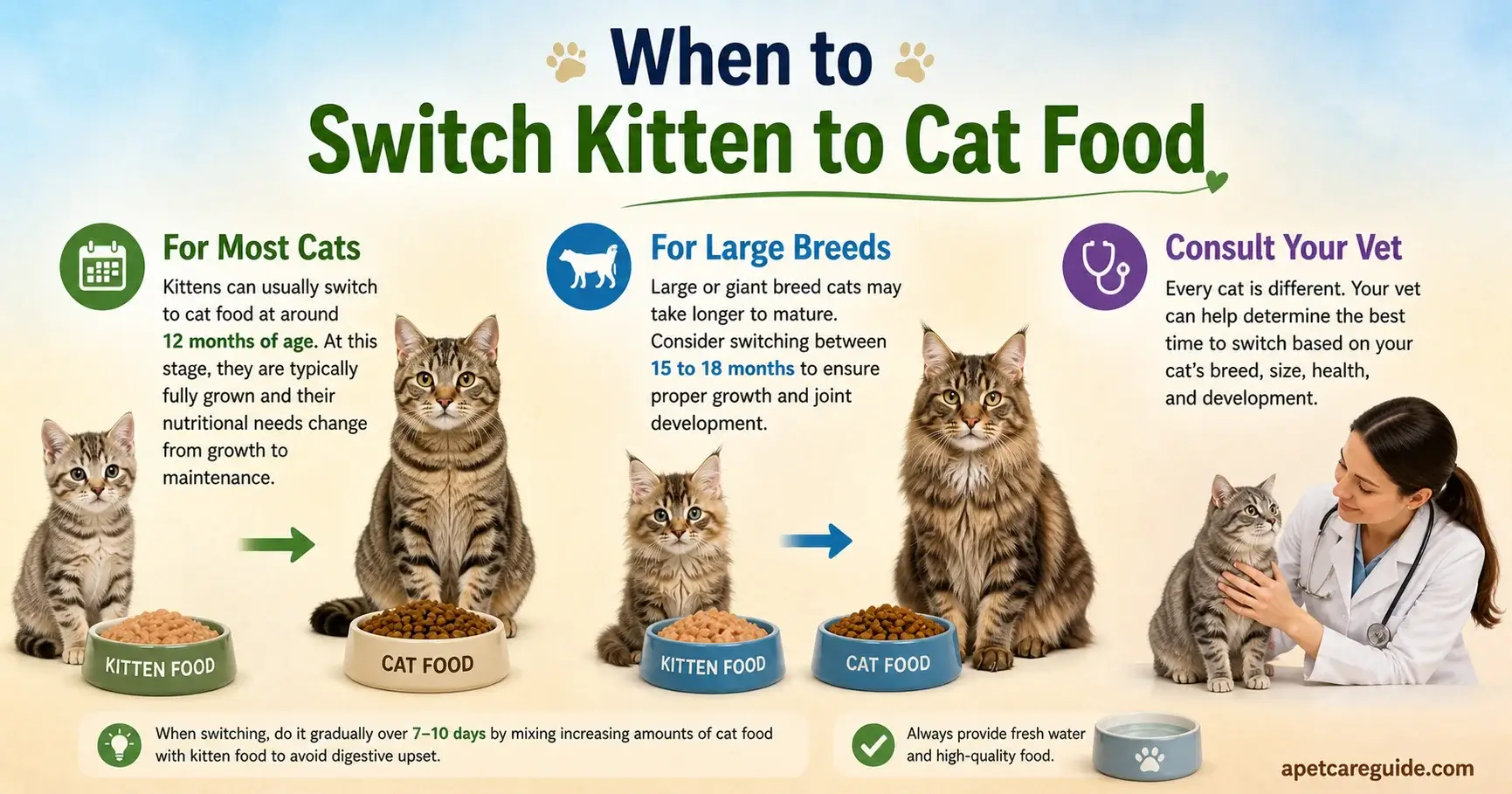
For most cats
The magic number is 12 months. Around their first birthday, they have typically completed the most intense phase of their growth and are ready for an adult maintenance diet. This is the general milestone for making the change.
For Large Breeds
As we mentioned, larger cats are on a different clock. For breeds like Maine Coons or Ragdolls, you must wait longer. These wonderful giants are a special case. They grow very slowly and might not be fully mature until they are 18 months or even two years old! They need to stay on that high-calorie kitten food for longer to support their growing bodies. Switching them too soon is a common mistake that can affect their final size and development, so patience is key.
Consult your vet
This is why you absolutely must talk to your veterinarian. They know your cat’s personal health, their breed, and their lifestyle. They can give you the best, most personal advice on the perfect time to make the change.
Risks of Switching Too Early
I know it can be tempting, especially if you run out of kitten food and only have the adult food bag. But please, don’t switch too early. It can be a real problem for their little bodies. A growing kitten given adult food is like a human baby trying to live on an adult’s diet. They will miss out on all those extra, important nutrients. This can lead to nutrient deficiencies and imbalances.
Stunted Growth: Kittens need extra protein to build strong muscles.
Weak Bones: Adult food lacks the high calcium that growing bodies demand.
Low Energy: Kittens burn calories fast. Adult meals leave them tired and hungry.
Upset Tummies: Small stomachs struggle to digest adult kibble, causing painful diarrhea.
Always feed your pet kitten food for a full 12 months!
How to Transition from Kitten Food to Cat Food
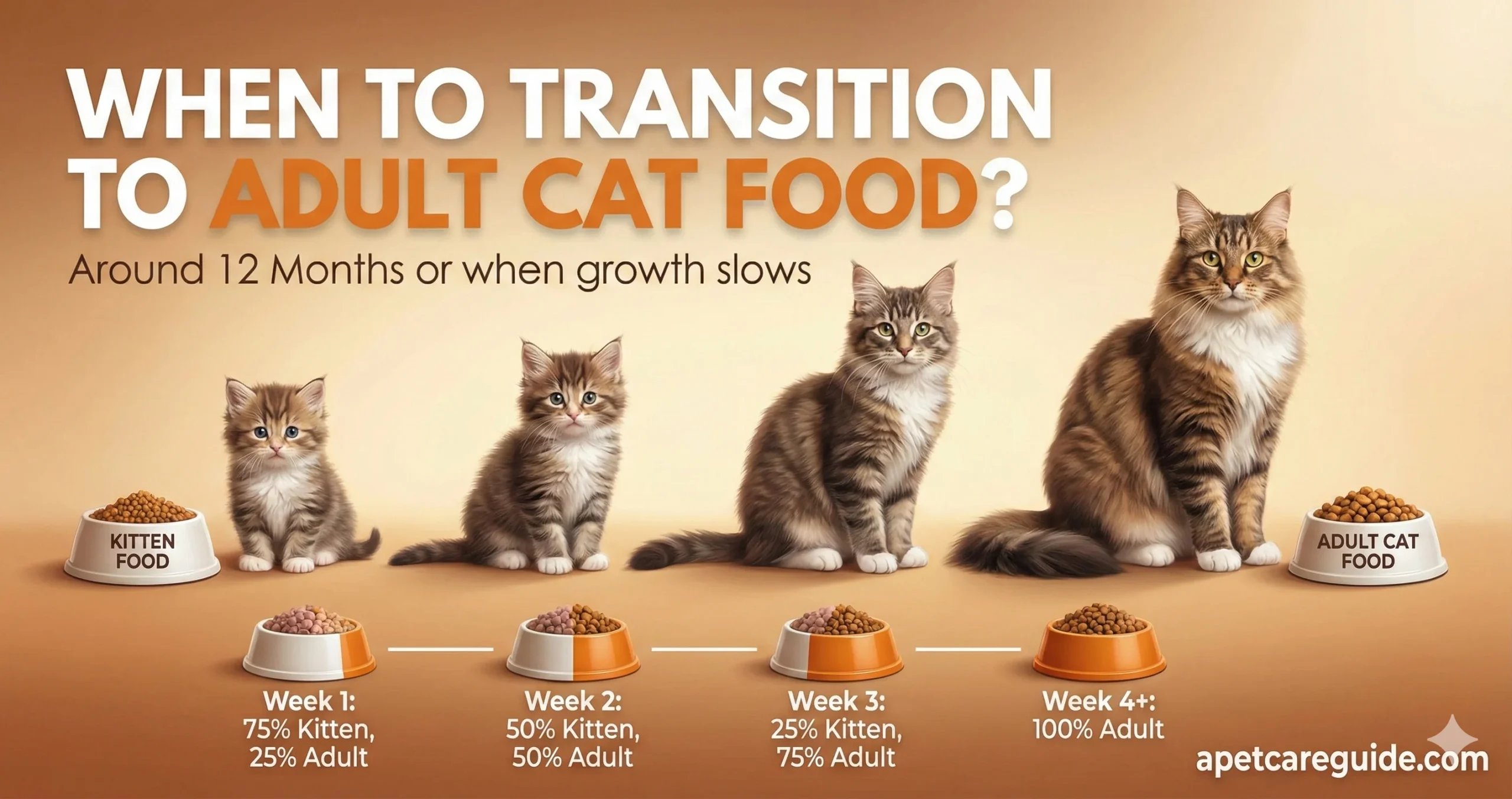
When the time is right, you can’t just swap the food bowl one day. That is a recipe for a very unhappy cat with an upset stomach! The secret to this process of when to switch from kitten food to cat food is to do it slowly.
Gradual Transition
You need to slowly mix the new adult food with their old kitten food. This gives their stomach time to adjust. A good plan is to do it over seven days:
- Day 1-2: 75% kitten food mixed with 25% adult food.
- Day 3-4: 50% kitten food mixed with 50% adult food.
- Day 5-6: 25% kitten food mixed with 75% adult food.
- Day 7: 100% new adult food!
Monitor Reactions
All through this time, keep a close eye on your cat. Are they eating it? Most importantly, watch their litter box. Any signs of gastrointestinal distress (like loose stools) mean you should slow down. Go back to the last step (like 50/50) for another day or two before moving forward.
Tips for Success
During this process, keep a loving eye on your cat. Watch their stool consistency and appetite to make sure everything is normal. Always have a bowl of fresh, clean water available, as this aids digestion. If your cat has a known sensitive stomach, don’t be afraid to extend this timeline. You can spend three or four days at each stage instead of two. The goal is a happy cat, not a race to the finish line.
Consult a Vet
Again, your vet is your best friend. Ask them for a personalized feeding plan before you even start. They can help you make this a smooth and happy change for your cat.
The Role of Vet Checkups in the Transition
Your vet is the expert who can see the whole picture. Those regular checkups are so important. This is when your vet will weigh your cat, check their body condition, and tell you, Yep, looks like Fluffy is at her ideal adult weight. It’s time to think about when to switch from kitten food to cat food.
They will help you adjust the food based on everything: your cat’s specific breed, how active they are (a lazy cat needs fewer calories!), and any other health considerations. They take the guesswork out of it.
Special Considerations
Cats with Health Conditions
If your precious cat already has a health condition like obesity, digestive sensitivities, or a chronic illness, the question of when to switch from kitten food to cat food becomes even more important. In these cases, your veterinarian is your most important partner. They may recommend a specific therapeutic diet and will provide a custom transition plan designed to support your cat’s unique health needs.
Indoor vs. Outdoor Cats
A cat’s lifestyle plays a big role in their diet. An outdoor cat who patrols their territory and climbs trees naturally burns more calories than an indoor cat that spends most of the day napping in a sunbeam. For your indoor friend, you’ll want an adult food that is carefully formulated with fewer calories to prevent them from becoming overweight.
Neutered Cats
The decision of when to switch from kitten food to cat food often happens around the same time a cat is neutered or spayed. After this procedure, a cat’s metabolism can slow down, making them more prone to weight gain. It’s vital to choose an adult food with controlled calorie levels or one specifically designed for neutered cats to help them maintain a sleek, healthy physique.
Choosing the Right Adult Cat Food
Welcome to the adult cat food aisle! It can be a lot to take in. Here’s a simple breakdown.
Key Nutrients to Look For
When you’re standing in the pet food aisle, the choices can feel overwhelming. Focus on the basics. Look for a high-quality protein source like chicken or fish listed as the first ingredient. Healthy fats are important for energy and a shiny coat. Essential vitamins and minerals support the whole body, and always check for taurine, an amino acid that is absolutely vital for a cat’s heart and eye health.
Dry vs. Wet Food Options
The debate between dry and wet food is a classic one. Dry food, or kibble, is convenient, budget-friendly, and can help scrape tartar from your cat’s teeth. On the other hand, wet food has a high moisture content, which is excellent for keeping your cat hydrated and supporting urinary tract health. Many owners find that feeding a mix of both offers the benefits of each.
- Dry Food (Kibble): This is great for free-feeding (leaving a bowl out). The crunchy texture can also be good for helping to clean their teeth.
- Wet Food (Canned): This is fantastic for hydration. Cats are not great at drinking water, so wet food gives them much-needed moisture. This is very good for their urinary health.
High-Quality Ingredients
No matter what you choose, learn to read the label. Look for a high-quality food where a real, named meat (like “chicken” or “salmon”) is the first ingredient. You want a good balance of protein, fats, and fiber. Try to avoid foods that are full of “fillers” like corn, wheat, or soy as the main ingredients.
Specialized Diets
Sometimes, your cat needs something special. Maybe they have a sensitive stomach, or they’ve put on a little weight. Or perhaps they have urinary issues. Don’t worry! There are many wonderful, specialized diets out there to help. This is another great time to ask your vet for a recommendation.
Monitoring Your Cat’s Health During the Transition
Weight Monitoring
Once your cat is on their new adult food, you are their health guardian. Get into the habit of weighing them regularly. Your vet can show you how to check their body condition score. You should be able to feel their ribs easily, but not see them. This simple check helps you ensure they are maintaining their ideal weight.
Digestive Health
A healthy cat has a happy tummy. Keep an eye on the litter box. Their stool should be firm and well-formed. Occasional issues can occur, but if you notice persistent diarrhea, vomiting, or constipation, it’s a sign that something is not right, and you should consult your veterinarian. Making a note of when to switch from kitten food to cat food and how it went can be a useful piece of information.
Behavioral Changes
Your cat’s behavior tells you so much about their health. A cat who is thriving on their new food will have a consistent appetite and great energy levels. Another wonderful sign is their coat—it should be shiny, soft, and healthy. If they seem sluggish or their coat looks dull, it could be related to their diet.
Common Mistakes
Based on my experience, helping owners determine when to switch from kitten food to cat food also means helping them avoid common pitfalls. Here are a few to watch out for:
- Switching too quickly. This is the number one cause of digestive upset. Please be patient and follow the gradual plan.
- Ignoring large breed maturity differences. Don’t rush your gentle giant. Give them the time they need to grow.
- Using an unsuitable adult food formula. Make sure the food matches your cat’s age, health, and lifestyle.
Skipping veterinarian advice. Your vet is your best resource for personalized, professional guidance. Don’t hesitate to ask them when to switch from kitten food to cat food for your specific pet.
Final Thoughts: When to switch from kitten food to cat food
Successfully transitioning your cat from kitten to adult food is a true act of love and a cornerstone of their lifelong health. By remembering the key points, timing the switch to their maturity, making the change slow and gradual, and carefully monitoring their well-being, you are setting them up for a vibrant and happy adulthood. Every cat is a unique individual, so pay close attention to their specific needs. For the absolute best and most personalized plan, always consult your veterinarian. They will help you make the perfect choices to ensure your cherished companion thrives for many years to come.
FAQ about when to switch from kitten food to cat food
At what age should I switch my kitten to adult cat food?
For most standard breeds, the best age to begin the switch is around 12 months old. This is generally when they have finished their primary growth phase.
How long should the transition from kitten to adult food take?
A safe and comfortable transition should take about 7 to 10 days. This allows your cat’s digestive system to properly adjust to the new food.
Can switching too quickly make my cat sick?
Yes, absolutely. Switching food too suddenly can shock your cat’s digestive system, often causing vomiting, diarrhea, and discomfort. A gradual transition is essential.
Are there special considerations for large breeds like Maine Coons?
Yes, large breeds mature much more slowly than standard breeds. You should wait until they are 18 to 24 months old before you determine when to switch from kitten food to cat food.
Does spaying/neutering affect when I should switch my cat’s food?
It doesn’t change the timing, but it does affect the type of food you choose. Since spaying or neutering can slow metabolism, it’s wise to select an adult food formulated for weight management or for neutered cats to prevent weight gain.
What if I have multiple cats of different ages? How do I manage feeding time?
This can be tricky! The best approach is to feed them in separate rooms or at scheduled times where you can supervise them to make sure each cat eats only their own food. Microchip-activated feeders are also a great high-tech solution.
Is it okay to give my adult cat kitten food as an occasional treat?
A tiny amount once in a while is unlikely to cause harm, but it’s not a good habit. Kitten food is very high in calories and can contribute to weight gain in adult cats if given regularly.
Can I switch between different brands of adult food using this same method?
Yes! The 7-10 day gradual transition method is the best practice for any food change, whether it’s from kitten to adult or from one adult brand to another. It always helps prevent digestive upset.