
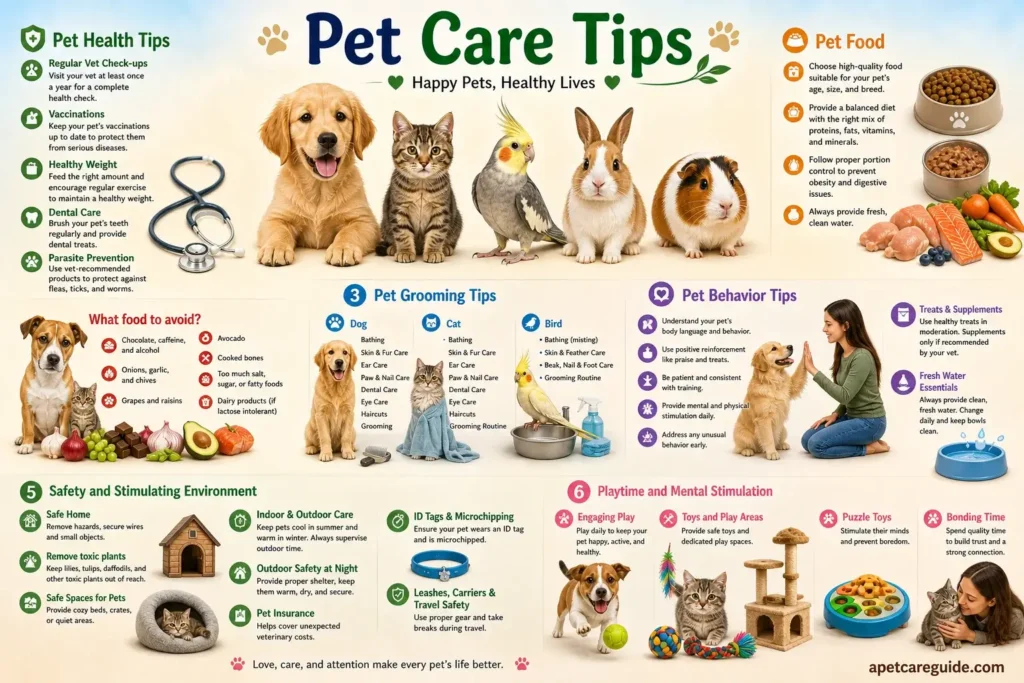


Keeping your pet happy is easy when you know the basics. Every animal needs fresh water and healthy food to grow strong. Think of this as your simple pet care guide for a better bond.
First, give your pet plenty of exercise. Dogs love walks, while cats enjoy chasing laser pointers. Exercise keeps their hearts healthy. Next, keep them clean with regular baths and brushing. Don’t forget to visit the vet for checkups to catch health issues early. Finally, show them lots of love every day. Using these pet care tips ensures your furry friend lives a long, joyful life. Consistent care creates a safe and happy home for everyone.
Pet Health Tips
Keeping your animal companion healthy requires a mix of good habits. From what they eat to how they exercise, small choices make a huge difference. In my experience, focusing on body and mind keeps them happy. Let us look at the key parts of animal wellness.
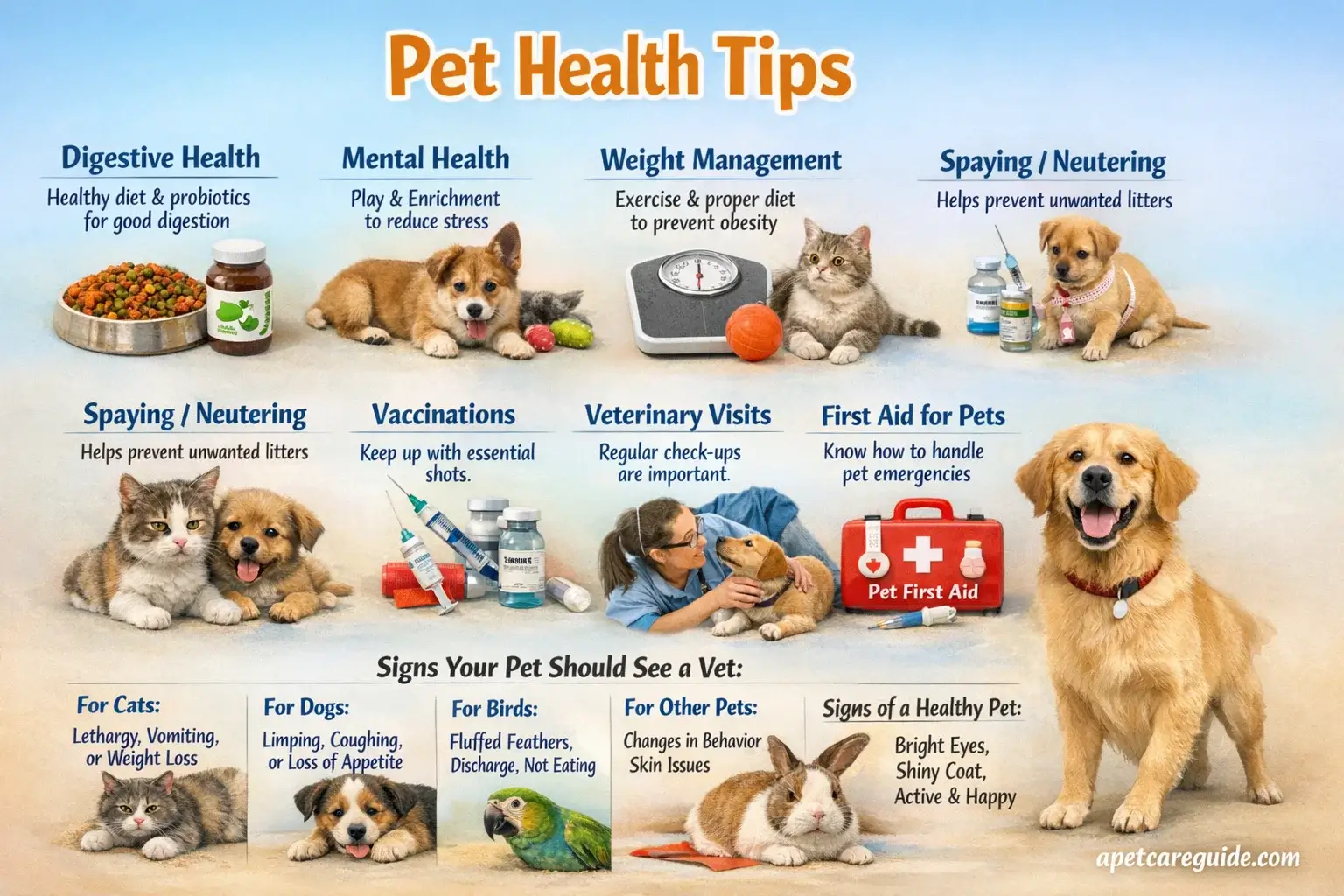
Digestive Health
A happy tummy keeps your buddy active. Feed them high-quality meals with steady fiber to prevent upset stomachs. I noticed that sudden food changes often cause diarrhea or vomiting. Keep garbage away from them. If they have gas or loose stools for more than a day, talk to a professional. Good digestion gives your animal solid energy every single day.
Mental Health
Animals get bored and sad just like humans. Leave fun puzzle toys out when you leave the house. One mistake many pet owners make is leaving their dogs alone for too long without stimulation. Some pets may chew furniture out of stress. Keep their brains working.
Weight Management
Extra fat puts heavy stress on animal joints and internal organs. Walk your dog regularly and measure every meal with a real cup instead of guessing. I personally prefer keeping treats to a small percentage of their diet. If your animal friend loses their waistline, cut back on portions immediately. A slim frame lengthens their lifespan.
Spaying/Neutering
This is a choice I strongly support. Spaying or neutering prevents unwanted litters and can reduce the risk of certain reproductive diseases. The health effects of timing vary by species, sex, breed, and individual health, so discuss the best timing with your veterinarian. This simple surgery reduces roaming and aggressive behavior. Most veterinarians suggest doing this when they are young. It makes community animal management much easier.
Vaccinations
Shots protect your animal from deadly bugs and viruses like rabies and parvo. Follow standard veterinary medicine guidelines to build strong immunity against dangerous diseases. Regular shots keep the whole neighborhood safe, too. Talk to a local clinic to see what your furry friend needs based on their lifestyle. Never skip these protective measures.
Pet Vaccination Schedule
Vaccination schedules are not the same for every pet. They depend on the animal’s species, age, vaccine type, lifestyle, health, exposure risk, and local regulations. Puppies and kittens usually need a series of vaccinations because maternal antibodies can interfere with early vaccination. Your veterinarian can recommend the right schedule for your pet rather than following a one-size-fits-all timetable. For broader guidance on vaccination principles, see the WSAVA Vaccination Guidelines.
Dog Vaccination Schedule
Puppies generally receive a series of core combination vaccines starting at about 6–8 weeks of age. Under the AAHA canine vaccination guidelines, puppies 16 weeks of age or younger should receive at least three doses of a combination vaccine between 6 and 16 weeks, usually 2–4 weeks apart. Rabies vaccination follows local laws and the requirements of the specific vaccine used. Other vaccines may be recommended based on a dog’s lifestyle, geographic location, and risk of exposure.
A simple puppy vaccination overview:
- 6–16 weeks: At least 3 doses of the core combination vaccine, generally 2–4 weeks apart.
- Rabies: Follow local laws and your veterinarian’s advice.
- After the puppy series: Follow-up vaccination timing depends on the vaccine and veterinary recommendations.
- Non-core vaccines: May be recommended when a dog’s lifestyle, location, or exposure risk makes them appropriate.
Cat Vaccination Schedule
Kittens also need a vaccination series, but the schedule depends on the vaccine and the kitten’s age and risk level. For the common core combination vaccine against feline panleukopenia, feline herpesvirus, and feline calicivirus, the AAHA/AAFP guidelines recommend starting no earlier than 6 weeks of age and repeating doses every 3–4 weeks until 16–20 weeks of age. Rabies vaccination follows local requirements, while feline leukemia virus (FeLV) vaccination is particularly important for kittens and young cats and may also be recommended for cats with ongoing exposure risk.
A simple kitten vaccination overview:
- Around 6 weeks or later: Core vaccination series can begin, depending on the vaccine.
- Every 3–4 weeks: Repeat the core kitten series until approximately 16–20 weeks of age.
- Rabies: Follow local law and veterinary recommendations.
- FeLV: Important for kittens and young cats; ongoing vaccination needs depend on exposure risk.
- Adult cats: Booster timing depends on the vaccine, lifestyle, and risk rather than one universal yearly schedule.
What About Birds, Rabbits, and Other Small Pets?
Vaccination is not a one-size-fits-all part of preventive care for every pet species. Birds, rabbits, guinea pigs, hamsters, reptiles, and other small pets can have very different preventive-care needs. Because vaccination recommendations vary greatly by species, disease risk, location, and available vaccines, it is better to ask an exotic-animal veterinarian about the preventive-care plan for your specific pet.
Learn more:Bird Care Guide
Veterinary visits
I recommend that young and adult animals need checkups at least once a year. Old animals should see the doctor twice a year. These checkups catch hidden illnesses before they become severe. I always bring a list of behavior shifts to these checkups. Regular examinations give you peace of mind and protect your wallet from big emergency bills later.
First aid for pets
Accidents can happen. I truly believe every pet owner should have a basic first-aid kit. It should include things like gauze, antiseptic wipes, and your vet’s emergency number. Knowing what to do in those first few minutes can make a huge difference.
Signs your Pet should see a vet
You know your pet better than anyone. Look for sudden shifts in how your animal acts. Heavy breathing, hiding, and extreme sleepiness point to trouble. Refusing water or meals for twenty-four hours is a major warning. Do not wait if you see physical pain.
For Cat
Cats are masters at hiding illness. You must watch for hiding more than usual, not eating for more than a day, or repeated vomiting. Watch for litter box misses, sudden crying, or heavy drooling. If they stop grooming their fur, they might feel sick. Rapid weight shifts or drinking too much water also mean you must call a professional.
For Dog
Dogs often show signs more clearly. Dogs show illness through pacing, whining, sudden aggression, vomiting, or diarrhea. A dry, cracked nose or red eyes show trouble. Heavy panting without exercise means they might have pain. Watch for limping or dragging their hind legs during walks.
For Birds
A sick bird looks different. A sick bird sits fluffed up on the cage floor. They stop singing and keep their eyes closed frequently. Look for runny noses or changes in their droppings. Breathing with an open beak means they need urgent care.
For Others Pet
Small animals like rabbits or hamsters go downhill quickly. Watch for teeth grinding, watery eyes, or a cold body temperature. If a reptile stops basking under its lamp or sheds poorly, something is wrong. Check their skin for lumps or bugs regularly. Treat any drop in activity as an emergency.
Signs of a Healthy Pet
A healthy animal has bright eyes, clean skin, and a shiny coat. They greet you with energy and move around easily. Their breath smells normal, and their gums look pink. Regular bathroom habits and a steady appetite show their body functions perfectly. Enjoying playtime is another great sign.
Pet Food
This is the topic that confuses people the most. The pet food aisle is huge! But good nutrition builds the foundation for long animal lives. Feeding the right diet keeps their bones strong and fur glowing. Let us review the best meal choices for different species and age groups.
For Cat
Felines are strict meat-eaters who need animal protein to survive. They cannot be vegetarians. They need specific nutrients like taurine for heart health. Balancing moisture and dry crunch keeps their bodies working well. Always select food labeled for their specific age.
Dry Food
Kibble is convenient and stays fresh in the bowl all day. Ordinary dry food should not be treated as a substitute for dental care. Regular tooth brushing with cat-safe toothpaste is one of the best ways to control plaque when your cat can tolerate it. Always pair dry meals with plenty of fresh water from fountains. Look for brands that list real meat as the top ingredient.
Wet Food
I am a big fan of wet food for cats. Cats naturally don’t drink much water. Canned food gives felines the hydration they naturally lack. Wet food contains much more water than dry food, so it can help increase a cat’s overall water intake. This can be especially useful for cats that do not drink much on their own. However, diet choices for cats with urinary or kidney disease should be discussed with a veterinarian. Many older felines prefer the soft texture. I mix a spoonful into dry food for a tasty meal.
Milk
This is a huge myth! Most adult cats cannot digest the lactose (sugar) in milk. Just stick to fresh water. Many adult cats have limited ability to digest lactose, so cow’s milk can cause digestive upset such as diarrhea or stomach discomfort. Fresh water is the better everyday drink. Avoid the regular dairy aisle completely. Buy special cat milk from the pet store if you want to give them a rare treat.
Kitten Food
Kittens are growing incredibly fast. They need special food that is packed with more calories, protein, and nutrients (like DHA for brain health) than adult cat food.
Senior Pet Food
As cats get older, their needs change. Senior cats may need changes in calorie intake or nutrient balance depending on their weight, activity level, and health. There is no single senior diet that is right for every older cat.
For Dog
Dry Food
This is the main food for most dogs. It’s balanced, easy to store, and comes in formulas for every size and age, from a tiny Yorkie to a huge Mastiff.
Wet Food
Wet food is a great choice. You can use it as a special topper to get a picky dog to eat. Soft food may be easier for a dog with painful teeth to eat, but changing food does not treat dental disease. Dogs with dental pain should be examined by a veterinarian.
puppy Food
Puppies are bundles of pure energy. They need “puppy food,” which is specially made with the extra protein and calories they need to build strong muscles and bones.
Senior Pet Food
Older dogs slow down. Senior dog food is made to help them stay at a healthy weight. It also often has ingredients to support their mobility and keep their minds sharp.
For Birds
Dry Food
This is the main part of a bird’s diet. For most parrots, this means a high-quality pellet diet. A diet of only seeds is unhealthy; seeds are more like a treat.
Wet Food
Fresh Foods for Birds. Dark leafy greens, chopped peppers, berries, and apples (no seeds) are wonderful additions to their pellets.
Baby Food
Baby birds (chicks) have very special needs. Baby birds have specialized nutritional needs. Hand-feeding should be done only with appropriate species-specific guidance, ideally under the supervision of an experienced avian veterinarian or qualified breeder. Incorrect syringe feeding can cause serious injury. This is a very delicate job, usually for experienced owners or breeders.
Senior Pet Food
Senior birds do not automatically need softer foods as they age. If an older bird has difficulty eating, changes in its beak, or other feeding problems, have an avian veterinarian check the bird and recommend any needed changes to its diet or food texture.
For Other Pets
(This covers pets like rabbits, guinea pigs, hamsters, and reptiles.)
Dry Food
This is the base. For rabbits and guinea pigs, it’s mostly hay (like Timothy hay) and a measured amount of pellets. For hamsters, it’s a good-quality seed and pellet mix.
Wet Food
This means fresh, safe vegetables. Rabbits and guinea pigs love leafy greens (like romaine lettuce or parsley). Reptiles, of course, have very specific diets, from crickets to special salads.
Baby Food
Baby mammals (like bunnies or hamsters) that are separated from their mother need a special, species-specific milk replacer.
Senior Pet Food
Yes, older small pets slow down. They may need softer foods, or their diet might need to be adjusted by a vet to prevent weight gain or help with arthritis.
What food to avoid?
This is a life-saving list. Please be so careful.
For Cat
Keep them away from onions, garlic, chocolate, grapes, and raisins. Lilies (the plants) are also extremely poisonous to cats.
Dog
The list is similar: chocolate, grapes, raisins, onions, and garlic. Also, be very careful with xylitol, a sweetener found in sugar-free gum and some peanut butters. It is incredibly toxic to dogs.
Bird
Avocado, chocolate, alcohol, caffeine, and apple seeds are all very dangerous for birds. Even the fumes from non-stick cookware can be fatal.
Pet Grooming Tips
Grooming is not just about looking good. It’s about health and bonding. This set of pet care tips is your chance to check your pet’s body for anything new, like ticks, fleas, or strange lumps.
Cat
Bathing a Pet
Good news: most cats do not need baths. They are amazing self-cleaners. You only need to bathe a cat if they get into something sticky or toxic.
Skin and Fur Care
Brushing is the main job. Long-haired cats (like Persians) need daily brushing to prevent painful mats. Short-haired cats enjoy a good brushing once or twice a week.
Ear Care
Check their ears weekly. Dark debris, redness, swelling, odor, or frequent scratching can indicate an ear problem. Do not assume the cause is ear mites; have a veterinarian examine the ear if these signs appear. Just wipe the outer part with a soft cloth. Never stick anything into the ear canal.
Paw and Nail Care
Indoor cats need their nails trimmed every few weeks. This stops the nails from getting too long and curling into their paw pads. It also saves your furniture!
Dental Care
This is tough, but so important. Brushing your cat’s teeth is the best. If they will not let you, dental treats and water additives can help reduce tartar.
Eye Care
Some breeds, like Persians, get “tear stains.” You can gently wipe these away with a damp, soft cloth. Check that their eyes are clear and bright.
Haircuts
Most cats do not need haircuts. The only exception is for long-haired cats who get terrible mats, where a “lion cut” shave might be the kindest option.
Grooming Routine
A simple routine: Brush a few times a week. Check ears and trim nails every few weeks.
Dog
Bathing a Pet
This depends on the breed and lifestyle. A dog that runs in the mud needs more baths! But do not overdo it. Bathing too often can dry out their skin. Always use a shampoo made for dogs.
Skin and Fur Care
Brushing is key. It removes loose hair and prevents matting. How often depends on the coat. A golden retriever needs more brushing than a beagle.
Ear Care
This is vital, especially for dogs with floppy ears (like Basset Hounds). Those ears trap moisture and can get infected. Check and clean them regularly.
Paw and Nail Care
If you hear “click-clack” on the floor, their nails are too long. Regular trims prevent pain and joint problems. Do not forget the dewclaw (the thumbnail)!
Dental Care
I’ve seen so many dogs with painful dental disease. Brushing their teeth is the gold standard. Yearly vet cleanings are also a good idea.
Eye Care
Gently wipe away any gunk from the corners of their eyes. If you see yellow-green discharge or a lot of redness, it’s time for a vet visit.
Haircuts
Some breeds (like Poodles or Shih Tzus) have hair that grows continuously. They need professional grooming and haircuts every 6-8 weeks. Other breeds (like Labradors) just shed and never need a trim.
Grooming Routine
Brush weekly (or daily for some). Check ears weekly. Trim nails monthly. Bathe as needed.
Bird
Bathing a Pet
Birds love baths! It’s vital for their feather health. You can offer a shallow dish of water for them to splash in. Many also love being misted with a spray bottle.
Skin and Fur Care
This is feather care. A healthy bird will “preen” its feathers to keep them clean. Your job is to provide those bathing opportunities.
Paw and Nail Care
Birds sometimes need their beaks and nails trimmed. If they get too long, it can be hard for them to walk or eat. This is often a job for a vet, as it’s easy to make a mistake.
Grooming Routine
Offer a bath daily or several times a week. Check the beak and nails monthly for overgrowth.
Pet Behavior Tips
This is one of my favorite topics. Your pet is “talking” to you all the time. Learning their language is one of the most rewarding pet care tips.
Dog
- Physical: A “play bow” (front end down, back end up) is a clear “Let’s play!” A stiff, slowly wagging tail is not friendly; it’s a sign of warning.
- Self-Care: Licking their paws. A little is normal. A lot can be a sign of allergies or anxiety.
- Vocal: A short “bark” is a greeting. A continuous, low growl is a serious back-off.
- Body Language: “Whale eye” (when you see the whites of their eyes) means they are stressed and uncomfortable.
Cat
- Physical: The “slow blink” is a cat’s version of a kiss. It means they trust you. A lashing, twitching tail means “I am very annoyed.”
- Self-Care: Over-grooming, especially to the point of creating bald spots, is a major sign of stress or pain.
- Vocal: A purr usually means contentment, but they can also purr when they are scared. A “chirp” is often a greeting.
- Body Language: A cat rubbing against your legs is marking you as “theirs.” A cat with a “bottle brush” tail is terrified.
Bird
- Physical: A bird grinding its beak often means it’s content and ready for sleep. A parrot with its crest feathers raised high is excited or alarmed.
- Self-Care: Preening (cleaning feathers) is normal. Plucking (pulling feathers out) is a serious sign of boredom, stress, or a medical issue.
- Vocal: Singing, talking, and whistling are signs of a happy, engaged bird. Screaming can be a sign of boredom or a call for attention.
- Body Language: Head bobbing is often a playful, “I want attention” gesture.
Tips for understanding and managing behavior
Cat
Be patient. Use positive reinforcement (treats and praise) to reward good behavior (like using a scratching post). Never punish a cat; it only makes them afraid.
Dog
Consistency is everything. Everyone in the house must be on the same page. Exercise is the cure for so many problems. A tired dog is a good dog.
Bird
Birds are very smart and very social. They need routine and daily interaction. Giving them puzzle toys and time out of their cage is key to preventing bad behaviors.
Treats and Supplements
Treats are for training and bonding, not just for spoiling. Now, a pet care tip gives some tips for treats and supplements.
- Healthy Treat Options: Small pieces of carrots, green beans, or blueberries are excellent for pet birds and dogs. Tiny flakes of tuna or cooked chicken work well for cats. Remember, treats should not make up more than 10% of their daily caloric intake.
- Role of Supplements: Supplements like glucosamine can support joint health in older or large-breed dogs. Probiotics can aid digestion, and omega fatty acids can give your pet a shiny, healthy coat. Always talk to your vet before adding any supplements.
Fresh Water Essentials
Proper hydration is critical for every bodily function. A Pet Care Guide highly recommends giving your pet fresh water for your pet.
- How much water do pets need daily?
- Dog: Approximately 1 ounce of water per pound of body weight (1 oz/lb).
- Cat: Roughly 3.5 to 4.5 ounces of water per 5 pounds of body weight (3.5−4.5 oz/5 lbs). Many cats get a lot of moisture from wet food.
- Bird: Birds need a constant supply of fresh, clean water, and they often drink while eating.
- Safe Bowls and Dispensers: I think you should give water in stainless steel or ceramic bowls, which are best because they are non-porous and easy to clean, preventing bacteria buildup. Water fountains can encourage pets, especially cats, to drink more.
Safety and Stimulating Environment
Creating a safe and happy home is a gift you give your pet every day.
Safe Home
Get on your hands and knees and look at the world from their level. Are there electrical cords to chew? Cleaning supplies left out? This is one of the most important pet care tips for any new owner.
Remove toxic houseplants like lilies, tulips, and daffodils.
This is not a joke. So many common plants are toxic. Lilies, in particular, are deadly to cats. Even a little pollen can cause kidney failure. It is safer to just remove them from your home.
Safe Spaces for Pets
Every pet needs a den, a place they can go where they know they are safe and will not be bothered. This could be a dog crate (left open), a cat tree, or a quiet corner for a bird’s cage.
Indoor & Outdoor Pet Care Tips
In my experience, indoor-only is much safer for cats. They live longer, healthier lives. For dogs, a fenced yard is great, but they still need walks and supervision.
How to Keep an Outdoor Pet Safe at Night
The safest place for any pet at night is inside with you. If a pet must stay outside (like a barn cat), it needs a warm, dry, predator-proof shelter.
Pet Insurance
I have seen pet insurance save a pet’s life. An emergency surgery can cost thousands of dollars. Insurance gives you the peace of mind to say “yes” to treatment without worrying about the cost. I highly recommend looking into it.
ID Tags and Microchipping of Pets
Why Identification is Crucial: A sturdy collar with an engraved ID tag (with your name and phone number) is the fastest way for someone to contact you if they find your pet.
How Microchipping Works: A microchip is a tiny transponder, about the size of a grain of rice, injected under the pet’s skin. When scanned, it reveals a unique number that links to your contact information in a database. It’s a permanent form of ID that can’t fall off.
Leashes, Carriers, and Travel Safety
Safe Transport Options: Always use a secure carrier for cats and small dogs in a vehicle. For larger dogs, a car harness or a crate is the safest option. Also, use a bird-caring bag.
Pet Travel Checklist: When you travel with your pet, don’t forget to take some things, such as food, water, bowls, a leash, waste bags, medications, a favorite toy, a bird’s harness, and a copy of their vaccination records.
Playtime and Mental Stimulation
A bored pet is an unhappy pet. Boredom leads to destruction, anxiety, and depression.
Engaging Play
This means playing with them. Use a feather wand for your cat. Play tug-of-war with your dog. Talk and sing to your bird.
Toys and Play Areas
Do not just dump all the toys on the floor. Rotate them every few days so they feel new and exciting again.
Puzzle Toys
I love these. They are toys that make your pet think of getting a treat. They are a fantastic way to bust boredom for dogs, cats, and even birds.
Bonding Time
This does not always have to be active play. Sometimes, just sitting on the couch and stroking your cat, or having your dog rest their head on your lap, is the most powerful bonding there is.
Special Pet Care Needs
Some pets just need a little extra.
- Sphynx & Hairless Pet Care: These pets have no fur to protect them. They get cold easily (they need sweaters!) and can get sunburned. They also need regular baths to wash off skin oils.
- Pet care after neutering: The main job is to keep them calm. No running or jumping for a week or two. You must use the “cone” (E-collar) to stop them from licking the incision.
- Pet care after spaying: This is a bigger surgery than a neuter. The rules are the same but even more strict: no jumping, short leash walks only, and use the cone!
- Pet care tips for sensitive stomach: The key is finding one high-quality food that works and sticking to it. No table scraps. No switching foods around.
- Pet care tips for sensitive skin: This is often linked to food allergies. Your vet may recommend a special diet (like one with salmon or duck). Medicated shampoos can also help soothe itching.
- Pregnant Pet Care Tips: She needs a quiet, safe “nesting” box where she can give birth. She will also need more food (often puppy or kitten food) to give her the extra calories.
- Senior Pet Care: My heart has a soft spot for seniors. They need softer beds for their joints, ramps to help them get on the couch, and more frequent vet check-ups.
- Baby care: (Puppies/kittens again). The three most important things are house-training (patience and routine), vaccinations, and socialization.
Here is the SEO-friendly content, written to follow your exact outline and writing notes.
Exercise and Physical Wellness
A Pet Care tips gives suggestions for exercise every day for your pet. A tired pet is a happy pet. Exercise is not just about physical health; it’s about mental balance.
Exercise Needs by Pet Type
- Dog Breed-Specific Needs: High-energy breeds like Border Collies or Retrievers may need over an hour of vigorous exercise daily. In contrast, a low-energy Bulldog might be happy with a couple of short, relaxed walks.
- Indoor Exercise for Cats: You can try some games to engage your cat with feather wands, laser pointers (never shine in their eyes), or by tossing crinkle balls. A tall cat tree encourages climbing and jumping.
Socialization
A well-behaved pet is a joy to live with. Training builds a language of understanding between you and your companion. Now I will describe how to train your pet in the pet care tips post.
Early Socialization
- Critical Periods: The window between 3 and 16 weeks of age is a crucial time for birds’ chicks, puppies, and kittens to have positive experiences with new people, places, sounds, and other animals.
- Safe Introductions: Make all new experiences positive and brief. Use lots of treats and praise.
Basic Obedience Training
Commands Every Pet Should Know: Sit, Stay, Come, and Leave It are essential for safety and good manners.
Positive Reinforcement: Reward the behavior you want with a treat, praise, or a toy. This is the kindest and most effective training method. This makes learning fun and builds trust.
Emotional Well-being: Love and Attention
The emotional connection we share with our pets is the most magical part of ownership. They give us unconditional love, and it’s our job to return it.
Understanding Emotional Needs
- Signs of a Happy vs. Stressed Pet: A happy pet is relaxed, playful, and seeks interaction. A stressed pet might hide, pace, have a tucked tail, or exhibit destructive behaviors.
- Human-Animal Bonding: The bond we form benefits both of us, lowering our stress levels and providing them with security and happiness.
Quality Time with Pets
- Ideas for Bonding Activities: Quietly cuddling on the couch, gentle grooming sessions, or simply talking to them in a calm voice can strengthen your connection.
- Role of Companionship: For our pets, we are their whole family. Consistent, loving attention lets them know they are safe and cherished.
Emergency Vet Care Tips
In an emergency, staying calm is your first and most important task.
- Call First: Immediately call your vet or an emergency clinic. They can give you first-aid advice and prepare for your arrival.
- Be Prepared: Know the location of your nearest 24/7 emergency vet.
- Transport Safely: If your pet is injured, be careful when moving them. An injured and scared animal might bite. Wrap them in a blanket and transport them in a carrier or on a makeshift stretcher.
- Have a Pet First-Aid Kit: Keep essentials like gauze, tape, antiseptic wipes, and emergency contact numbers handy.
Pet Care Checklist
I share some pet care checklists that you can use to stay on top of your responsibilities.
- Daily:
- Fresh food and water
- Exercise, play, and enrichment
- Potty breaks/Litter box cleaning
- Administer any medications
- Love and attention
- Weekly:
- Brush coat
- Wash food/water bowls thoroughly
- Clean bedding
- Check ears, eyes, and paws
- Monthly:
- Apply flea, tick, and heartworm prevention
- Check nails and trim if needed
- Annually:
- Schedule a veterinary wellness exam
- Update vaccinations
- Renew pet license and update microchip information
Daily Pet Care Routine
A predictable routine helps pets feel secure. Here is a sample schedule:
- Morning:
- First potty break.
- Serve breakfast (perhaps in a puzzle feeder).
- Provide fresh water.
- Short walk or play session.
- Afternoon:
- Midday potty break.
- Cuddle time or a short training session.
- Evening:
- Longer walk or active playtime.
- Serve dinner.
- Quiet time and cuddling before bed.
- Final potty break.
Interactive Pet Toys
These toys fight boredom and provide excellent mental exercise.
- Puzzle Feeders: These require your pet to solve a simple puzzle to get their food.
- Treat-Dispensing Balls: As your pet rolls the ball, treats or kibble fall out.
- Feather Wands: A classic for cats that mimics hunting prey.
- Snuffle Mats: These fabric mats have strips where you can hide treats for your dog to find with their nose.
FAQ about pet care tips
How often should I bathe my dog?
Only when needed, like if they get dirty or smelly. Over-bathing (more than once a month) can strip their skin of natural oils and cause irritation.
What are the signs of a healthy pet?
A healthy pet is active and alert, with clear eyes, clean ears, a shiny coat, a healthy appetite, and a consistent body weight.
How much should I feed my pet daily?
The feeding guide on your pet food bag is a starting point. Adjust the amount based on your pet’s age, activity level, and body condition. It is always best to ask your vet for a specific recommendation.
Is it necessary to microchip my cat or dog?
Absolutely. It’s a permanent, reliable form of identification that significantly increases the chance of being reunited with your pet if they ever get lost.
How often should I take my adult pet to the vet?
A healthy adult dog or cat should have a wellness exam at least once a year.
What are the most common household dangers for pets?
Toxic foods (chocolate, xylitol, grapes), certain houseplants (lilies, tulips), cleaning supplies, human medications, and electrical cords are among the most common hazards.
How do I know if I’m feeding my pet the right amount of food?
Monitor their body condition. You should be able to feel their ribs easily, and they should have a visible waist when viewed from above. If you’re unsure, your vet can help you assess their weight. This is a core part of how to keep pets healthy.
Is pet insurance worth the cost?
For many, yes. It provides peace of mind by covering unexpected accidents and illnesses, which can be very expensive. It allows you to make decisions based on your pet’s needs rather than your budget.
What is the best way to introduce a new pet to my existing pets?
Go slowly and be patient. Keep them separated at first, allowing them to smell each other through a closed door. Then, do scent swapping with blankets. The first face-to-face meetings should be brief, supervised, and positive.
How to take care of a pet?
This comprehensive pet care guide shows you how. It involves providing proper nutrition, a safe home, regular exercise, consistent grooming, preventative veterinary care, and lots of love and attention.
How to keep pets healthy?
You keep pets healthy by focusing on prevention. This means feeding a high-quality diet, providing daily exercise, staying up-to-date on vaccines and parasite control, maintaining good dental hygiene, and having annual check-ups with your veterinarian.
Pet Care Tips: Final Thoughts
Being a pet owner is a profound commitment, one filled with endless rewards. These pet care tips have covered the key pillars: thoughtful nutrition, proactive health care, a safe environment, and boundless love. While this information provides a strong foundation, remember that your pet is an individual. The single most important tip is to build a strong relationship with your veterinarian. They are your partner in ensuring your cherished companion lives the longest, healthiest, and happiest life possible.