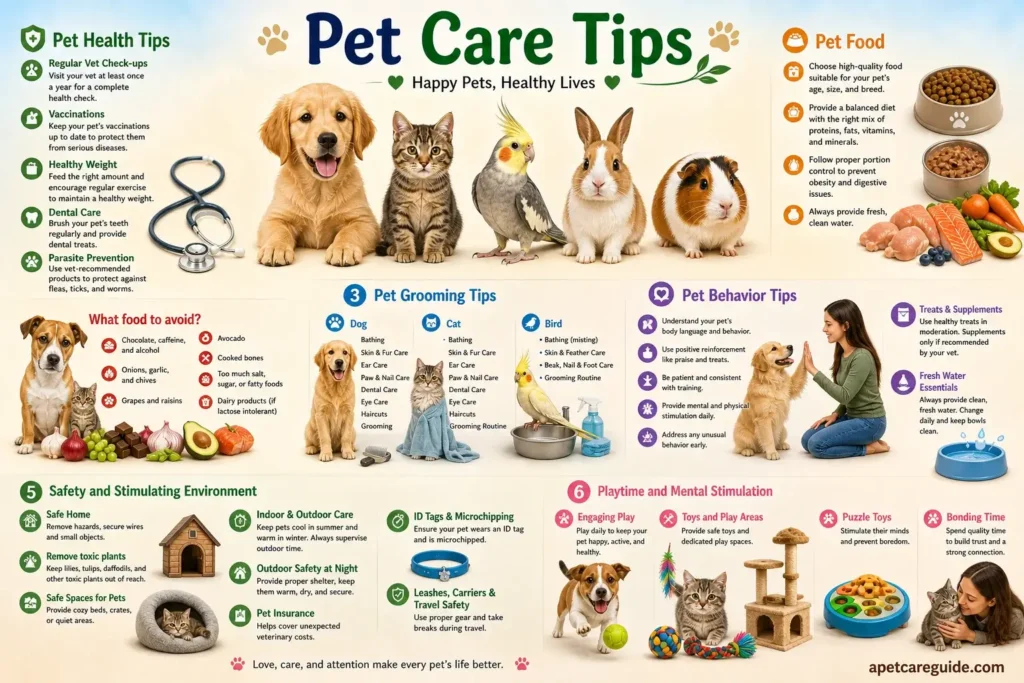
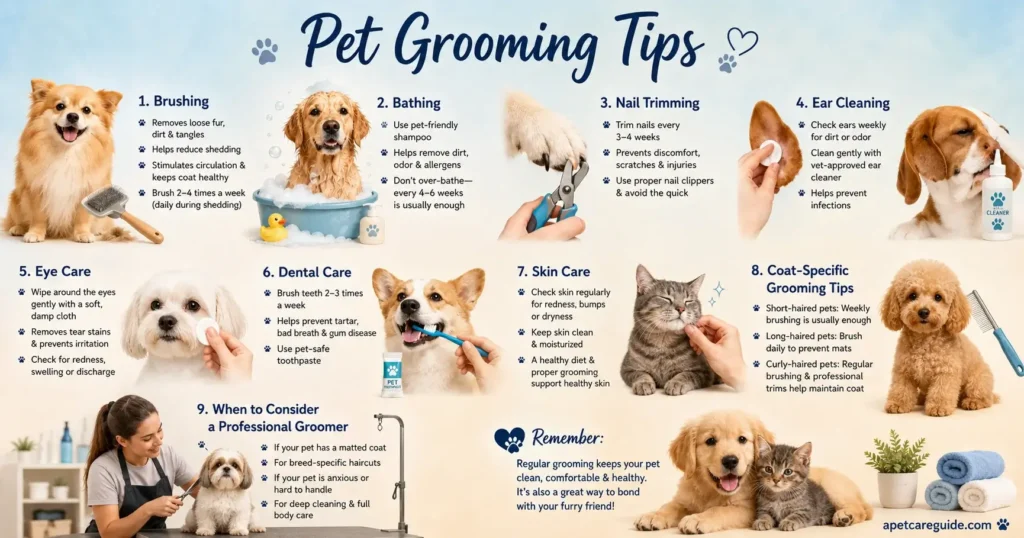


Keeping your pet clean is about much more than appearance. Regular grooming helps protect your pet’s skin, coat, teeth, ears, and nails while making it easier to spot health problems before they become serious. Whether you have a playful dog, an independent cat, or a companion bird, a consistent grooming routine supports better health, greater comfort, and a happier life.
Quick Answer: Pet grooming is the regular care of your pet’s coat, skin, ears, eyes, teeth, and nails. A proper grooming routine helps prevent infections, reduces shedding, keeps the coat healthy, improves comfort, and allows you to detect problems like fleas, ticks, lumps, or skin irritation early.
Over the years, I’ve learned that grooming is one of the simplest ways to keep pets healthy without making every issue a trip to the veterinarian. A few minutes spent brushing, checking the skin, cleaning the ears, or trimming nails can prevent painful mats, ear infections, dental disease, and other common problems. Just as importantly, regular grooming creates a stronger bond between you and your pet, making them feel more relaxed and secure during handling.
In this guide, I’ll walk you through practical pet grooming tips for brushing, bathing, nail trimming, ear cleaning, eye care, dental care, skin checks, flea and tick inspection, coat-specific grooming, safety tips, common mistakes to avoid, and simple grooming schedules you can follow at home. Whether you’re a first-time pet owner or looking to improve your current routine, these step-by-step tips will help you keep your pet clean, comfortable, and healthy throughout the year.
| Task | Recommendation |
|---|---|
| Brushing | Brush based on your pet’s coat type, ranging from daily to once a week. |
| Bathing | Bathe every 4–8 weeks or whenever your pet becomes dirty or develops an odor. |
| Nail Trimming | Trim nails every 3–4 weeks to prevent discomfort and overgrowth. |
| Ear Cleaning | Inspect ears weekly and clean only when wax or dirt builds up. |
| Teeth-Brushing | Brush your pet’s teeth at least 2–3 times each week. |
| Health Check | Look for fleas, ticks, lumps, wounds, or skin irritation during every grooming session. |
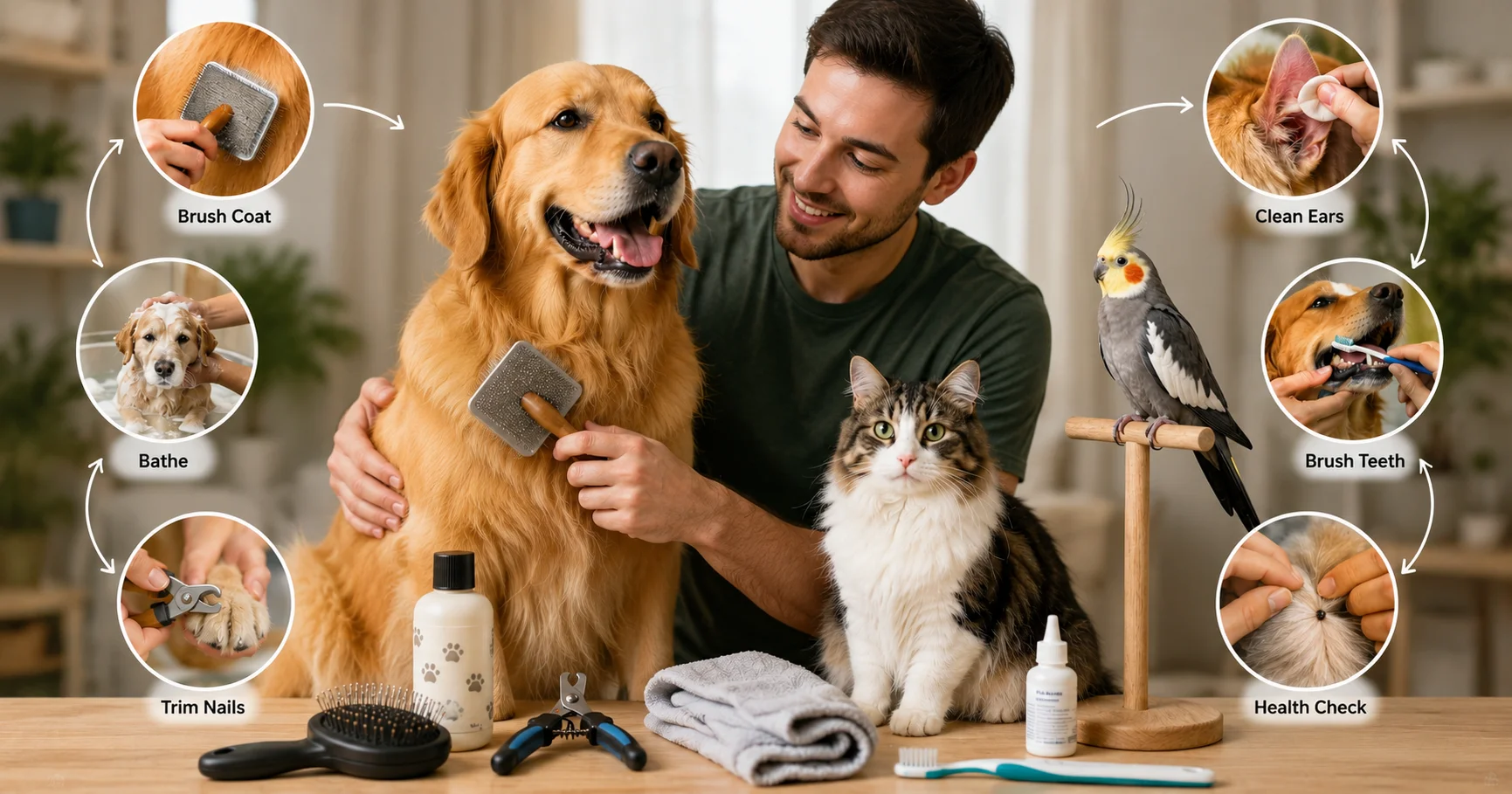
Related Articles:
Best pet care tips for beginners
Best pet animals for beginners
Grooming Tips for Pets
Brushing
Brushing removes loose fur, dirt, and dead flakes. It spreads natural oils across the coat, keeping it shiny. For most healthy pets, brushing a few times a week is enough to remove loose fur and keep the coat healthy. Short strokes work best to stop pain. If you hit a knot, hold the fur near the base to stop pulling it. Picking the right tool matters. Slicker brushes tackle tangles nicely, while bristle brushes smooth out shorter coats.
The American Kennel Club (AKC) notes that brushing frequency varies depending on a pet’s breed, coat type, and lifestyle. Long-haired and double-coated breeds generally require more frequent brushing than short-haired pets to reduce tangles and excessive shedding.
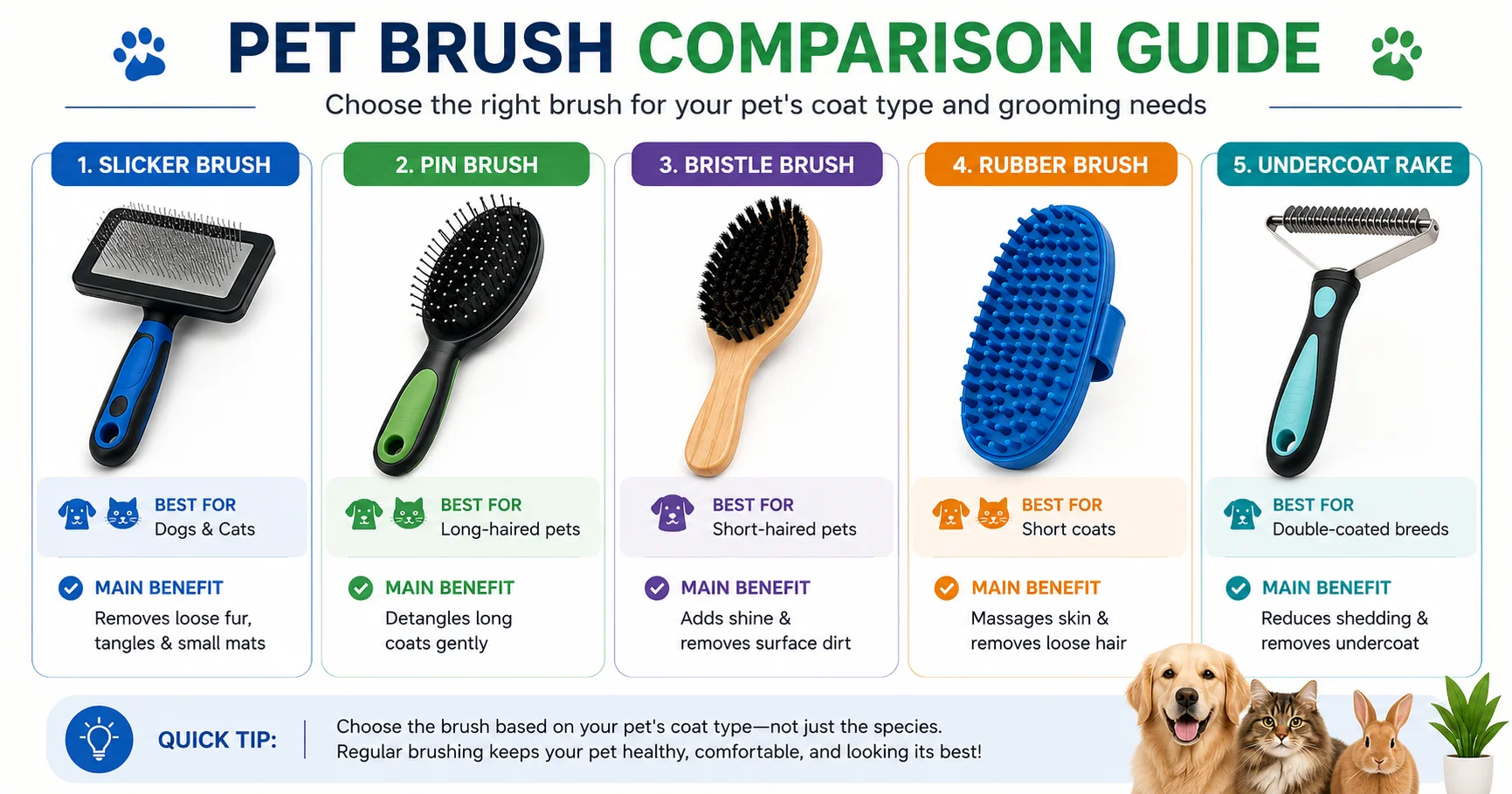
Pet Brush Comparison Guide
Different brushes are designed for different coat types and grooming needs. Choosing the right brush helps reduce shedding, prevent mats, and keep your pet’s coat healthy and comfortable.
| Brush Type | Best For | Main Benefit |
|---|---|---|
| Slicker Brush | Dogs & Cats | Removes loose fur, tangles, and small mats while promoting a healthy coat. |
| Pin Brush | Long-haired pets | Gently detangles the coat and helps maintain a smooth, fluffy appearance. |
| Bristle Brush | Short-haired pets | Removes surface dirt and loose hair while adding natural shine. |
| Rubber Brush | Short-coated pets | Removes loose hair while gently massaging the skin and improving circulation. |
| Undercoat Rake | Double-coated breeds | Removes loose undercoat, reduces shedding, and helps prevent matting. |
Bathing
You do not need to wash your animal every single week. Washing too much strips away their natural oils. In my experience, bathing every four to six weeks works well for most healthy dogs unless they become unusually dirty, depending on how muddy we get outside. Always use lukewarm water. Hot water hurts their sensitive skin. Scrub gently with a pet-safe shampoo, starting from the neck down. Rinse thoroughly because leftover soap causes serious itching.
According to the ASPCA, pets should always be bathed with shampoos specifically formulated for animals. Human shampoos can disrupt the natural skin barrier because pets have a different skin pH.
Nail Trimming
Long nails hurt them when they walk and snag on carpets. A practical habit is to trim your pet’s nails every three to four weeks before they become overgrown. The trick is cutting just the tip. Avoid the quick, which is the pink part of the nail that contains blood vessels and nerves. If you accidentally nip it, apply styptic powder right away to stop the bleeding. Offer plenty of treats, so they stay completely calm.
The American Veterinary Medical Association (AVMA) recommends routine nail trimming as part of preventive pet care because overgrown nails may affect posture, walking comfort, and joint health.
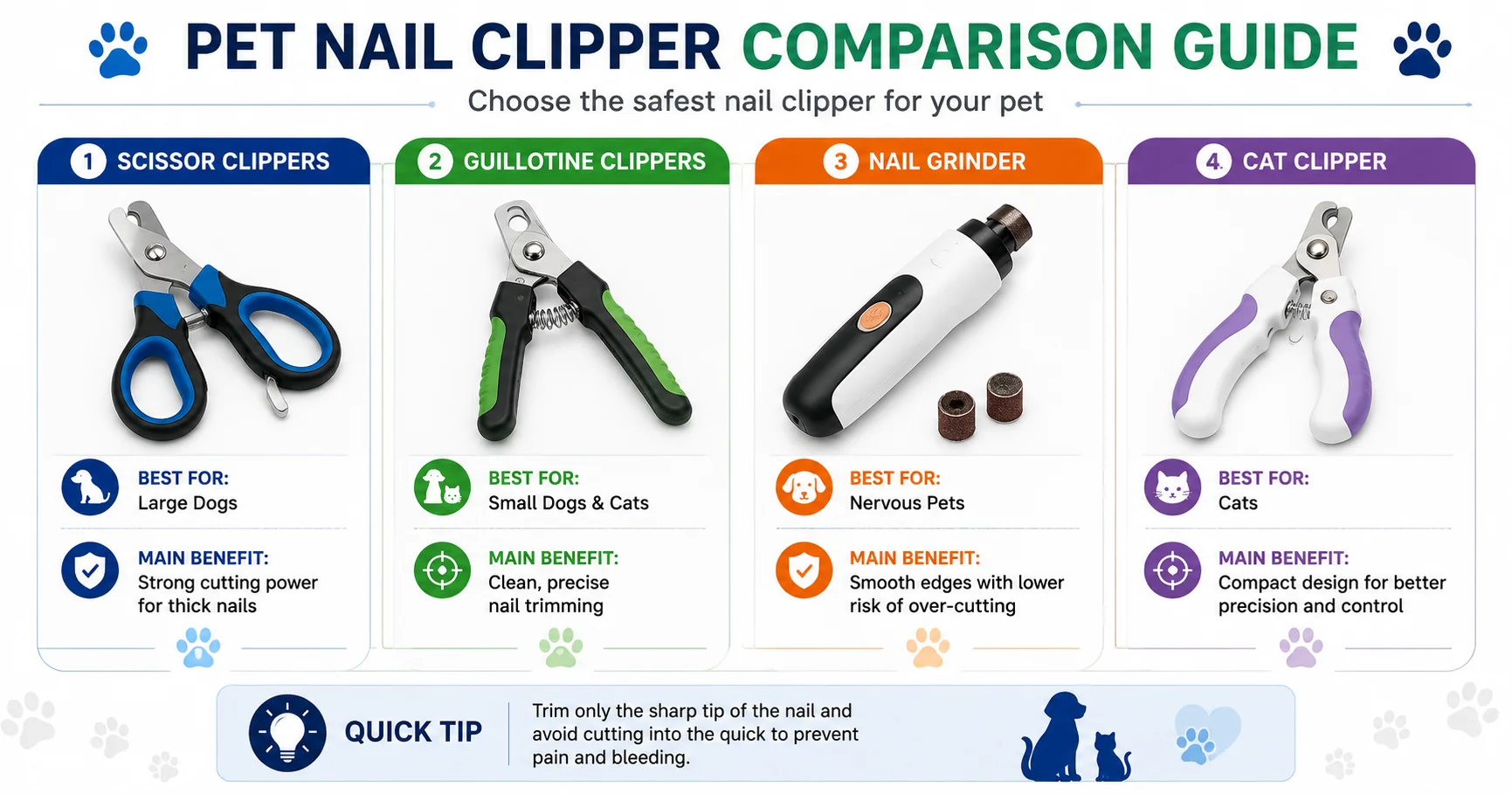
Choosing the Right Nail Clipper for Your Pet: A Comparison
Using the correct nail clipper makes trimming safer, easier, and less stressful for both you and your pet. The table below compares the most common types of pet nail clippers and their best uses.
| Clipper Type | Best For | Advantages |
|---|---|---|
| Scissor Clippers | Large dogs | Strong cutting power, ideal for thick nails. |
| Guillotine Clippers | Small dogs and cats | Easy to use and provides clean, precise cuts. |
| Nail Grinder | Nervous or anxious pets | Creates a smooth nail edge and lowers the risk of over-cutting. |
| Cat Nail Clippers | Cats | A compact size offers better precision and control. |
Choosing the Right Nail Clipper for Your Pet
Ear Cleaning
Dirty ears lead to painful infections. I check my pet’s ears weekly for weird smells, redness, or dark wax. To clean them, squeeze a vet-approved liquid cleaner onto a cotton ball. Gently wipe the visible part of the inside flap. Never stick a cotton swab down into the canal. You could accidentally damage their eardrum or push the debris further inside.
Eye Care
Keeping the eyes clean stops irritation and bad infections. I use a soft, damp washcloth to wipe away morning crusties or tear stains. Wipe outward from the corner of the eye. Use a different part of the cloth for each side to stop bacteria from spreading. If you see yellow discharge, heavy squinting, or cloudy spots, call your vet right away.
Dental Care
Bad breath points to teeth problems. Plaque buildup leads to gum disease, which hurts your pet and causes worse health issues later. I try to brush my dog’s teeth three times a week. Always buy toothpaste made strictly for animals because human paste is toxic to them. Use a soft finger brush and rub the gums gently. Chews also do a great job scraping off extra tartar.
The American Animal Hospital Association (AAHA) recommends regular tooth brushing as one of the most effective ways to reduce plaque buildup and support long-term oral health in dogs and cats.
Skin Care
Healthy skin acts as your pet’s first line of defense against infections, parasites, allergies, and environmental irritants. Regular grooming makes it much easier to monitor skin health because you can examine the skin closely while brushing or bathing. I always part the fur with my fingers to look underneath the coat, especially around the neck, belly, legs, and tail. A few minutes spent checking the skin during each grooming session can help identify problems before they become serious.
Veterinarians at Cornell University College of Veterinary Medicine recommend using routine grooming sessions to examine the skin for redness, parasites, wounds, unusual lumps, or coat changes that may indicate underlying health problems.
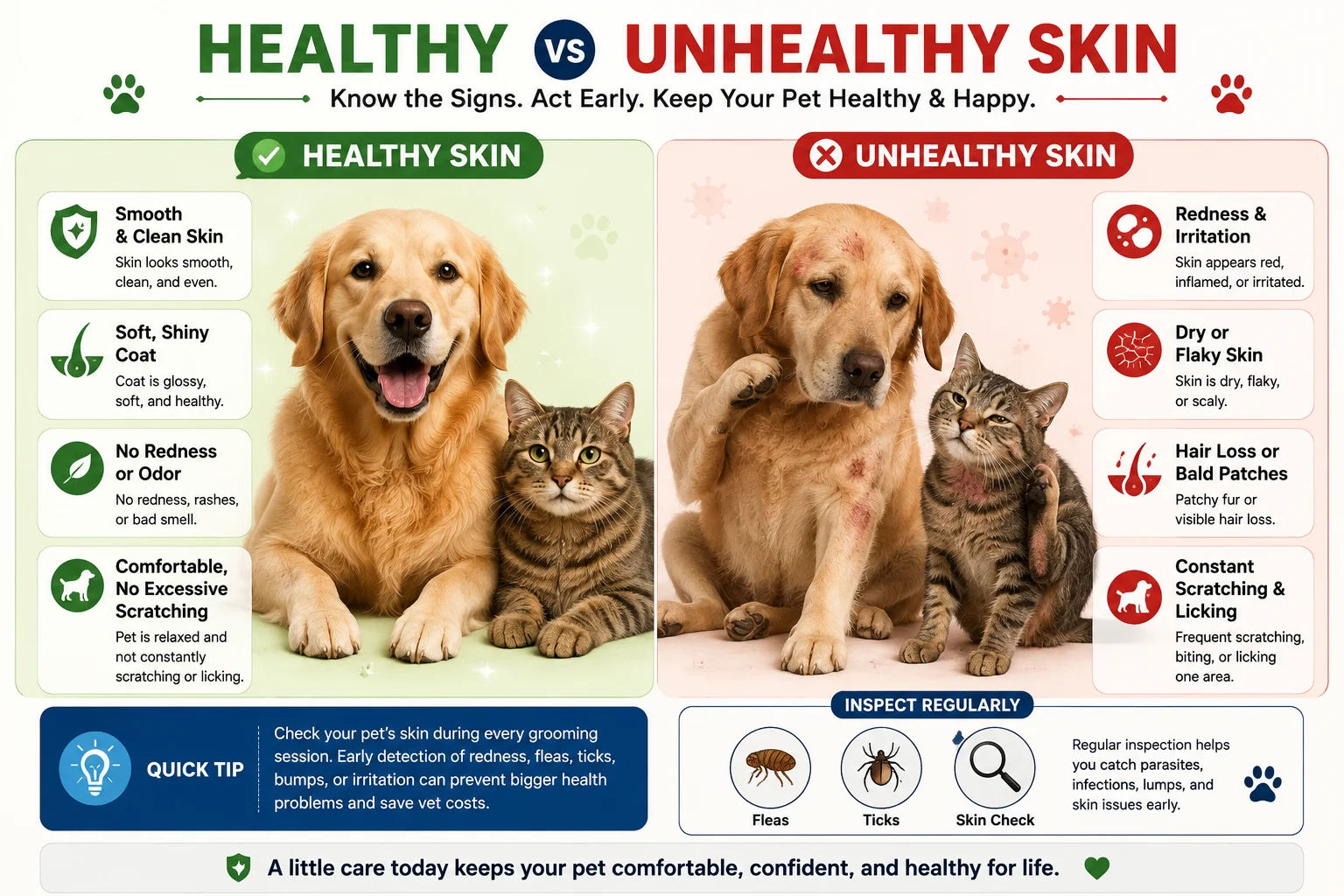
Signs of Healthy Skin
Healthy skin should look smooth, clean, and free from irritation. Your pet’s coat should appear shiny, soft, and evenly distributed across the body. A healthy pet usually has little or no dandruff, no unpleasant odor, and doesn’t constantly scratch or lick the same area. Minor seasonal shedding is completely normal for many breeds.
Signs of Unhealthy Skin
Watch for redness, excessive flaking, bald patches, hot spots, scabs, unusual lumps, persistent scratching, or greasy skin. A strong odor, frequent licking, or constant biting at one area may also indicate allergies, parasites, bacterial infections, or other skin conditions. If these symptoms continue or worsen, they should not be ignored.
When Dry Skin Is Normal
Dry skin can sometimes occur during cold winter months, low humidity, seasonal coat changes, or after frequent bathing. Mild flaking without redness or itching is often temporary. Using a moisturizing pet shampoo, reducing unnecessary baths, and feeding a balanced diet rich in omega-3 fatty acids may help improve skin moisture naturally.
When It Needs Veterinary Care
Seek veterinary advice if your pet develops severe itching, bleeding, open sores, widespread redness, swelling, pus, hair loss, or painful skin lesions. Skin problems that persist for several days or continue spreading may require medical treatment. Early diagnosis often prevents minor skin irritation from becoming a more serious health issue.
Essential Pet Grooming Tools
Regular grooming becomes much easier when you use the right tools. Each grooming tool serves a specific purpose, from removing loose fur to keeping your pet’s nails, ears, and teeth healthy. Choosing quality grooming supplies also makes the experience safer and less stressful for both you and your pet.
Essential Pet Grooming Tools Comparison
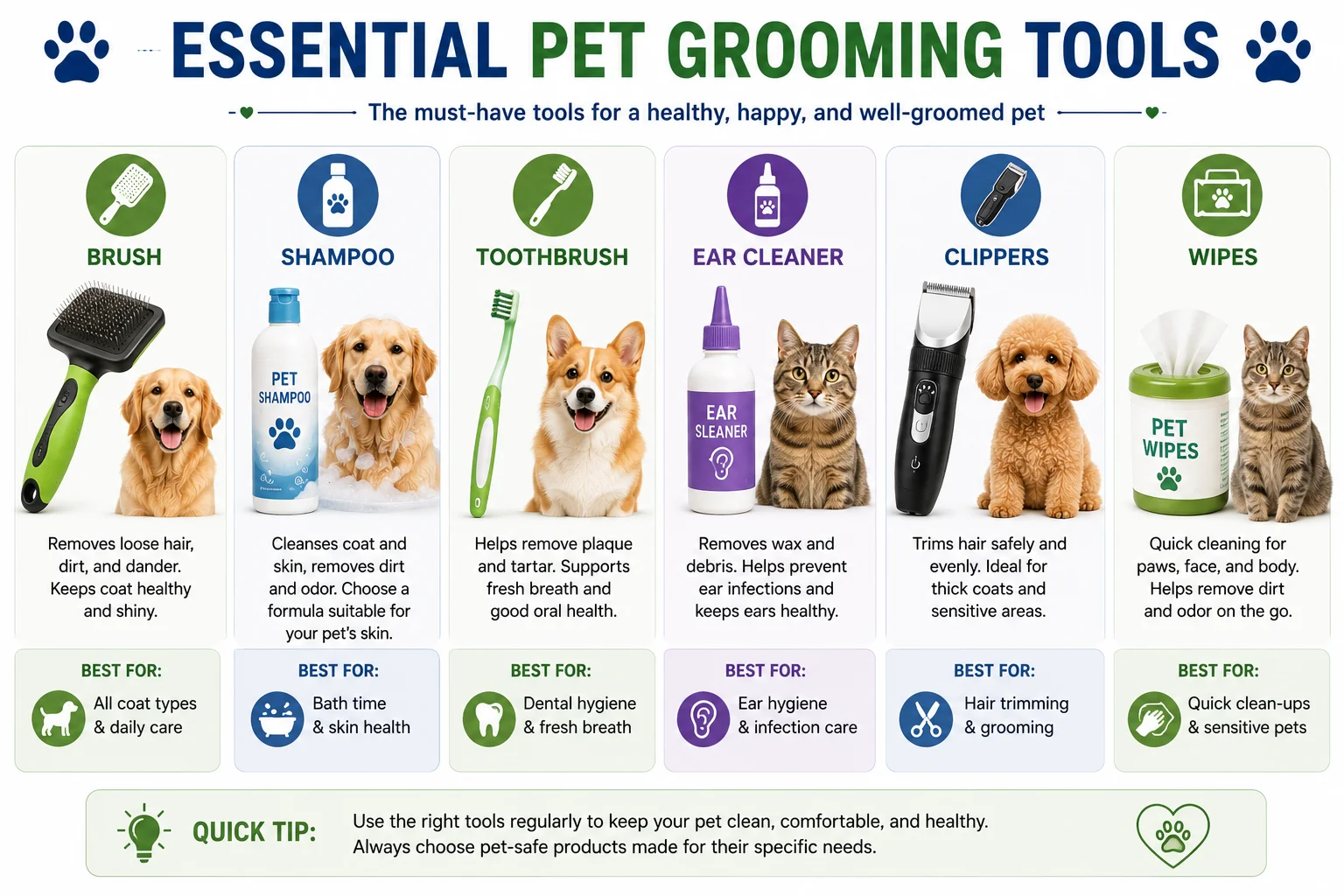
| Grooming Tool | Best For | Main Purpose |
|---|---|---|
| Slicker Brush | Dogs & Cats | Removes loose fur, tangles, and small mats. |
| Pin Brush | Long-haired pets | Detangles long coats while keeping the fur smooth. |
| Nail Clippers | Dogs, Cats & Birds | Trims overgrown nails to improve comfort and mobility. |
| Pet Shampoo | All Pets | Cleans the coat without damaging the skin’s natural oils. |
| Pet Toothbrush & Toothpaste | Dogs & Cats | Helps reduce plaque and supports healthy teeth and gums. |
| Ear Cleaner | Dogs & Cats | Removes wax and debris to help prevent ear infections. |
| Grooming Wipes | Dogs & Cats | Quickly cleans paws, face, and coat between baths. |
📌 Important Note: Always choose grooming tools that match your pet’s species, coat type, size, and age. Using the wrong brush, shampoo, or nail clipper may cause discomfort or injury.
💡 Expert Tip: From my experience, buying a few high-quality grooming tools is much better than purchasing many inexpensive ones. Quality brushes, clippers, and shampoos last longer, work more effectively, and make grooming far more comfortable for your pet.
Reference: The American Kennel Club (AKC) and the American Society for the Prevention of Cruelty to Animals (ASPCA) recommend using species-appropriate grooming tools and pet-safe grooming products to maintain healthy skin, coat, nails, ears, and overall well-being.
How to Check for Fleas, Ticks, and Skin Irritation
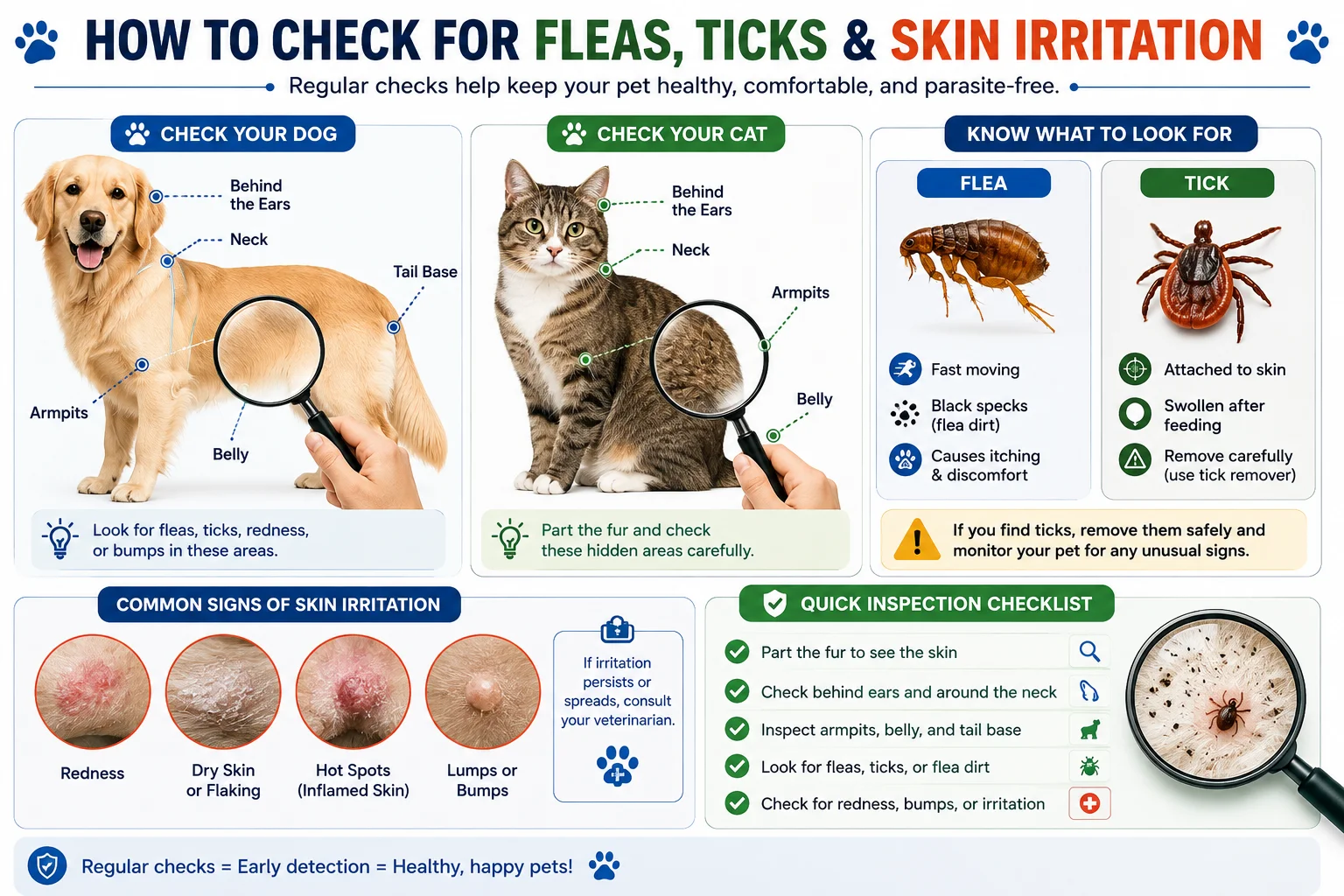
Finding bugs and rashes early saves your dog or cat from severe itching. I always run my hands thoroughly over their body during brushings. This section covers what to look out for and how to handle bad reactions quickly before they spread.
Why grooming is the best time for a health check
You already have your hands all over your animal. You part the fur and touch the paws. This hands-on time makes catching hidden lumps or tender spots totally straightforward. Your dog stands still, allowing you to catch tiny changes before they turn into major medical bills.
What fleas, ticks, and parasites can look like
Fleas look like fast-moving dark specks. You might also spot tiny black pepper flakes near the tail base. Ticks feel like small, hard bumps attached directly to the body, mostly around the neck or ears. Mites leave behind crusty patches. I always keep a magnifying glass nearby.
How to spot dry skin, redness, hot spots, or bumps
Run your fingers against the direction of the fur growth. This pushes the hair up. Flaky white dandruff means dryness. Hot spots appear as wet, angry red circles that ooze. Bumps feel like soft marbles underneath. Pay close attention to any area they lick constantly.
What to do if you notice a skin issue during grooming
Stop brushing that exact area immediately so you avoid causing extra pain. I gently clean mild scrapes with warm water. For hot spots, I put a cone on my pet so they stop chewing it. The American Veterinary Medical Association (AVMA) warns against using human creams.
When to contact a veterinarian
Call your vet if an issue lasts more than two days or spreads fast. I reach out immediately if a bump changes size, bleeds, or feels unusually warm. Uncontrollable scratching or bad smells coming from the ears need a quick checkup. Trust your gut. If your buddy acts tired or whines, get medical advice fast.
The World Small Animal Veterinary Association (WSAVA) encourages regular home health checks as part of routine grooming. Monitoring changes in your pet’s coat, body condition, skin, ears, and eyes helps identify potential health problems early.
Coat-Specific Grooming Tips
Every coat needs a completely different approach. Using the wrong brush wastes time and hurts your buddy. I strictly match my tools to my pet’s specific fur length and texture. Let’s look at the best ways to care for smooth, short, long, and demanding coats safely.
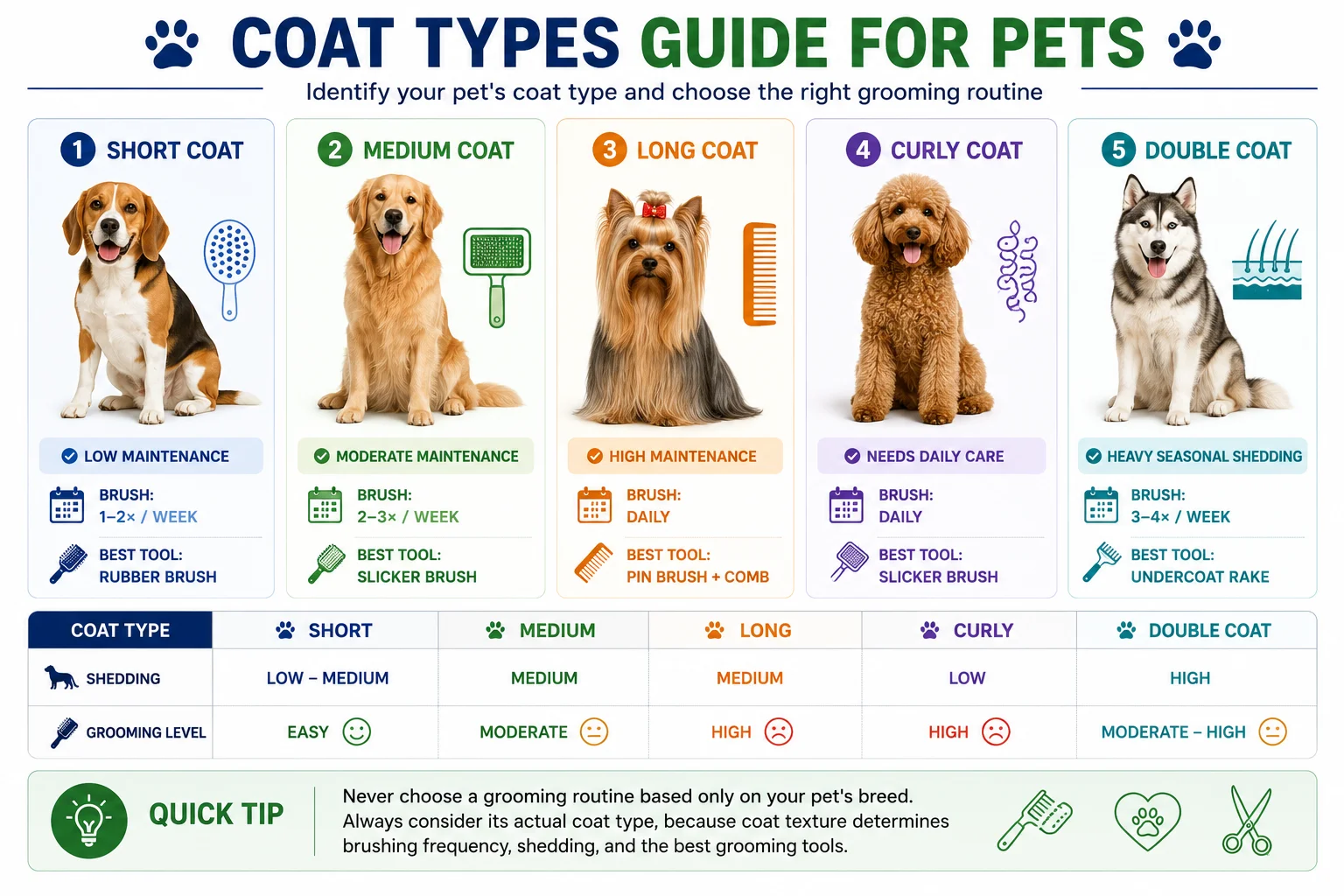
Coat Type Comparison
| Coat Type | Brushing Frequency | Recommended Brush |
|---|---|---|
| Short Coat | 1–2 times per week | Rubber Brush |
| Medium Coat | 2–3 times per week | Slicker Brush |
| Long Coat | Daily | Pin Brush + Comb |
| Curly Coat | Daily | Slicker Brush |
| Double Coat | 3–4 times per week | Undercoat Rake |
Grooming smooth and short coats
Breeds like Pugs and short-haired cats have smooth fur. These coats shed heavily. I grab a rubber curry brush or a mitt. Moving the mitt in circular motions grabs loose hair and massages the back. Finish with a soft-bristle brush. You only need to brush them once a week.
Grooming short, dense fur
Huskies have a thick double coat. They have a harsh outer layer and a soft, fluffy undercoat. I use a slicker brush to grab dead hair from the top. Then, an undercoat rake pulls out the packed fluff near the base without cutting the healthy fur.
Grooming long and silky coats
Long hair needs serious dedication. Yorkshire Terriers need brushing almost every afternoon. I start with a metal comb to gently work through the long strands. A pinbrush smooths everything out afterward. Never brush a long coat while it is completely dry, because the hair breaks quickly.
Managing tangles and mats in high-maintenance coats
Mats pull tightly, causing severe pain. When I find a knot, I hold the base of the fur. I gently work a dematting comb through the ends of the hair, slowly moving up. Never rip the brush straight through a knot. If a mat feels solid, shave it off safely.
How often each coat type should be brushed and bathed
Smooth coats need weekly brushing and a bath every two months. Short, dense double coats demand brushing three times a week. Long, silky hair needs brushing constantly and a wash every three weeks. I base this schedule strictly on fur length. Adjust the timing if they play outside frequently.
Grooming Safety Tips
Keeping your buddy safe during a wash or trim matters most. Slips, cuts, and burns happen fast if you rush. I follow strict safety rules at home to keep accidents completely away.
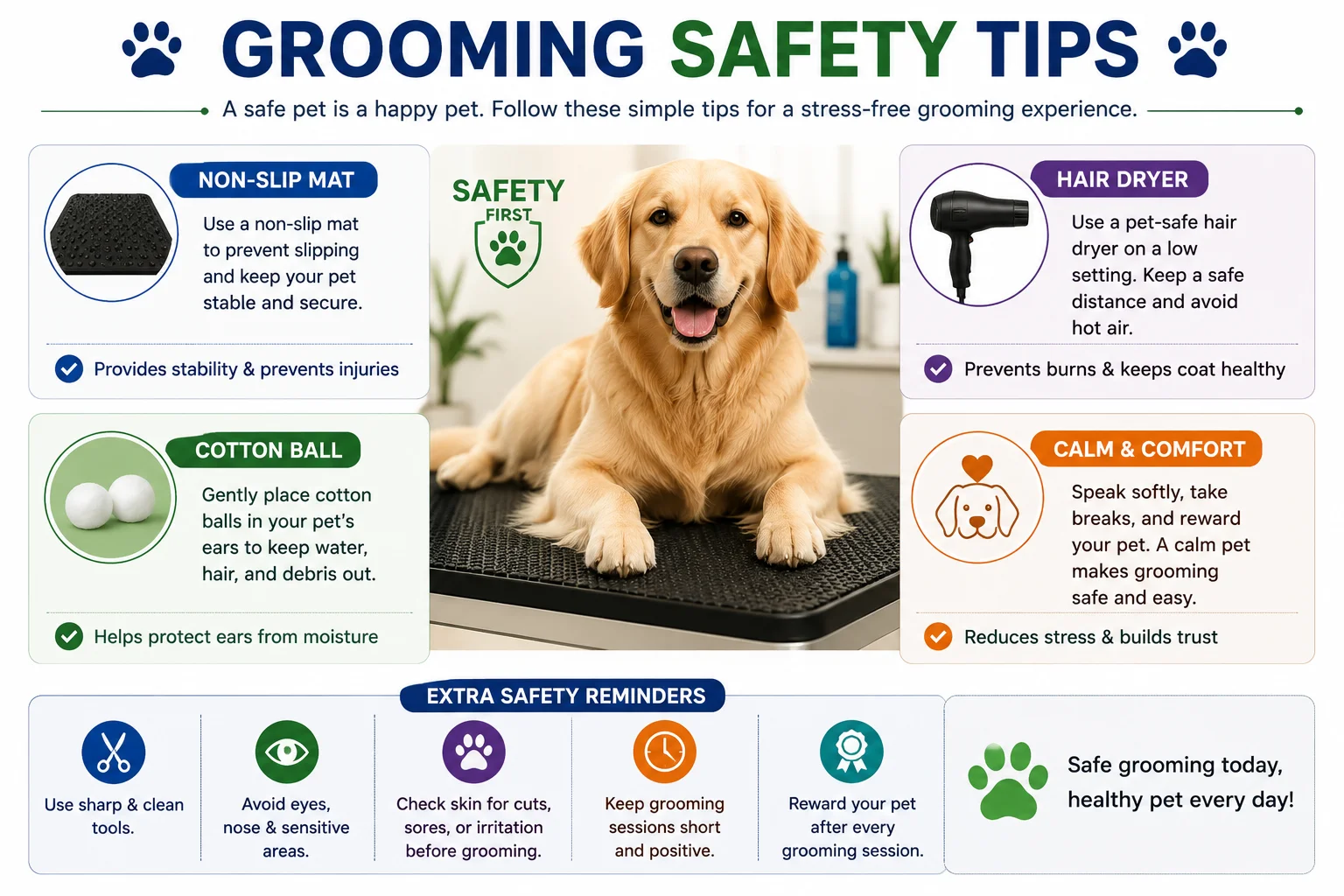
Use a non-slip surface during bathing
Tubs get incredibly slippery once soap mixes with water. A sliding animal panics quickly, risking muscle tears. I always place a thick rubber mat at the bottom of the tub before turning the water on. A wet towel laid flat also works well in an emergency.
Keep water and products away from the eyes and ears
Soap stings badly. Trapped water causes yeast infections. I tilt my dog’s chin upward when rinsing the neck so the water flows down the back. I use a damp cloth to wipe the face. Placing large, dry cotton balls lightly inside the flaps blocks stray splashes.
Use low heat when drying with a hairdryer
Animal skin is much thinner than ours. A normal hairdryer burns them in seconds if it’s set too high. I always pick the coolest setting available. Keep the dryer moving constantly. Never hold it in one spot. Keep the nozzle at least six inches away. Towel-dry them heavily first.
Never pull through mats aggressively
Ripping a brush through tangled fur feels like having your hair violently pulled by the roots. It tears the delicate skin underneath. I always use a special spray to soften the knot first. Use your fingers to gently pull the knot apart before bringing a comb near it.
Keep grooming sessions calm, short, and positive
Animals feed off our energy. If you act stressed, they panic. I talk in a soft, happy voice the whole time. If my cat starts squirming, I stop. Breaking a big task into smaller pieces works wonders. I might clip two nails on a Tuesday and finish the rest later.
Home Grooming vs Professional Grooming
Both home grooming and professional grooming have their own advantages. Home grooming is ideal for routine maintenance and strengthening the bond with your pet, while professional grooming provides specialized care for complex grooming needs. Use the comparison below to decide which option is best for your pet.
| Feature | Home Grooming | Professional Grooming |
|---|---|---|
| Cost | Lower long-term cost after purchasing basic grooming tools. | Higher cost due to professional services and specialized equipment. |
| Convenience | Can be done anytime in a familiar home environment. | Requires booking appointments and traveling to a grooming salon. |
| Skill Required | Basic grooming knowledge and patience are needed. | Performed by trained groomers with professional expertise. |
| Equipment | Basic brushes, combs, shampoo, nail clippers, and towels. | Professional grooming tables, dryers, clippers, and specialized tools. |
| Best For | Routine brushing, bathing, nail trimming, and regular health checks. | Breed-specific haircuts, severe matting, difficult coats, and advanced grooming. |
| Stress Level | Usually lower because pets remain in a familiar environment. | Some pets may experience stress in an unfamiliar place. |
| Health Monitoring | Owners can regularly check for lumps, parasites, wounds, and skin changes. | Professional groomers may identify coat or skin issues that require veterinary attention. |
| Recommended Frequency | Weekly or as part of your regular grooming routine. | Every 4–8 weeks, depending on your pet’s breed, coat type, and grooming needs. |
Expert Tip: For most pets, the best approach is to combine regular home grooming with occasional professional grooming. Routine brushing, bathing, nail trimming, and health checks at home help keep your pet comfortable and allow you to spot potential health issues early. Professional grooming every 4–8 weeks can provide breed-specific styling, safely remove heavy mats, and address grooming tasks that require specialized tools or experience.
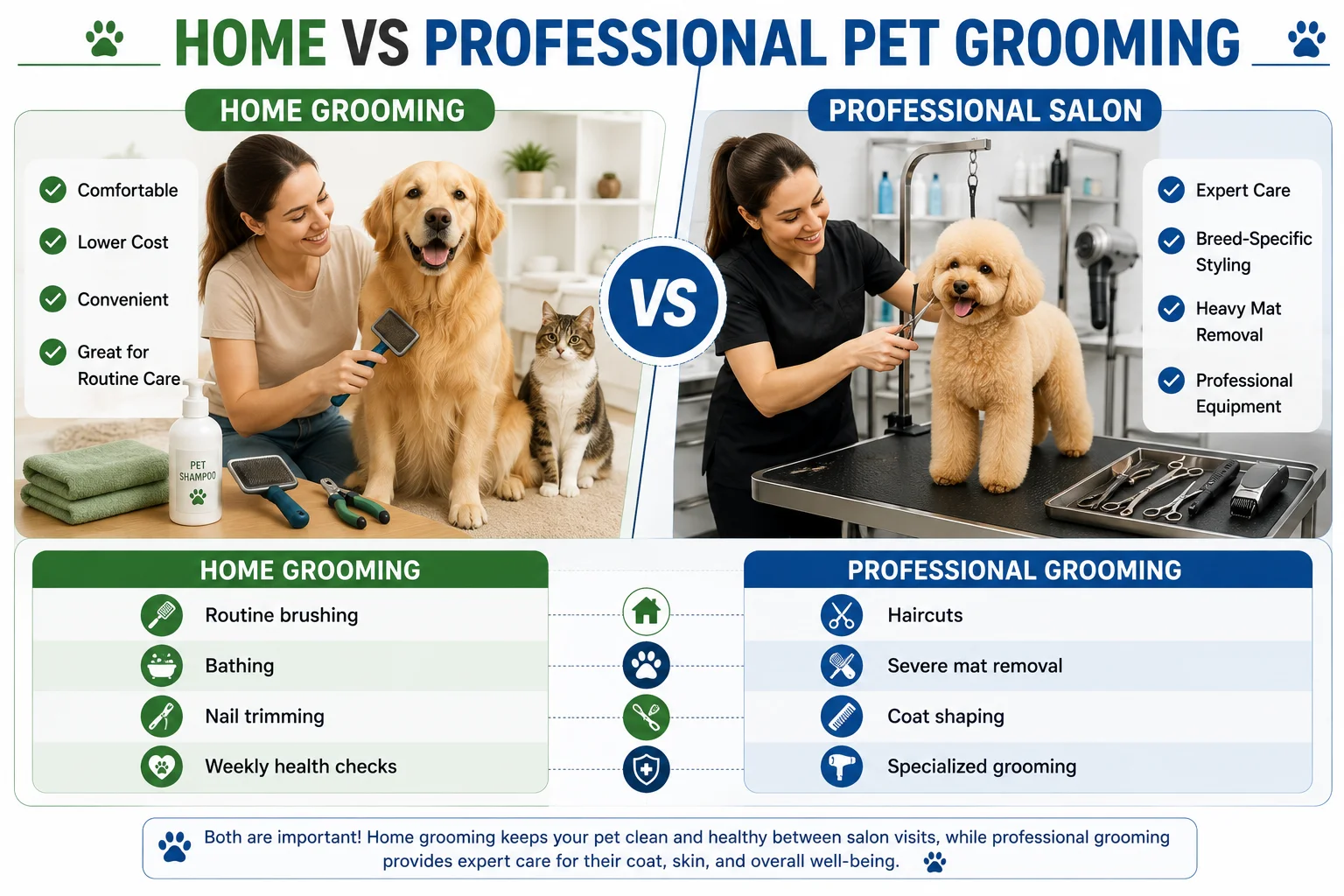
The American Kennel Club (AKC) also recommends combining routine home grooming with professional grooming when breed-specific coat care or specialized trimming is required.
When to Consider a Professional Groomer
Sometimes, doing it yourself just does not work out. I hand the clippers over to an expert when things get tricky. Professionals have the right tables and tools to handle difficult situations smoothly.
Signs your pet needs expert grooming help
Extreme anxiety, biting, and thrashing are clear signs you need a pro. I call my groomer if I find massive mats stuck tight against the skin. Skunk sprays or severe flea infestations also need heavy-duty treatments that my regular bathtub setup cannot handle. Professionals de-escalate fear safely.
How professional grooming supports
Poodles and Samoyeds possess highly demanding coats. Groomers use high-velocity dryers that blow out the dead undercoat much faster than brushing alone. They know specific breed cuts that keep the hair out of the eyes. Getting a professional sanitary trim stops messy accidents from sticking to long fur.
What services a professional groomer usually provides
A standard trip includes a deep bath, blow-dry, thorough brush-out, and a customized haircut. Groomers also perform tasks I dislike doing at home, like expressing anal glands. They grind nails down smoothly with a Dremel tool instead of just clipping the sharp tips.
How often to schedule grooming appointments?
Haircuts dictate the schedule. Dogs with continuously growing hair need a trim every four to six weeks. Double-coated breeds benefit from professional blowouts every change of season. If you keep the coat brushed well at home, you can stretch appointments to every eight weeks.
Choosing a trusted and experienced groomer
I always ask my vet or local friends for direct recommendations. Tour the salon before booking an appointment. Check if the cages look clean and the dogs seem relaxed. Ask about their certification. A good groomer asks detailed questions about medical history and past behavior.
Common Pet Grooming Mistakes to Avoid
Early on, I made plenty of errors that made my dog hate bath time. Learning what not to do makes the whole process smoother. Avoiding these regular mistakes protects your animal from accidental pain.
Brushing too late after the mats have already formed
Waiting until the fur looks tangled is a huge mistake. By the time you see a mat on the surface, the hair near the base is likely felted solid. I brush purely to prevent knots. Brushing takes five minutes. Removing a solid mat takes an hour of painful pulling.
Bathing with the wrong shampoo
Human shampoo destroys the pH balance of an animal’s body. Even baby shampoo dries them out. I strictly buy high-quality pet shampoo. Using dish soap brutalizes their coat by stripping all moisture. Sticking to oatmeal-based formulas keeps the skin barrier tough and fully hydrated.
The ASPCA also advises avoiding harsh household soaps or detergents because they may cause skin irritation and excessive dryness.
Choosing the Right Pet Shampoo
Using the right shampoo helps keep your pet’s skin and coat healthy while reducing the risk of irritation. The table below compares common pet shampoo types, their best uses, and situations where they may not be the ideal choice.
| Shampoo Type | Best For | Avoid If |
|---|---|---|
| Oatmeal Shampoo | Dry or itchy skin | Your pet shows signs of an allergic reaction after use. |
| Hypoallergenic Shampoo | Sensitive skin | Your pet has healthy skin and doesn’t require a special formula. |
| Flea & Tick Shampoo | Parasite control | Routine bathing without a flea or tick problem. |
| Puppy/Kitten Shampoo | Young pets | Your pet needs a medicated shampoo recommended by a veterinarian. |
| Moisturizing Shampoo | Dry or dull coat | Your pet has naturally oily skin or a condition requiring a different treatment. |
Cutting nails too short
Snapping the claw causes intense pain and creates a bloody mess. Once you cut a nail too short, it remembers that pain forever. I only trim the tiny, curved hook at the very end. Stop the moment you see a dark dot in the center.
Forgetting ears, teeth, and paw care
Many people just wash their bodies and ignore the details. Dirty teeth lead to heart disease. Unchecked ears breed nasty yeast infections. I also check between the paw pads for stuck thorns or cracked skin. Applying a soothing paw balm during the winter stops salt from burning their paws.
Overbathing and drying out the skin
Washing your dog every week ruins their coat. It washes away the protective oils that keep the hair waterproof and shiny. The skin quickly turns flaky and itchy. Unless my dog rolls in something utterly disgusting, I stick to a monthly bath routine. Use unscented wipes for muddy paws.
Pet Grooming Routine
Sticking to a schedule stops the mess from piling up. I use a basic calendar to remember when to clip, brush, and wash. Breaking the chores into smaller steps keeps my pets looking neat without overwhelming my weekend.
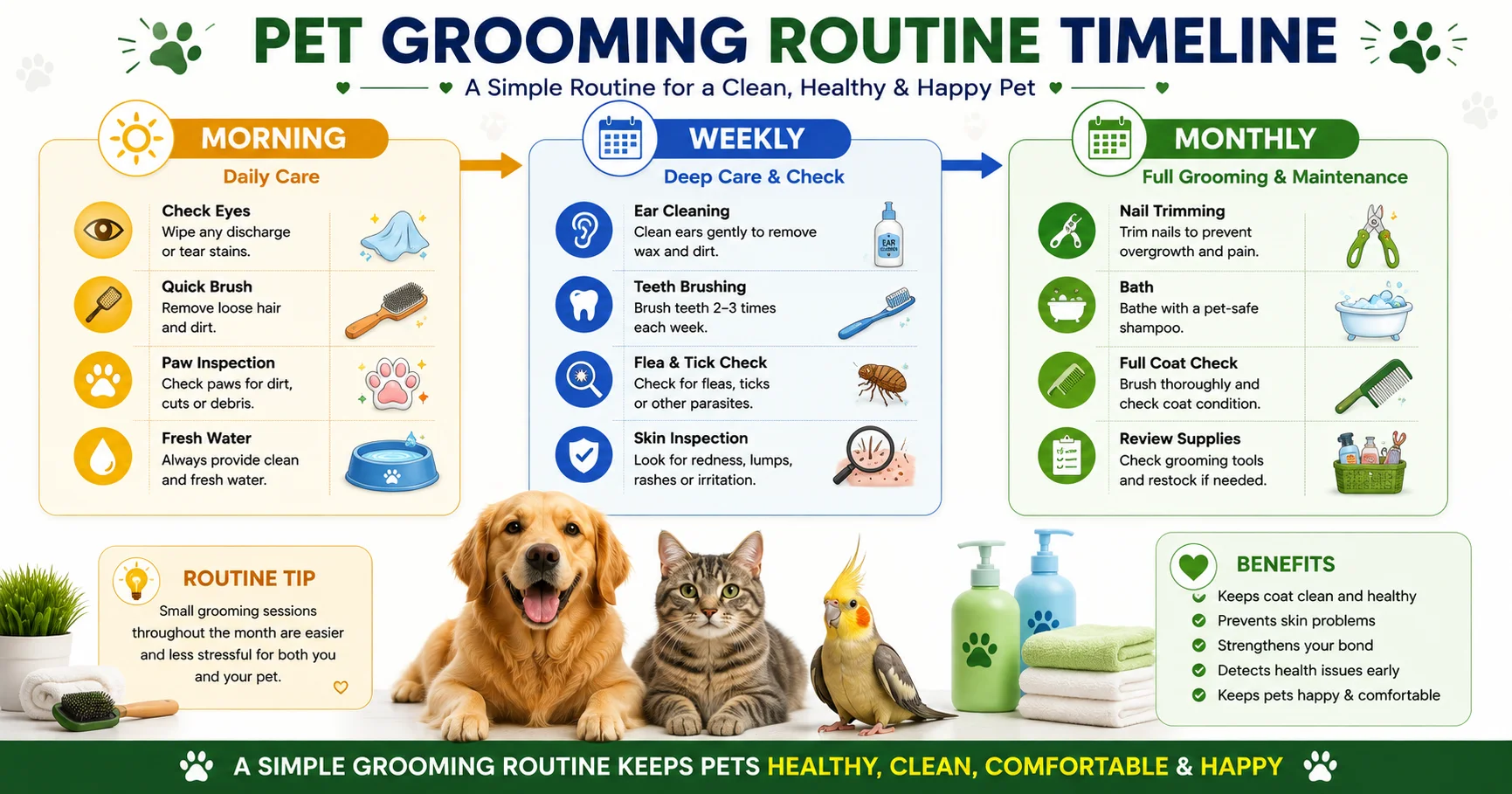
Daily, weekly, and monthly grooming checklist
Every single morning, I quickly wipe eye boogers and brush long coats for five minutes. Weekly, I check the ears, brush teeth, and run a comb through short coats. Monthly duties include a full bath, a careful nail trim, and applying flea medicine.
How to build a routine based on breed and coat type
Look closely at your specific breed’s needs. A hairless cat needs weekly wipe-downs to remove grease. A Golden Retriever needs serious brushing to manage shedding. Dogs with floppy ears trap moisture, so I clean those ears more frequently. Tailor your schedule strictly to match their unique physical traits.
How to keep grooming stress-free for anxious pets
I smear peanut butter on a lick mat and stick it to the tub’s wall. Licking releases calming chemicals in the brain. Always introduce tools slowly. Let them sniff the clippers while turned off. Give a treat. Move at their pace. Forcing a terrified animal guarantees a violent struggle.
Setting up a simple at-home grooming schedule
Pick a quiet spot in your house with good lighting. I always groom my dog on Saturday mornings after an exhausting walk. A tired dog stands much more still. Gather all brushes and towels before you begin. Having everything within arm’s reach stops you from leaving a wet dog alone.
Tracking grooming needs as your pet grows older
Senior pets need a gentle touch. Arthritis makes standing in the tub deeply painful. I place a soft towel down and let my older dog lie flat while I brush him. Older cats often stop cleaning themselves properly, so they need extra help removing loose fur. Check them often.
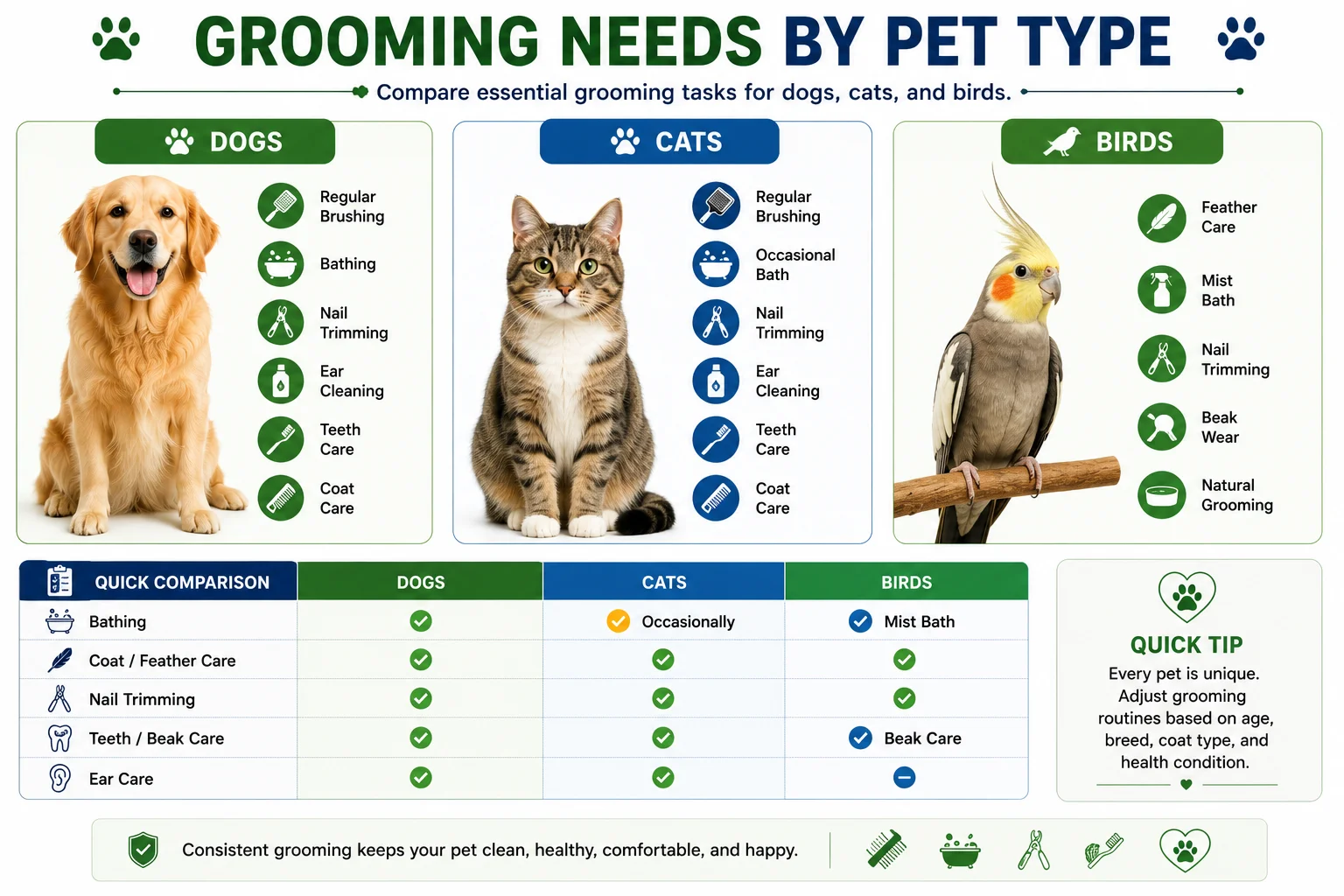
Grooming Needs by Pet Type
Although dogs, cats, and birds all benefit from regular grooming, their grooming needs are different. The comparison table below highlights the essential grooming tasks for each type of pet.
| Grooming Task | Dogs | Cats | Birds |
|---|---|---|---|
| Brushing | ✔ Regular | ✔ Regular | ✔ Feather care only |
| Bathing | ✔ Yes | Occasionally | Mist bath or species-specific bathing |
| Nail Trimming | ✔ Yes | ✔ Yes | ✔ Yes |
| Ear Cleaning | ✔ Yes | ✔ Yes | Rarely, if recommended |
| Teeth Care | ✔ Yes | ✔ Yes | Usually not required |
| Coat / Feather Care | Coat | Coat | Feathers |
Grooming Tips for Birds
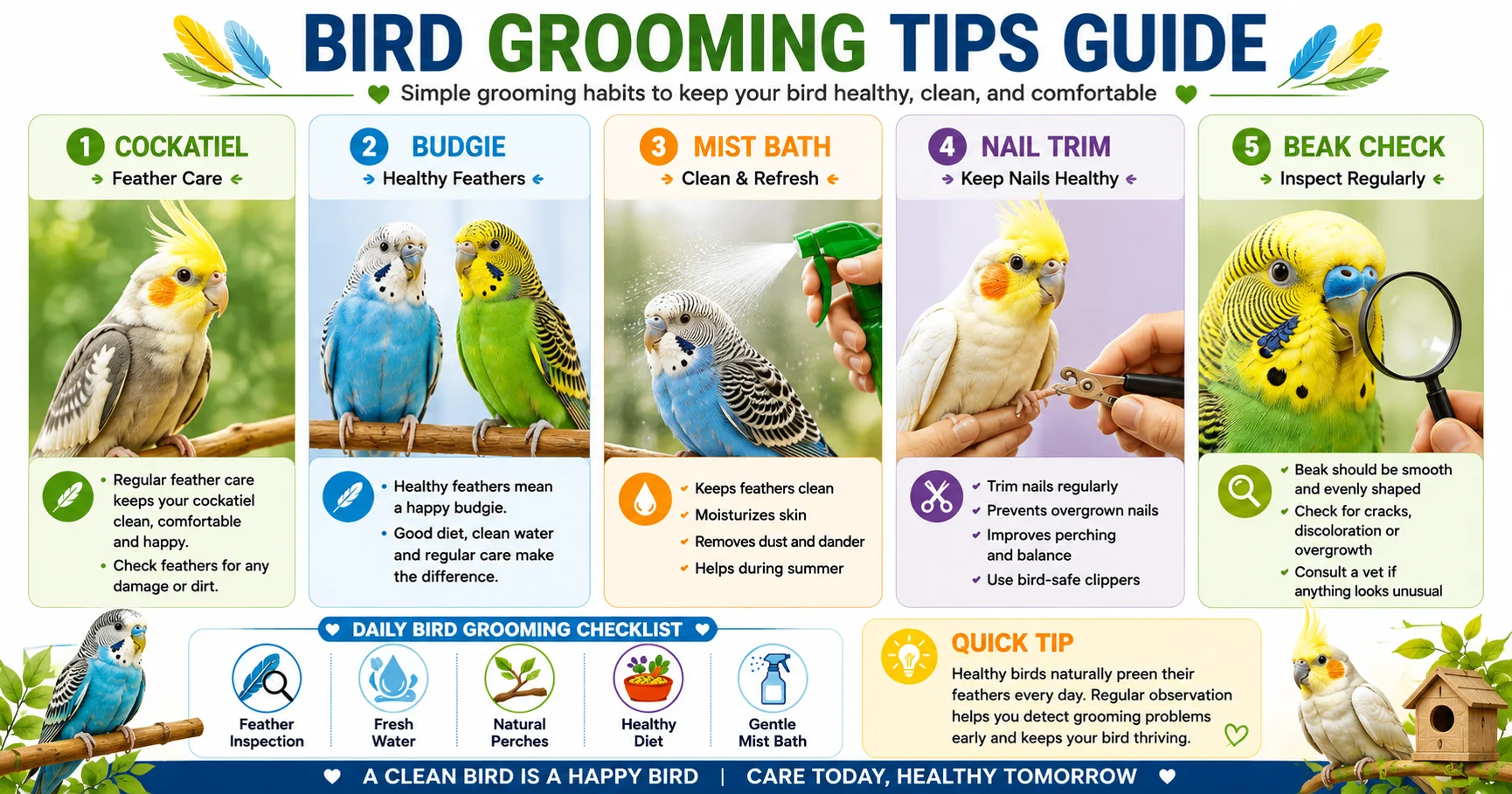
Birds require a different grooming routine than dogs and cats. Instead of bathing with shampoo or frequent brushing, birds stay healthy through proper feather care, regular nail maintenance, occasional beak checks, and species-appropriate bathing. A gentle grooming routine helps birds stay clean, comfortable, and active.
Feather Care
- Healthy feathers help birds regulate body temperature and fly properly.
- Allow birds to preen naturally.
- Remove loose feathers only if recommended.
- Watch for broken feathers or feather damage.
Nail Trimming
- Trim nails only when they become too long.
- Overgrown nails make perching difficult.
- Use bird-nail clippers.
- Avoid cutting the quick.
Beak Care
- A healthy beak wears down naturally.
- Provide mineral blocks.
- Offer natural wood perches.
- Contact an avian veterinarian if the beak becomes overgrown.
Mist Bath
- Many companion birds enjoy light mist baths.
- Use clean, lukewarm water.
- Allow feathers to air dry naturally.
- Never use shampoo unless prescribed.
Bird Grooming Schedule
| Grooming Task | Recommendation | Frequency |
|---|---|---|
| Feather Care | Allow natural preening and inspect feathers. | Daily |
| Nail Trimming | Trim only when overgrown. | Every 1–3 months |
| Beak Care | Monitor growth and provide natural wear surfaces. | Weekly |
| Mist Bath | Offer clean water mist. | 2–4 times per week (species-dependent) |
📌 Important Note: Birds should never be groomed like dogs or cats. Avoid using human shampoo, soaps, or unnecessary feather trimming. Always use bird-safe grooming methods.
💡 Expert Tip: From my experience, healthy birds do most of their grooming through natural preening. Providing clean water, appropriate perches, and a balanced diet often contributes more to feather health than frequent handling.
Reference: The Association of Avian Veterinarians (AAV), the Merck Veterinary Manual, and Cornell University College of Veterinary Medicine recommend regular feather inspection, proper nail maintenance, species-appropriate bathing, and routine beak monitoring to support bird health and welfare.
Seasonal Grooming Tips
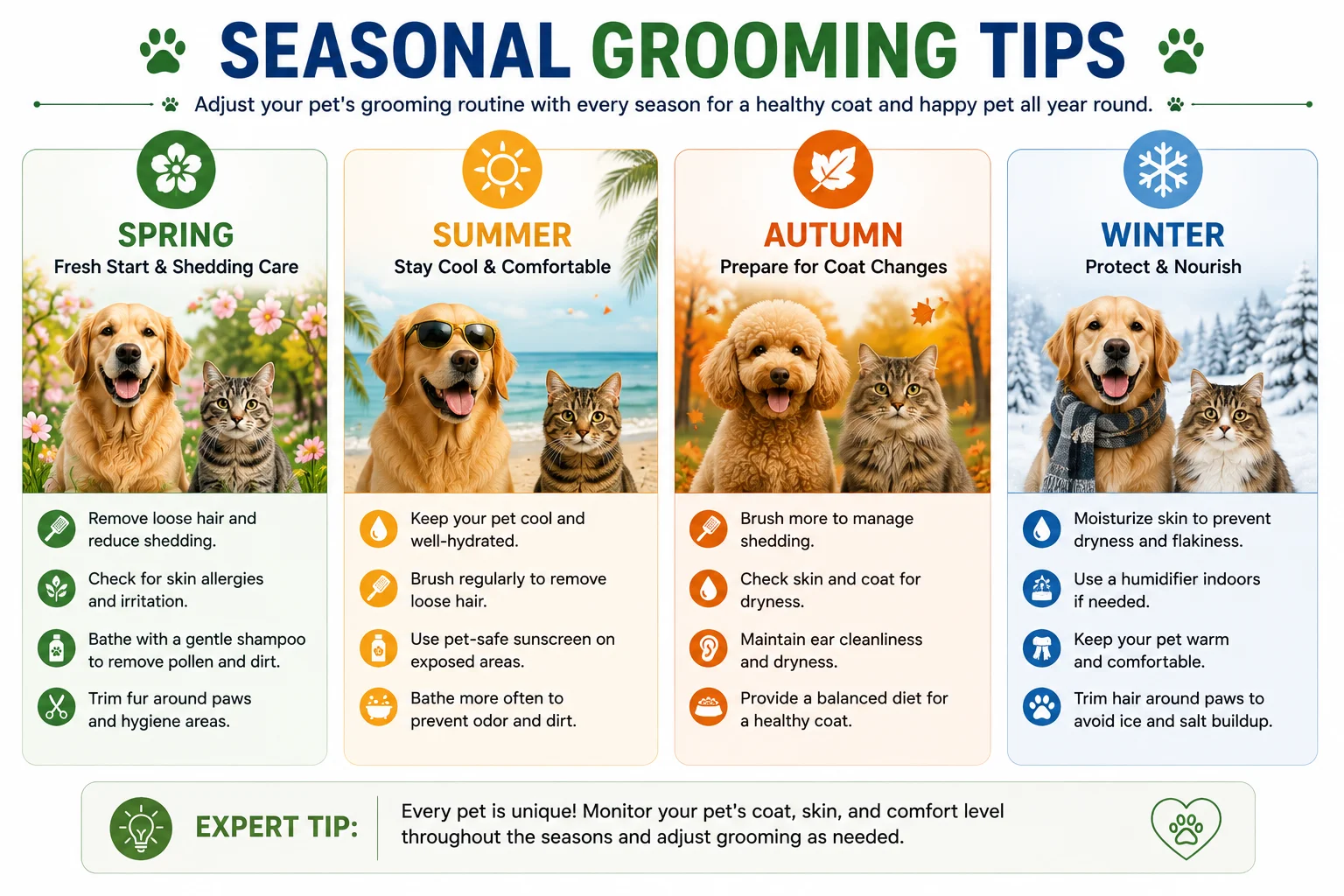
Seasonal weather changes can affect your pet’s skin, coat, paws, and overall grooming needs. Adjusting your grooming routine throughout the year helps reduce shedding, prevent parasites, protect the skin, and keep your pet comfortable in every season.
Spring Grooming
Spring is the main shedding season for many pets, making regular grooming especially important. Brushing more often helps remove loose fur, prevents matting, and keeps the coat healthy. After outdoor activities, check your pet carefully for fleas and ticks, as parasite activity increases during warmer weather. It’s also a good time to inspect the skin for seasonal allergies, redness, or irritation and perform a full coat check after winter.
Summer Grooming
Hot weather increases the risk of overheating, parasites, and skin problems. Brush your pet more frequently to remove loose fur and improve airflow through the coat. Always check for ticks after every walk or outdoor adventure. Never shave double-coated breeds, as their coat helps regulate body temperature and protects the skin from sunburn. Keep your pet well hydrated during grooming sessions, and bathe only when necessary using a pet-safe shampoo to avoid drying out the skin.
Autumn Grooming
As temperatures begin to drop, your pet’s coat starts preparing for colder weather. Increase brushing to remove loose seasonal fur and reduce matting as the new coat develops. Continue flea and tick prevention because parasites remain active during early autumn. After outdoor walks, inspect your pet’s paw pads for debris, small cuts, or dryness before the colder months arrive.
Winter Grooming
Cold weather often causes dry skin and cracked paw pads, so adjust your grooming routine accordingly. Bathe your pet less frequently to help preserve the skin’s natural oils. Use a moisturizing pet shampoo whenever bathing is needed, and apply paw balm to protect against cold, snow, and road salt. Always dry the coat completely after bathing to prevent chills, and continue brushing regularly to prevent mats and distribute natural oils throughout the coat.
| Season | Main Grooming Focus | Recommended Care |
|---|---|---|
| Spring | Seasonal Shedding | Brush more frequently, remove loose undercoat, check for seasonal allergies, and begin flea and tick prevention. |
| Summer | Heat & Parasites | Brush regularly, check for ticks after outdoor activities, keep your pet hydrated, and avoid shaving double-coated breeds. |
| Autumn | Coat Transition | Remove loose fur, continue parasite prevention, trim overgrown nails, and prepare the coat for cooler weather. |
| Winter | Dry Skin & Paw Protection | Bathe less often, use a moisturizing pet shampoo, apply paw balm, brush regularly, and dry the coat completely after bathing. |
📌 Important Note: Seasonal weather affects your pet’s skin, coat, and paws. Adjusting your grooming routine throughout the year helps reduce shedding, prevent parasites, and maintain healthy skin and coat condition.
💡 Expert Tip: From my experience, many pet owners use the same grooming routine all year. Simply brushing more during shedding seasons and using moisturizing products in winter can noticeably improve your pet’s comfort and coat health.
Recommendations: Recommendations are based on guidance from the American Kennel Club (AKC) and the American Society for the Prevention of Cruelty to Animals (ASPCA), which recommend adjusting grooming routines based on seasonal weather, coat type, and parasite risk.
FAQ about Pet Grooming Tips
How often should I groom my pet?
Brush long hair every day. Brush short hair weekly. Bathe them roughly every four to six weeks. Clip nails once a month. Adjust this schedule based on how dirty they get outside.
Can I use human shampoo for my pet?
No, never use your own shampoo. Human skin has a different pH level. Using our soap severely damages their skin, strips away natural oils, and creates painful rashes. Always buy pet-specific formulas.
What is the best way to prevent matting in pet fur?
Brush the coat constantly with a metal comb that reaches down to the skin. Focus on high-friction areas like the armpits, behind the ears, and the base of the tail. Using a detangling spray helps immensely.
Final Thoughts on Pet Grooming Tips
Short, steady sessions build trust much better than struggling through a massive, three-hour cleaning session once a year. Your pet learns that the brush brings treats and gentle massages, not loud noises. A clean coat breathes easily, keeping them comfortable in any weather.
Running my hands over their body weekly helps me find dangerous ticks or weird lumps early. Home care handles surface cleanliness, but your doctor must check the serious medical stuff. Working together with your vet keeps your best friend living much longer.
Regular grooming is one of the easiest ways to protect your pet’s health while strengthening the bond you share. Start with small grooming sessions, stay consistent, and always pay attention to changes in your pet’s skin, coat, nails, ears, and overall behavior. Healthy grooming habits today can prevent many health problems tomorrow.