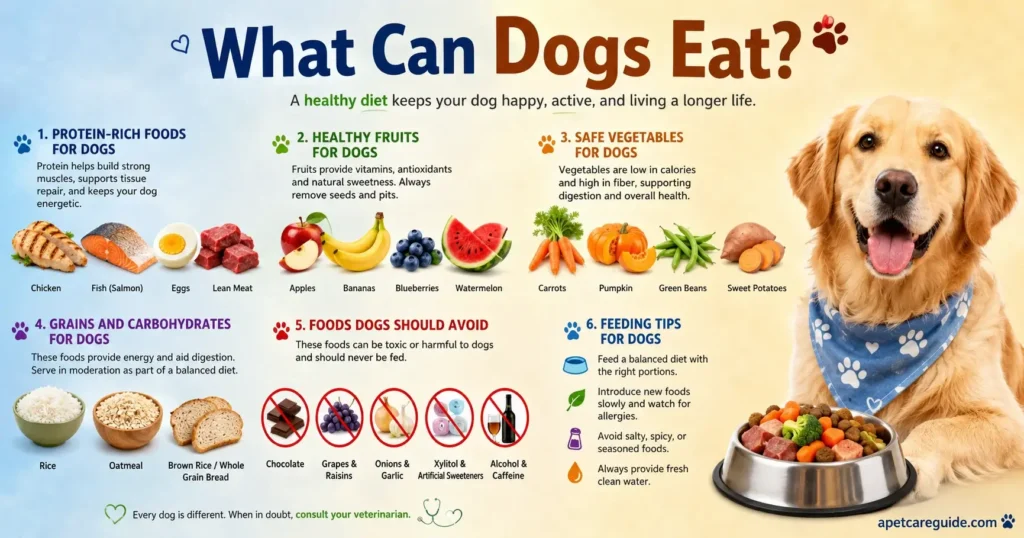


What can dogs eat? It’s one of the most common questions every dog owner asks. While many everyday human foods are perfectly safe for dogs, others can cause serious digestive problems, poisoning, or even life-threatening emergencies. Knowing which foods are safe—and which should always be avoided—is one of the most important parts of keeping your dog healthy. A balanced diet not only supports growth and energy but also helps maintain healthy muscles, strong immunity, good digestion, a shiny coat, and a longer, happier life.
Quick Answer: Dogs can safely eat many plain, cooked foods, including chicken, turkey, eggs, salmon, carrots, pumpkin, blueberries, apples (without seeds), plain rice, oatmeal, and sweet potatoes. However, foods such as chocolate, grapes, raisins, onions, garlic, macadamia nuts, alcohol, and products containing xylitol are toxic and should never be fed. New foods should always be introduced gradually, and treats should make up no more than 10% of your dog’s daily calorie intake.
Choosing the right foods is also one of the easiest ways to prevent avoidable health problems. A nutritious diet supports healthy digestion, strengthens the immune system, helps maintain an ideal body weight, and reduces the risk of nutritional deficiencies. Just as importantly, avoiding toxic foods can prevent emergency veterinary visits caused by accidental poisoning, stomach upset, or severe allergic reactions.
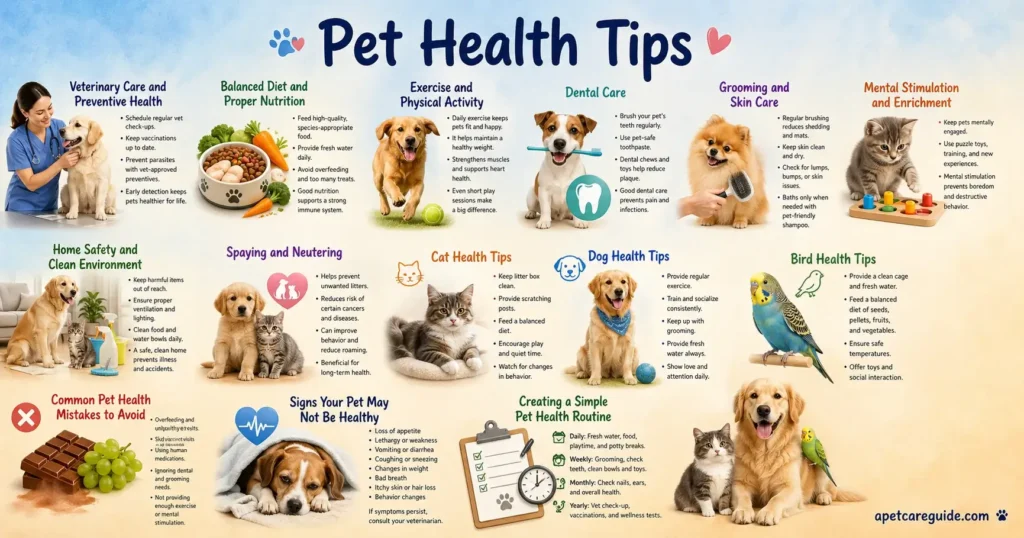
Proper nutrition is only one part of keeping your dog healthy. Along with feeding a balanced diet, regular preventive care, exercise, and routine wellness checks also play an important role. If you’re looking for more ways to support your pet’s overall well-being, read our Pet Health Tips guide.
The World Small Animal Veterinary Association (WSAVA) emphasizes that complete and balanced nutrition plays a key role in maintaining healthy body weight, immune function, digestion, and overall long-term health. Healthy treats should complement—not replace—a nutritionally complete diet.
In my experience, keeping meals simple has always produced the best results. Instead of sharing heavily seasoned table scraps, I rely on plain cooked proteins, fresh fruits, and dog-safe vegetables in moderation. I’ve found that introducing only one new food at a time makes it much easier to identify digestive problems or food allergies before they become serious. Many pet owners find that this gradual approach helps their dogs adjust comfortably while building a healthy, balanced diet.
Whether you’re caring for a playful puppy, an active adult dog, or a senior companion, understanding what dogs can eat allows you to make safer feeding decisions every day. In this guide, you’ll learn which proteins, fruits, vegetables, grains, and healthy treats are safe for dogs, which foods should always be avoided, proper portion recommendations, feeding tips for puppies, common signs of food allergies, and practical advice to help your dog stay healthy, active, and happy for years to come.
At a Glance: What Can Dogs Eat?
Need a quick overview? This table summarizes the safest foods, foods to avoid, and the most important feeding rules before you read the detailed guide below.
| Category | Quick Summary |
|---|---|
| Best Protein Sources | Plain cooked chicken, turkey, eggs, and salmon. |
| Safe Fruits & Vegetables | Carrots, pumpkin, blueberries, apples (without seeds), sweet potatoes, and green beans. |
| Safe Grains | Plain rice and cooked oatmeal in moderation. |
| Foods to Avoid | Chocolate, grapes, raisins, onions, garlic, macadamia nuts, alcohol, and xylitol. |
| Healthy Treat Limit | Treats should make up no more than 10% of your dog’s daily calorie intake. |
| Best Feeding Practice | Serve foods plain, fully cooked when appropriate, introduce new foods gradually, and feed appropriate portions. |
Best Foods Dogs Can Eat
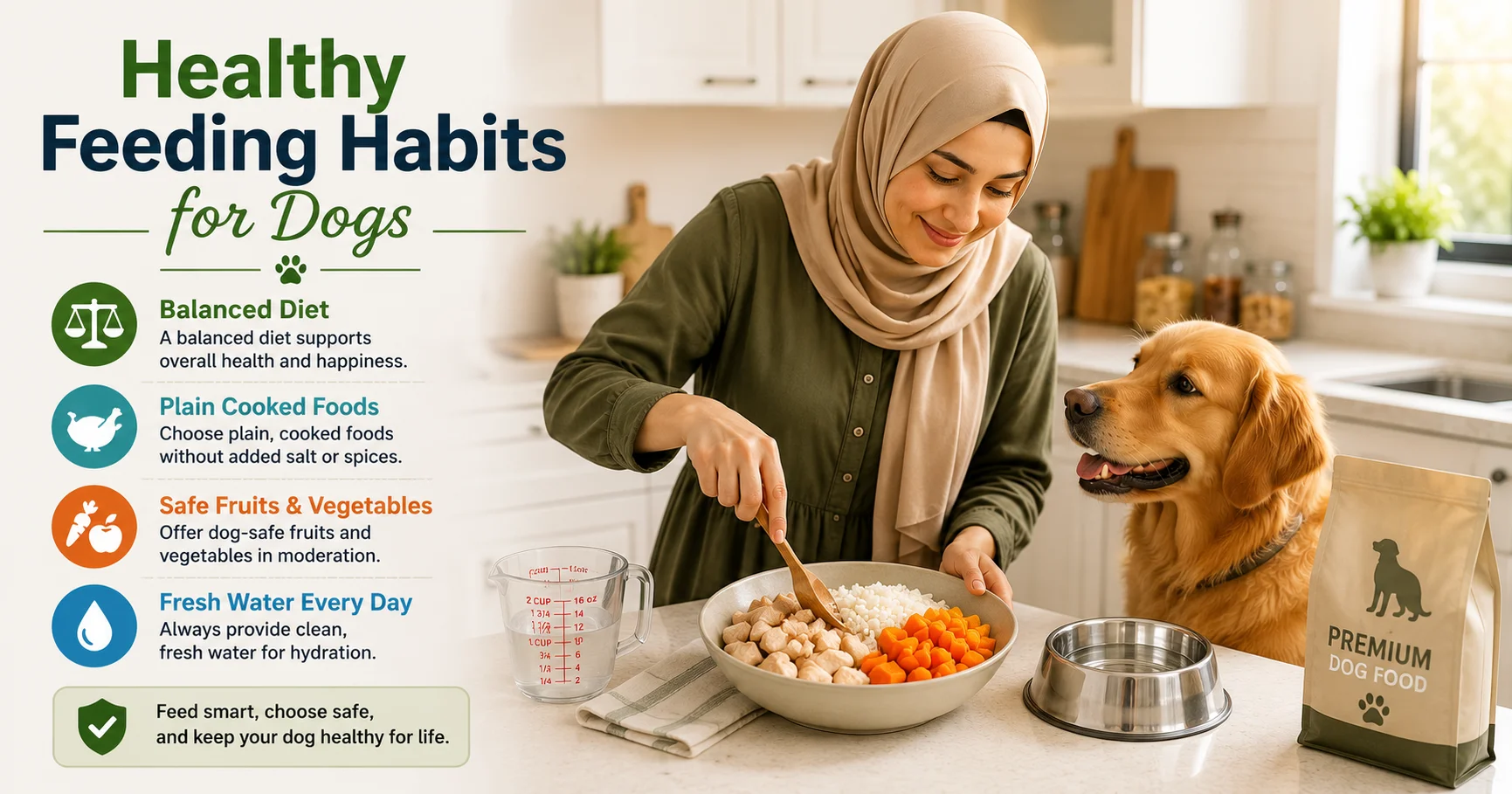
Dogs can safely eat many whole human foods. I focus on lean proteins like chicken and fish. Fresh produce like carrots and blueberries also makes great additions. Just keep everything plain and unseasoned.
Protein-Rich Foods for Dogs
Meat provides the building blocks for a healthy dog. I stick to lean, cooked options. These proteins help my dog stay active and maintain a shiny coat.
Chicken
Chicken helps build strong muscles and provides lots of energy. I serve about a quarter cup of shredded meat per twenty pounds of body weight. Always remove the skin and bones before feeding.
Eggs
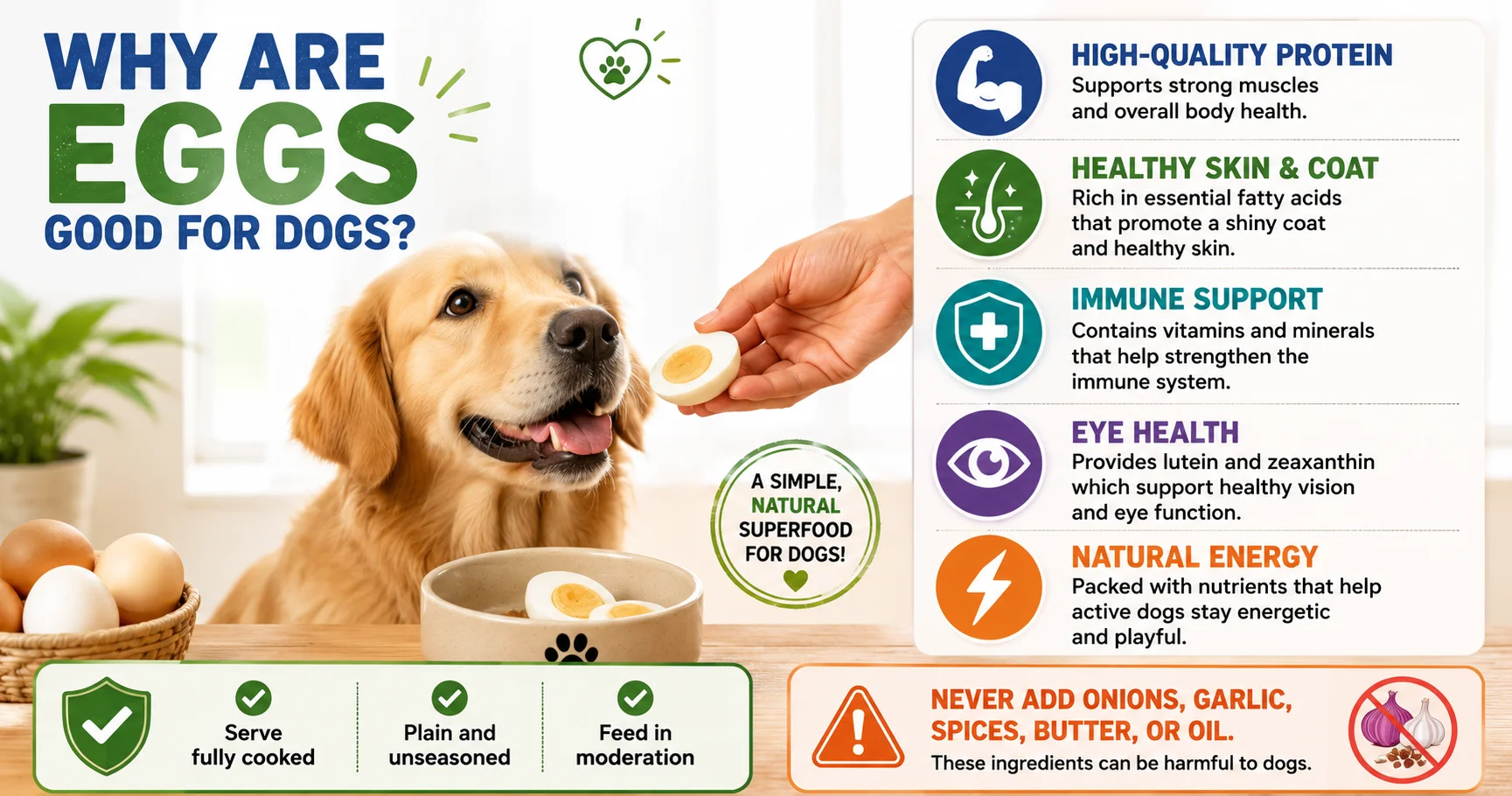
Eggs offer a complete protein source and essential fatty acids for healthy skin. I give my dog one plain, cooked egg as a special meal topper. Never feed them raw eggs to avoid bacteria.
Fish
Salmon and whitefish supply omega-3 fats that help with joint health. I offer two small pieces of cooked fish once a week. Be sure to pick out every bone to prevent choking.
According to the Merck Veterinary Manual, high-quality animal proteins supply essential amino acids that support muscle maintenance, tissue repair, immune function, and overall health throughout a dog’s life.
Healthy Fruits for Dogs
Fruits serve as natural, sweet treats. I use them for training rewards because they are low in fat. They add a nice variety to a boring kibble diet.
Apples
Apples provide a great crunch and plenty of vitamin C. I offer two or three thin slices after removing the core and every seed. Seeds contain cyanide, which is dangerous.
Bananas
Bananas contain potassium, which helps with heart and kidney function. I break off a one-inch piece as a rare snack. They have a lot of sugar, so don’t overdo it.
Blueberries
Blueberries act as a superfood that protects cells from damage. I toss my dog five or six fresh berries at a time. They are low in calories and very easy to eat.
Safe Vegetables for Dogs
Veggies add fiber and nutrients without making your dog gain weight. I mix them into meals for extra volume. Most dogs love the natural snap and texture.
Carrots
Carrots help clean teeth and provide beta-carotene for good eye health. I give one whole baby carrot as a chewy snack. They are very low in calories and fun to crunch.
Pumpkin
Plain pumpkin helps fix both constipation and runny stools. I stir one or two tablespoons of puree into their regular food. Make sure it is not the sugary pie filling.
Sweet Potatoes
Sweet potatoes provide lasting energy and help with digestion. I serve a few small, cooked cubes without any butter. They must be cooked to be safe for a dog’s stomach.
Fruits vs. Vegetables for Dogs: Which Makes the Healthier Treat?
The American Kennel Club (AKC) notes that many fresh fruits and vegetables can be healthy treats for dogs when served in moderation. However, owners should always remove seeds, pits, and other potentially hazardous parts before feeding.
Both fruits and vegetables can be healthy treats for dogs, but they offer different nutritional benefits. Vegetables are generally lower in calories and natural sugar, making them a better everyday snack for most dogs. Fruits provide valuable vitamins, antioxidants, and natural sweetness but should be offered in moderation because many contain more natural sugars. Rather than choosing one over the other, the healthiest approach is to offer a balanced variety of dog-safe fruits and vegetables while keeping portions appropriate for your dog’s size, age, and activity level.
| Feature | Fruits | Vegetables |
|---|---|---|
| Main Benefit | Rich in vitamins, antioxidants, and natural sweetness. | High in fiber, vitamins, and minerals while remaining naturally low in calories. |
| Natural Sugar | Higher natural sugar, so portions should stay small. | Usually very low in natural sugar. |
| Calories | Generally moderate. | Usually lower, making them excellent weight-friendly treats. |
| Fiber | Moderate fiber depending on the fruit. | Typically higher in fiber to support healthy digestion. |
| Best Examples | Blueberries, apples (without seeds), bananas, strawberries. | Carrots, pumpkin, green beans, cucumber, sweet potatoes. |
| How Often | Offer several times per week in small portions. | Suitable for more frequent healthy treats. |
| Weight Management | Good in moderation. | Usually the better option for overweight dogs because they’re lower in calories. |
| Best For | Training rewards, antioxidant support, and occasional sweet treats. | Daily healthy snacks, digestive support, and weight management. |
Grains and Carbohydrates for Dogs
Grains give dogs the fuel they need for long walks. I use them to settle my dog’s stomach when he feels sick. They are a great way to round out a meal.
Rice
White rice is very easy to digest and calms an upset tummy. I mix a small scoop with plain chicken when my dog has diarrhea.
Oatmeal
Oatmeal provides plenty of fiber for dogs with irregular bathroom habits. I serve a half-cup of cooked oats made with water. Let it cool down completely before they eat it.
Homemade vs. Commercial Dog Treats: Which Is Better?
Neither homemade nor commercial dog treats are automatically better. Homemade treats give you complete control over the ingredients, while high-quality commercial treats offer convenience and consistent nutrition. The best choice depends on your dog’s health, your lifestyle, and the quality of the ingredients you choose.
| Feature | Homemade Dog Treats | Commercial Dog Treats |
|---|---|---|
| Ingredients | You choose every ingredient and can avoid unnecessary fillers or artificial additives. | Ingredient quality depends on the manufacturer and product. |
| Artificial Additives | Usually free from preservatives, artificial colors, and flavors. | Some products may contain preservatives, flavorings, or coloring agents. |
| Nutrition | Nutritional value depends on the recipe and ingredients you use. | Reputable brands usually provide consistent nutritional information. |
| Cost | Often more affordable when prepared in batches. | Premium products are usually more expensive. |
| Convenience | Requires preparation, storage, and planning. | Ready to serve anytime. |
| Portion Control | Easy to adjust based on your dog’s size and calorie needs. | Follow the feeding guidelines on the package. |
| Best For | Owners who want complete control over ingredients and enjoy preparing treats at home. | Busy owners who choose high-quality treats from trusted brands. |
The American Animal Hospital Association (AAHA) recommends choosing treats that fit within your dog’s overall nutritional needs and daily calorie allowance while maintaining a balanced diet.
How to Decide Whether a Food Is Safe for Your Dog
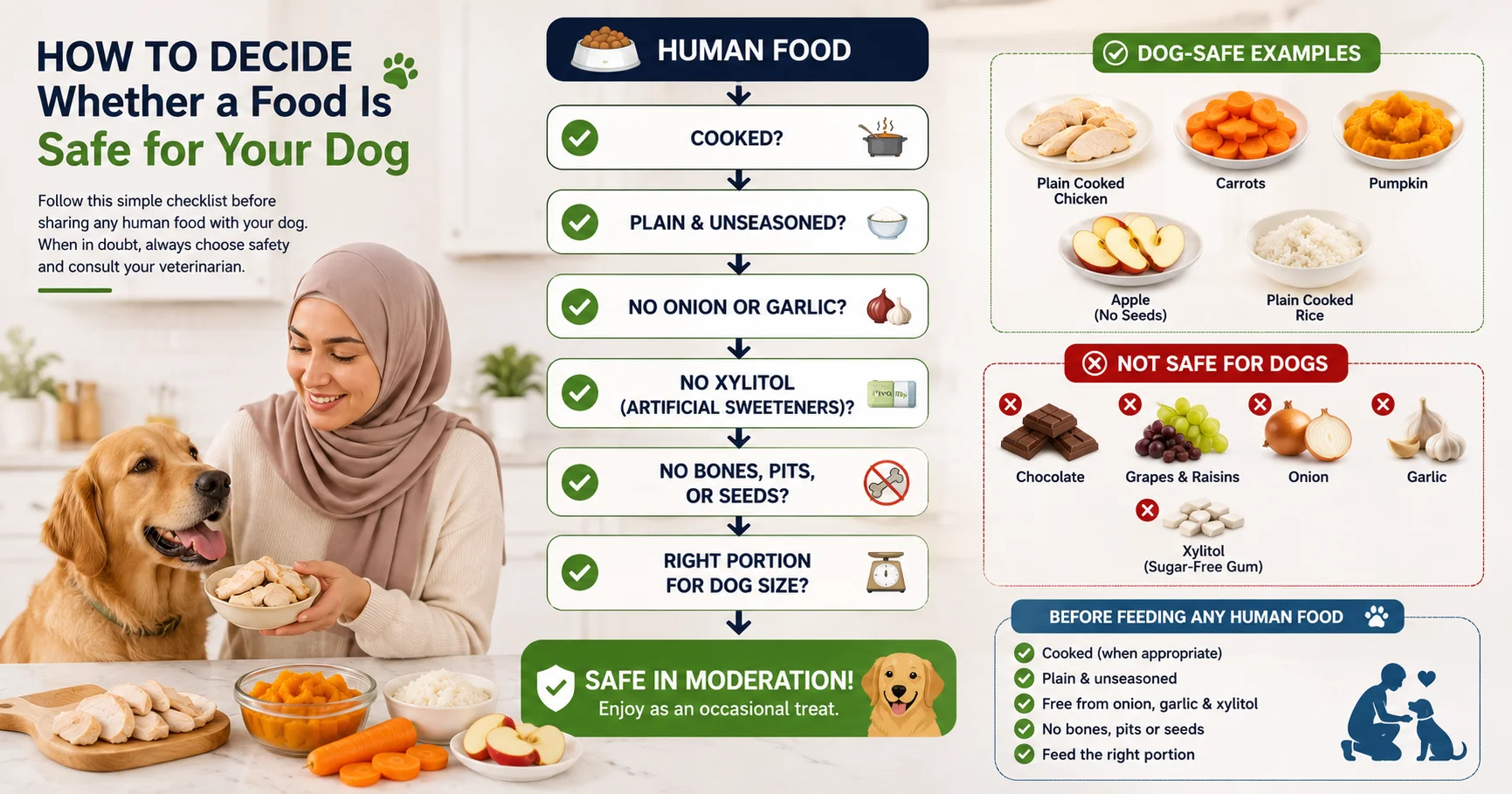
Not every human food is automatically safe for dogs. Some foods that seem harmless can upset your dog’s stomach, while others may be toxic even in small amounts. Before offering any new food, it’s worth taking a moment to check a few important details.
In my experience, asking a few simple questions before sharing any food has prevented many common feeding mistakes. It only takes a minute to evaluate a food, but that small habit can help protect your dog from digestive problems, allergic reactions, or accidental poisoning.
Before giving any human food to your dog, ask yourself:
- Is the food plain and unseasoned?
- Is it fully cooked if cooking is recommended?
- Does it contain onions, garlic, or chives?
- Does it contain xylitol or other artificial sweeteners?
- Is it high in fat or heavily fried?
- Is it high in salt, sugar, or spices?
- Could it become a choking hazard because of bones, pits, seeds, or large pieces?
- Am I sure this food is considered safe for dogs?
Decision Checklist Before Feeding Human Food
| Question | Safe Action | If Not |
|---|---|---|
| Is it plain and unseasoned? | Continue. | Don’t feed it. |
| Is it cooked if necessary? | Continue. | Cook it first or avoid serving it. |
| Does it contain onions, garlic, or chives? | Continue only if No. | Never feed it. |
| Does it contain xylitol or other artificial sweeteners? | Continue only if No. | Never feed it. |
| Is it high in salt, fat, or spices? | Continue only if No. | Choose a healthier alternative. |
| Does it contain bones, pits, or seeds? | Remove them before serving. | Don’t feed it until they’re removed. |
| Is the portion appropriate for your dog’s size? | Continue. | Reduce the serving size. |
| Is it suitable for your dog’s age and health condition? | Continue. | Ask your veterinarian first. |
| Still unsure? | Verify with your veterinarian or a trusted veterinary resource. | Don’t feed it. |
The ASPCA Animal Poison Control Center advises keeping toxic foods such as chocolate, grapes, raisins, onions, garlic, alcohol, macadamia nuts, and products containing xylitol completely out of your dog’s reach to help prevent accidental poisoning.
How Often Can Dogs Eat Human Foods?
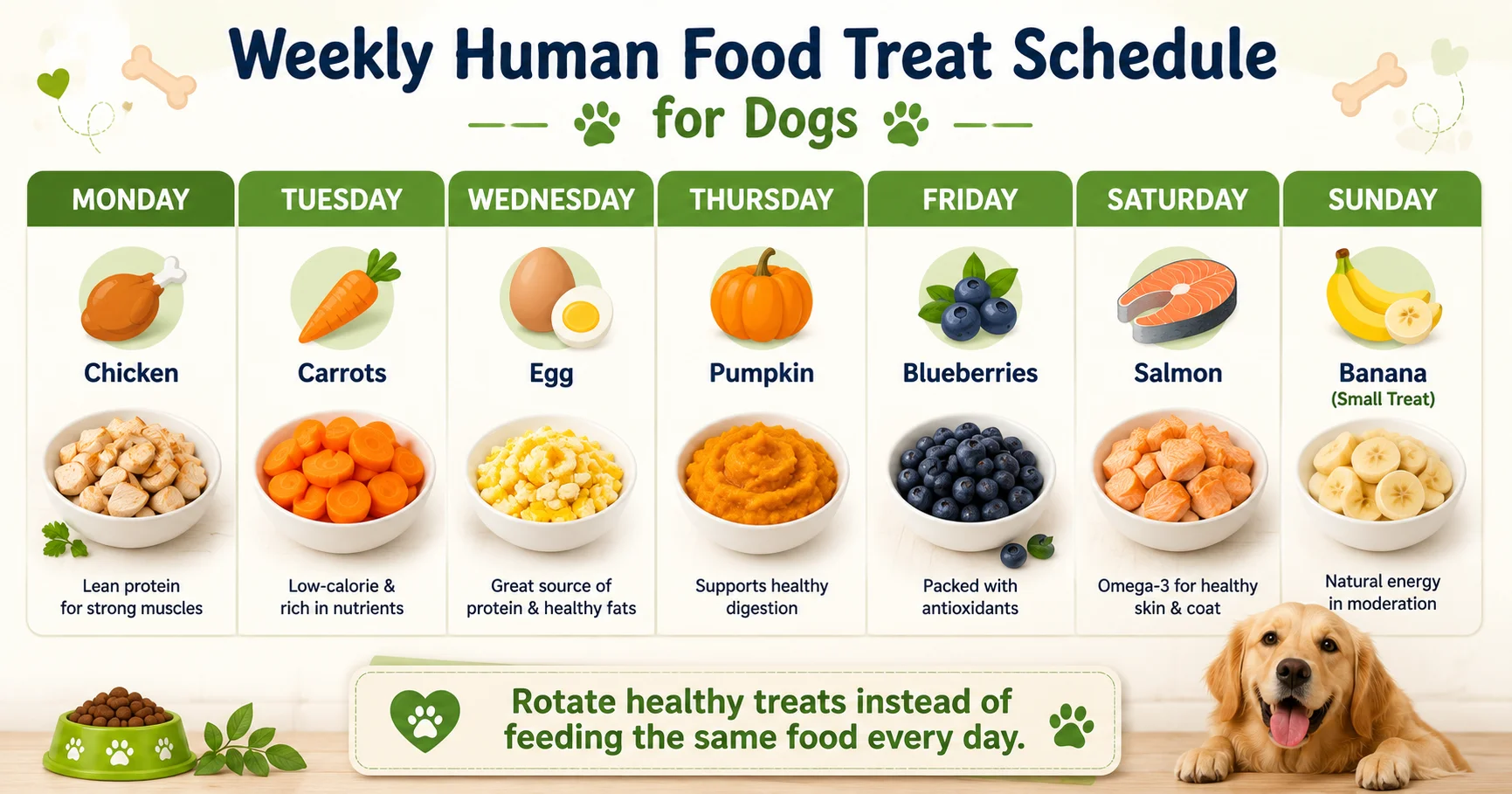
Not every healthy human food should be fed every day. While some foods, such as plain cooked chicken, can be offered regularly in small amounts, others should be treated as occasional snacks because they contain more fat, sugar, or calories. Feeding too much of even a healthy food can upset your dog’s balanced diet or contribute to weight gain.
In my experience, following a simple weekly feeding routine makes it much easier to provide variety without overfeeding. The table below offers general guidance for healthy adult dogs. Individual needs may vary depending on your dog’s age, activity level, medical conditions, and advice from your veterinarian.
Recommended Feeding Frequency for Common Human Foods
The table below provides general guidance on how often healthy adult dogs can enjoy common human foods as treats. These recommendations are intended for plain, dog-safe foods served in moderation alongside a complete and balanced diet.
| Food | Recommended Frequency | Notes |
|---|---|---|
| Plain Cooked Chicken | Daily (small amounts) | Lean protein that supports muscle health. |
| Turkey | Daily (small amounts) | Serve plain without skin, seasoning, or bones. |
| Eggs | 2–3 times per week | Always fully cooked before serving. |
| Salmon | Once per week | Cook thoroughly and remove every bone. |
| Pumpkin | 3–4 times per week | Supports healthy digestion and fiber intake. |
| Carrots | Several times per week | Low-calorie snack rich in beta-carotene. |
| Green Beans | Several times per week | A filling, low-calorie treat. |
| Apples (No Seeds) | 2–3 times per week | Remove the seeds and core before feeding. |
| Blueberries | 2–3 times per week | Offer a small handful as a treat. |
| Banana | Occasionally | Naturally high in sugar, so feed sparingly. |
| Plain Rice | As needed | Often used for short-term digestive upset. |
| Oatmeal | Occasionally | Serve plain and fully cooked. |
The American Animal Hospital Association (AAHA) recommends monitoring your dog’s body condition regularly and adjusting treat frequency if weight gain becomes noticeable.
How Much Human Food Can Dogs Eat?
Knowing what dogs can eat is only part of the equation. Feeding the right amount is just as important. Even healthy foods can lead to weight gain, digestive upset, or nutritional imbalances if served in large quantities. In my experience, using human foods as occasional treats or meal toppers works much better than replacing a complete and balanced dog food.
For most healthy adult dogs, healthy human foods should make up no more than 10% of their daily calorie intake. The remaining 90% should come from a nutritionally balanced commercial dog food or a veterinarian-approved homemade diet. If you’re introducing a new food, start with a small portion and monitor your dog for vomiting, diarrhea, itching, or other signs of food intolerance before offering it again.
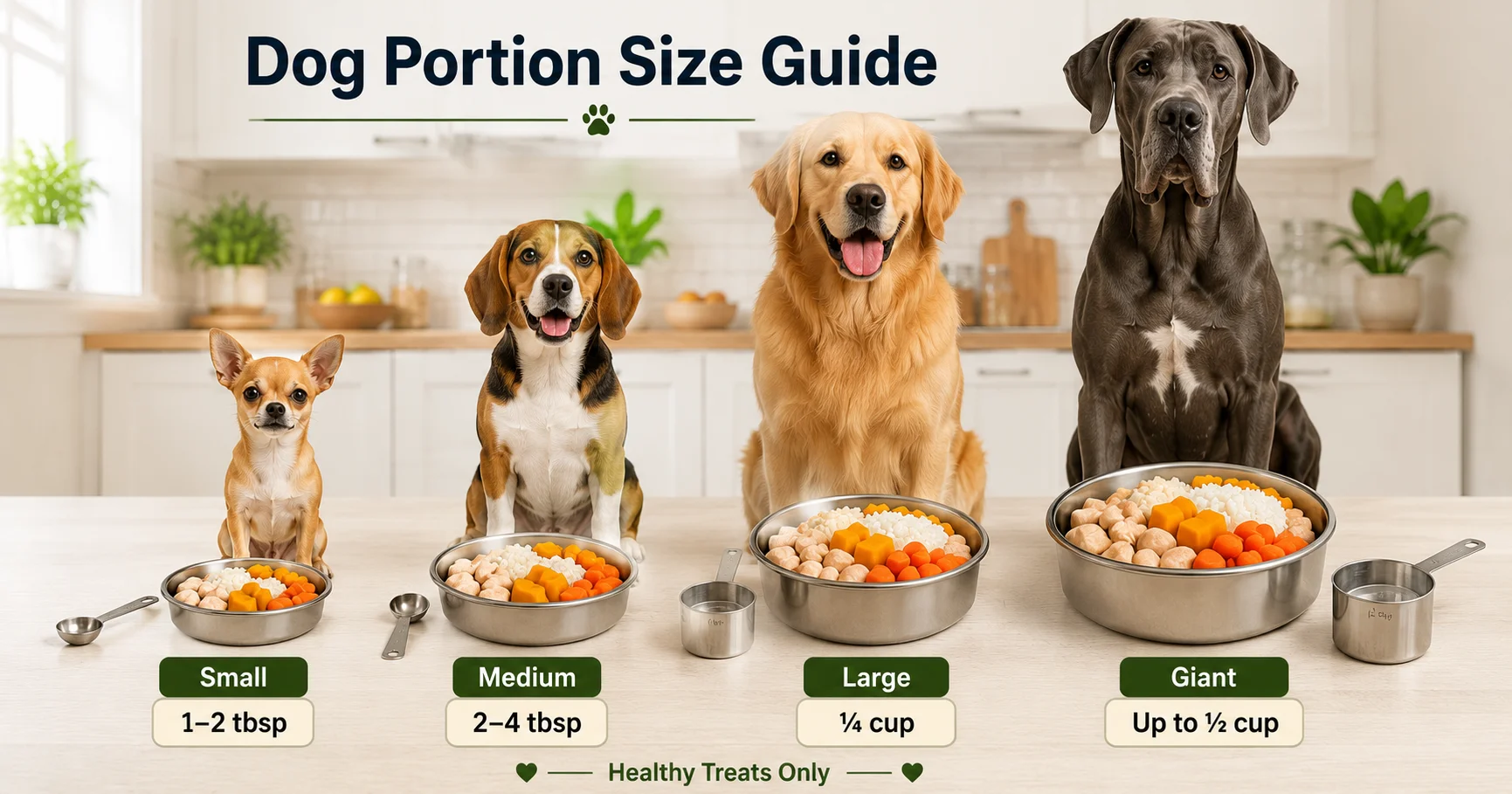
The table below provides general portion recommendations for healthy treats based on your dog’s size. These are guidelines only, as every dog’s age, activity level, breed, and medical condition can affect its nutritional needs.
Daily Portion Guide by Dog Size
| Dog Size | Example Weight | Maximum Healthy Human Food Treats Per Day |
|---|---|---|
| Small Dogs | 5–10 kg (11–22 lb) | 1–2 tablespoons |
| Medium Dogs | 10–25 kg (22–55 lb) | 2–4 tablespoons |
| Large Dogs | 25–40 kg (55–88 lb) | ¼ cup |
| Giant Dogs | Over 40 kg (88+ lb) | Up to ½ cup |
WSAVA nutritional guidelines recommend adjusting food portions according to a dog’s age, breed, activity level, body condition score, and overall health rather than relying only on body weight.
Puppy vs Adult vs Senior Dogs
Different life stages have different nutritional needs. While many human foods are safe for dogs, the right choices and portion sizes vary depending on whether your dog is a puppy, an adult, or a senior. The comparison below provides general guidance to help you choose appropriate foods while considering your dog’s age and overall health.
| Dog Life Stage | Safe Human Foods | Extra Care & Feeding Tips |
|---|---|---|
| Puppy (Under 12 Months) | Small amounts of plain cooked chicken, turkey, eggs, pumpkin, carrots, and plain rice. | Introduce one new food at a time, keep portions very small, avoid rich or fatty foods, and never replace a complete puppy diet with human foods. |
| Adult Dogs | Most dog-safe foods, including chicken, fish, eggs, carrots, pumpkin, blueberries, apples (without seeds), oatmeal, and plain rice. | Maintain a balanced diet, keep treats below 10% of daily calories, and rotate healthy foods instead of feeding the same treats every day. |
| Senior Dogs (7+ Years) | Soft, easy-to-digest foods such as cooked chicken, turkey, pumpkin, plain rice, oatmeal, cooked eggs, and cooked fish. | Choose softer foods when needed, monitor digestion and body weight, and consult your veterinarian before making major dietary changes if your dog has age-related health conditions. |
Foods Dogs Should Avoid
Some human foods are literally poisonous for your pet. I keep these items in high cabinets where my dog can’t reach them. You must be very careful with these four categories.
Chocolate
Chocolate contains theobromine, which dogs cannot process. This chemical causes heart racing, tremors, and even death. The darker the chocolate, the more dangerous it becomes for your pet.
Grapes and Raisins
Grapes and raisins can cause sudden kidney failure in dogs. Even a single grape might be toxic for some small breeds. I never leave these sitting out on the kitchen counter.
Onion and Garlic
Onions and garlic contain compounds that damage a dog’s red blood cells. This leads to anemia and makes your dog feel very weak. Both raw and powdered versions are equally harmful.
Xylitol and Artificial Sweeteners
Xylitol is a sugar substitute found in gum and some peanut butters. It causes a massive drop in blood sugar and liver failure. Always read the back of the jar before sharing.
Cooked vs Raw Foods
Many dog owners wonder whether raw or cooked foods are the better choice. While some raw feeding plans exist, cooked foods are generally safer for most households because they reduce the risk of harmful bacteria and parasites.
| Food Type | Cooked Foods | Raw Foods |
|---|---|---|
| Safety | Safer for most healthy dogs because cooking helps reduce harmful bacteria and parasites. | Higher risk of bacterial contamination, including Salmonella and E. coli. |
| Digestibility | Generally easier to digest, especially for puppies, senior dogs, and dogs with sensitive stomachs. | May be difficult for some dogs to digest and can increase the risk of stomach upset. |
| Bones | Remove all bones before serving to prevent choking or internal injuries. | Raw bones may still present choking or dental injury risks and should only be offered with proper supervision. |
| Recommended For | Most pet dogs as part of a balanced diet. | Only under veterinary guidance or with a carefully planned raw feeding program. |
The American Veterinary Medical Association (AVMA) discourages feeding raw or undercooked animal-source proteins because they may contain harmful bacteria that can affect both pets and people.
Can Puppies Eat Human Food?
Puppies have very delicate digestive systems that are still growing. I wait until they are older before introducing many human foods. Their growth depends on a specific balance of nutrients.
Best Foods for Puppies
Small bits of plain, boiled chicken are safe rewards. You can also offer tiny pieces of cooked carrot.
Foods Puppies Should Avoid
Stay away from heavy fats, dairy, and salty snacks. These can cause painful stomach cramps and diarrhea in young dogs.
Feeding Tips for Dogs
Good feeding habits are just as important as choosing safe foods. Offer only plain, unseasoned foods in appropriate portions, introduce one new food at a time, and keep treats below 10% of your dog’s daily calorie intake. If your dog has a sensitive stomach or an existing medical condition, consult your veterinarian before making significant dietary changes.
* Feed plain, unseasoned foods only.
* Introduce one new food at a time.
* Measure treats instead of guessing.
* Keep treats below 10% of daily calories.
* Always provide fresh drinking water.
* Watch for digestive upset after new foods.
Signs of Food Allergies in Dogs
Not every dog reacts to food in the same way. Some dogs develop mild digestive upset, while others experience ongoing skin or ear problems. If you introduce a new food, monitor your dog closely for these common signs of a food allergy or food intolerance.
Itching and Excessive Scratching
Persistent itching is one of the most common signs of a food allergy. Dogs may scratch their ears, face, neck, or body more often than usual.
Recurring Ear Infections
Frequent ear infections, redness, unpleasant odor, or excessive ear wax can sometimes be linked to food allergies, especially when they keep returning.
Vomiting
Repeated vomiting after eating a particular food may indicate that your dog’s digestive system cannot tolerate that ingredient.
Diarrhea
Loose stools or ongoing diarrhea can occur when a dog reacts poorly to certain foods or ingredients.
Excessive Gas
Frequent gas, bloating, or stomach discomfort may develop if your dog has difficulty digesting a specific food.
Constant Paw Licking or Chewing
Dogs with food allergies often lick or chew their paws excessively, especially after meals or throughout the day.
Skin Redness or Rashes
Red, inflamed skin, hot spots, or recurring rashes may develop as part of an allergic reaction.
Hair Loss or Poor Coat Quality
Chronic food allergies may contribute to hair loss, excessive shedding, or a dull, unhealthy coat over time.
Nutrition and grooming often work together. Changes in your dog’s coat, skin, or excessive shedding may indicate nutritional deficiencies, allergies, or underlying health issues. Learn how to monitor your dog’s coat and skin in our Pet Grooming Tips guide.
FAQ about what can dogs eat
Can Dogs Eat Eggs?
Yes, they can eat plain, cooked eggs. They are a great source of protein and vitamins. I avoid raw eggs because of the risk of salmonella. One egg a day is plenty for most dogs.
Can Dogs Eat Cheese?
Yes, in very small amounts. Most dogs love cheese, but many are lactose intolerant. I use tiny cubes of low-fat cheese for training only. Too much can lead to weight gain or upset stomachs.
Can Dogs Eat Peanut Butter?
Yes, if it does not contain xylitol. I always check the label for artificial sweeteners before giving a spoonful. It is a great way to hide medicine or fill a chew toy.
A healthy diet works best when it’s combined with proper daily care. Regular exercise, clean water, mental stimulation, and routine health monitoring all contribute to your dog’s long-term well-being. For more everyday advice, explore our Pet Care Tips guide.
Read More Articles: What is a pet for kids
Sharing food with my dog is a great way to bond. I stick to plain, whole foods like chicken, carrots, and apples to keep him safe. By avoiding toxic items like chocolate and grapes, I protect his long-term health. Remember to introduce new snacks slowly and keep portions small. A balanced diet mixed with lots of love ensures your dog stays happy for years. Reference: According to the ASPCA, always consult your vet before making major changes to your pet’s diet.