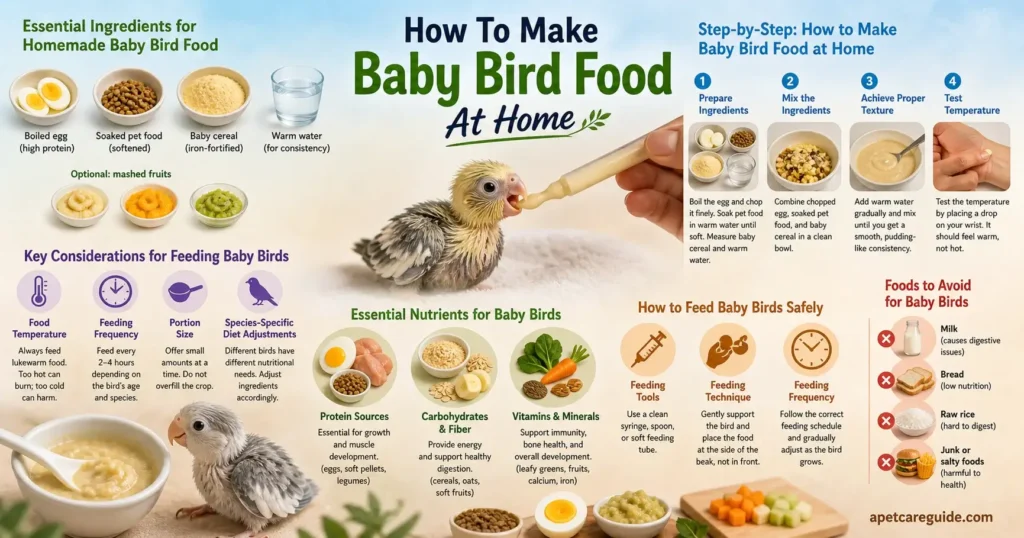


Homemade baby bird food can be a temporary emergency option when proper baby bird formula is unavailable. You need simple ingredients like boiled eggs, soaked pet food, and baby cereal. Mix them with warm water into a soft paste. Feed the bird carefully using a syringe or dropper.
Keep the food lukewarm and feed the chick often. Always prioritize safety and hygiene to help the bird grow strong until you find a professional wildlife rehabilitator. Now I describe how to make baby bird food at home step by step.
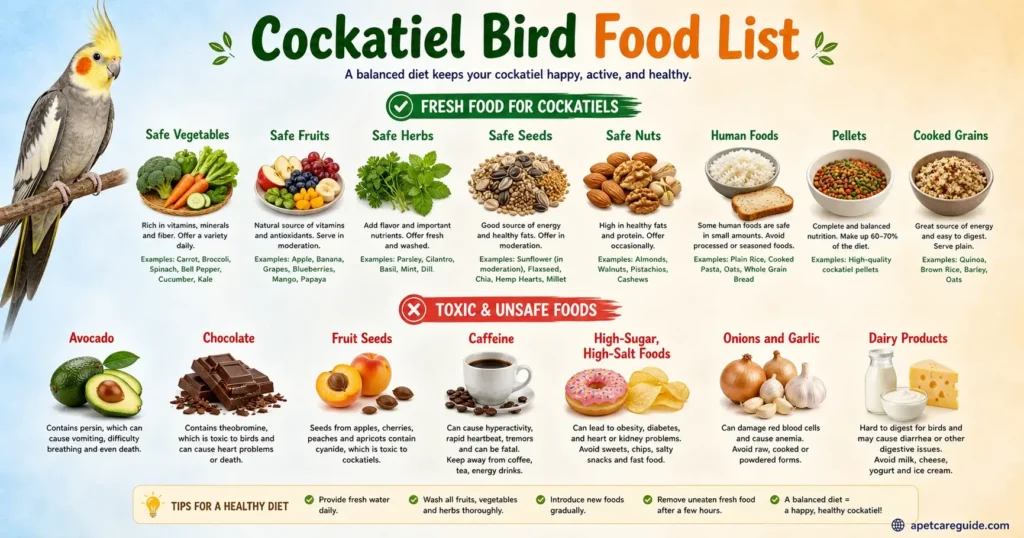
If you are caring for a baby bird, it is also helpful to understand a complete bird food chart so you know which foods are safe and which should be avoided.
What Is the Best Homemade Food for a Baby Bird?
Homemade baby bird food can be made with mashed boiled egg, softened puppy or kitten kibble, iron-fortified baby cereal, and warm water. In my experience, this type of mixture works best as a short-term emergency option until a wildlife rehabilitator or avian professional can provide proper care. Commercial hand-feeding formula remains the safest long-term choice for most baby birds.
When to Feed Homemade Baby Bird Food
You should feed homemade food to orphaned or abandoned chicks that lose their parents. This provides a temporary feeding solution before professional help arrives. Homemade food should only be used as a short-term emergency solution. Use this homemade mix in emergencies where commercial baby bird formula isn’t available. Always contact a wildlife rehabilitator quickly for long-term care.
Homemade Baby Bird Food vs Commercial Formula
| Feeding Option | Best Use | Main Advantage | Limitation |
|---|---|---|---|
| Commercial Hand-Feeding Formula | Long-term feeding | Complete and balanced nutrition designed for baby birds | Usually costs more and may not be available immediately |
| Homemade Baby Bird Food | Emergency situations only | Can be made quickly with common household ingredients | Not nutritionally complete for long-term feeding |
Essential Ingredients for Homemade Baby Bird Food
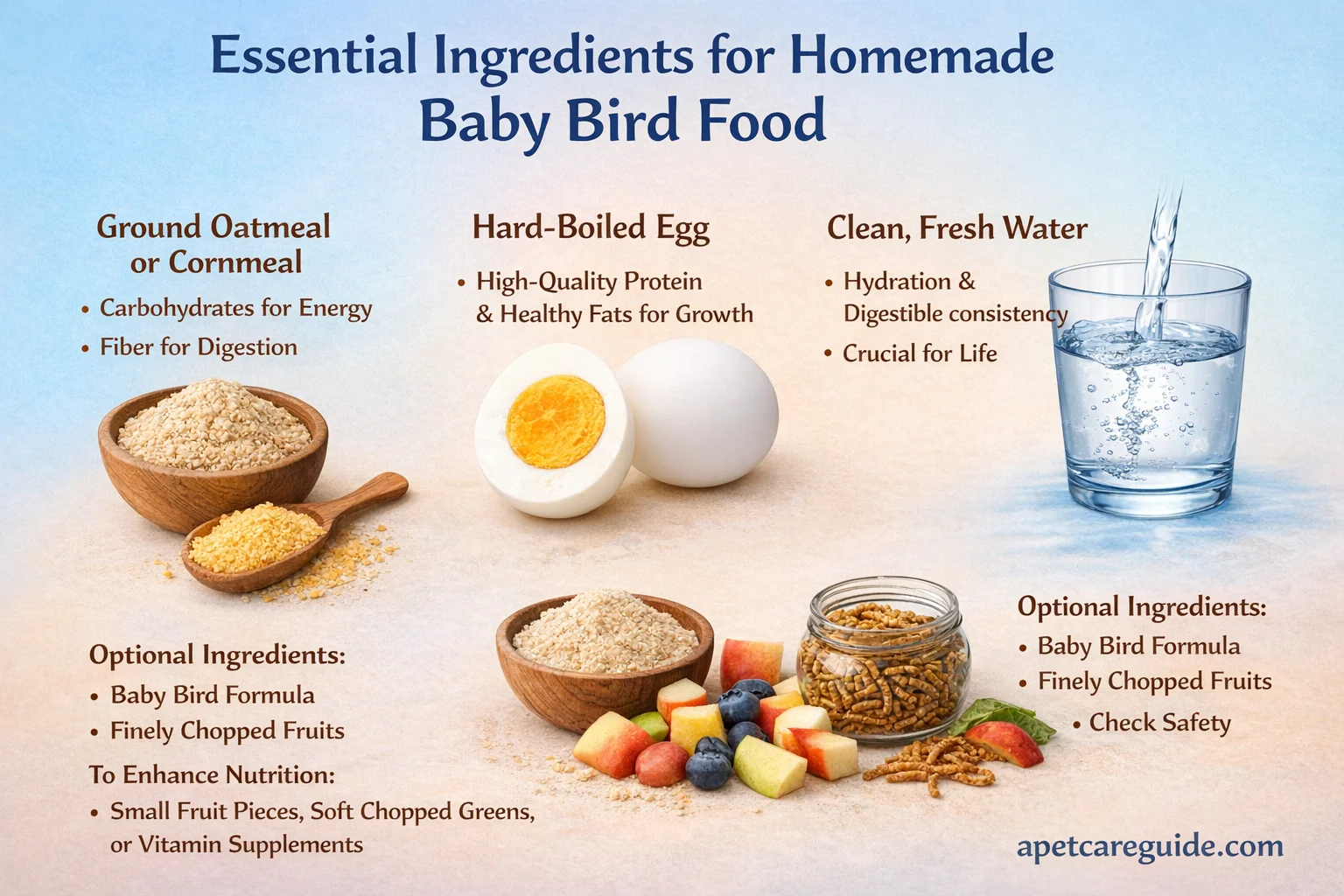
You only need a few common items to make safe food for baby birds. Gather these simple ingredients to create a meal that helps them grow strong.
Boiled egg (high protein)
Mash a hard-boiled egg perfectly. Boiled eggs provide the high protein that baby birds need for fast growth and strong muscles.
Soaked pet food (softened)
Soak dry puppy or kitten kibble in warm water until it becomes completely soft. Softened pet food adds essential fats and extra protein to keep the bird healthy.
Baby cereal (iron-fortified)
Add plain, iron-fortified baby cereal to the mixture. This cereal gives the bird the necessary carbohydrates for energy. Make sure it contains no added sugars or artificial flavors.
Warm water (for consistency)
Mix in warm water to thin the food. The water creates a smooth, safe consistency so the bird can swallow the food easily without choking.
Optional: mashed fruits
You can add a tiny bit of finely mashed fruits, like bananas or apples. This gives the bird extra vitamins, but keep the amount very small, so you do not upset their stomach. Small amounts of mashed fruit may be suitable for some older chicks, but protein-rich foods should remain the priority.
Step-by-Step Guide: How to Make Baby Bird Food at Home
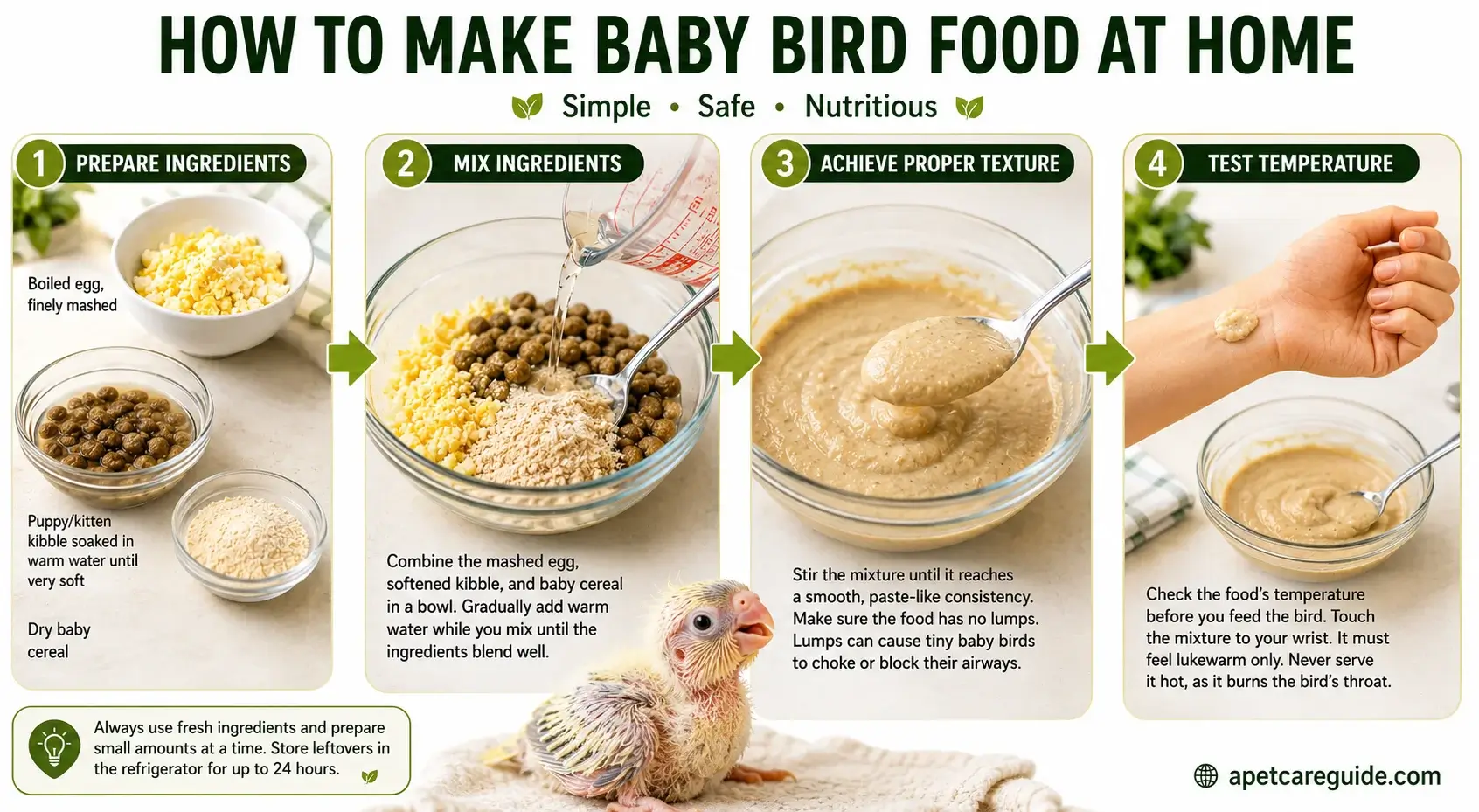
Step 1: Prepare Ingredients
First, boil an egg until it is hard. Peel the egg and mash it thoroughly so no large pieces remain. Next, soak plain puppy or kitten kibble in warm water until it becomes completely soft.
Step 2: Mix the Ingredients
Place the mashed egg, softened kibble, and iron-fortified baby cereal in a bowl. Mix well. Slowly add warm water until the ingredients form a smooth blend.
Step 3: Achieve Proper Texture
Stir until the mixture reaches a soft, paste-like consistency. The food should be easy to swallow but not watery. Make sure there are no lumps.
Step 4: Test Temperature
Before feeding, test the temperature on your wrist. The food should feel warm, not hot. Overheated food can injure a baby bird’s mouth and throat.
Important: In my experience, homemade baby bird food works best as a temporary emergency option. It should not replace a commercial hand-feeding formula for long-term feeding. If possible, contact a wildlife rehabilitator or avian veterinarian for species-specific guidance.
Key Considerations for Feeding Baby Birds
You must feed baby birds carefully. Follow these important guidelines to keep the bird safe, healthy, and comfortable.
Food Temperature
Always serve the food lukewarm. Test it on your skin first. Hot food causes severe internal burns, and cold food stops digestion and makes the bird sick.
Portion Size
Overfeeding kills just as easily as starvation. You want to offer small, pea-sized portions. Only give enough food that the bird can swallow in one gulp. If you see the crop (a sack at the base of the neck) bulging too much, you went too far. Stop immediately. Small amounts digest more easily and prevent food from backing up into their throat.
Species-Specific Diet Adjustments
Different birds eat different things. Seed-eating birds need different nutrients than insect-eating birds. Try to identify the bird species and adjust the recipe slightly based on what it naturally eats.
Baby Bird Feeding Frequency Guide
| Age Stage | Typical Feeding Interval | Feeding Needs | Notes |
|---|---|---|---|
| Hatchling (0–3 Days) | Every 15–30 minutes | Very small, frequent feedings | Requires close monitoring and warmth |
| Nestling (4–14 Days) | Every 30–60 minutes | Soft, protein-rich food | Feed only when the crop is nearly empty |
| Older Chick (2–4 Weeks) | Every 1–2 hours | Larger portions per feeding | Gradually introduce age-appropriate foods |
| Fledgling (4+ Weeks) | Less frequent | Learning to eat independently | Encourage self-feeding while monitoring intake |
Essential Nutrients for Baby Birds
Baby birds grow incredibly fast. They require a balanced mix of proteins, carbohydrates, vitamins, and minerals to build strong feathers and bones.
Protein Sources
Boiled eggs offer excellent, easy-to-digest protein. Protein is the most critical nutrient for growing chicks. Mash the eggs well so the bird gets maximum energy from every bite.
Carbohydrates & Fiber
Cooked, plain rice and plain oats or baby cereals provide healthy carbohydrates and fiber. These ingredients give the active chick quick energy and keep their digestive system working smoothly.
Vitamins & Minerals
Tiny amounts of mashed fruits, like apples and bananas, provide vital vitamins. You can also scrape a little cuttlebone powder into the food to act as a calcium source for strong bones.
Proper nutrition is critical for healthy growth and development. The Association of Avian Veterinarians (AAV) also emphasizes the importance of species-appropriate nutrition for birds.
How to Feed Baby Birds Safely
Feeding Tools
Use a plastic syringe without the needle or an eyedropper to control the food flow. You can also use a small spoon with bent edges to mimic a mother bird’s beak.
Feeding Technique
Push the food out very slowly. Let the bird swallow naturally and avoid force-feeding it. Watch closely for swallowing to ensure the food goes down the throat safely.
Foods to Avoid for Baby Birds
Foods to Avoid for Baby Birds
| Food / Substance | Safe for Baby Birds? | Why It Should Be Avoided |
|---|---|---|
| Milk & Dairy Products | ❌ No | Baby birds cannot properly digest dairy products and may develop digestive issues. |
| Bread | ❌ No | Provides very little nutrition and can fill the crop without supporting healthy growth. |
| Chocolate | ❌ No | Contains theobromine and caffeine, which are toxic to birds. |
| Avocado | ❌ No | Contains persin, a compound that can be harmful to birds. |
| Caffeine (Coffee, Tea, Energy Drinks) | ❌ No | Can affect the heart and nervous system. |
| Alcohol | ❌ No | Highly toxic and potentially life-threatening. |
| Salty Foods | ❌ No | Excess salt may lead to dehydration and kidney problems. |
| Sugary Foods & Candy | ❌ No | Offer little nutritional value and may upset digestion. |
| Raw Beans | ❌ No | Some raw beans contain natural toxins that can be dangerous. |
| Processed Human Foods | ❌ No | Often contain excess salt, sugar, preservatives, and additives. |
| Onion | ❌ No | May damage red blood cells and cause health problems. |
| Garlic | ❌ No | Can irritate the digestive system and may be harmful in large amounts. |
| Fruit Pits & Apple Seeds | ❌ No | May contain compounds that release cyanide-like toxins. |
| Moldy or Spoiled Food | ❌ No | Can contain harmful bacteria, mold, and toxins. |
| Honey | ❌ No | May contain bacteria or fungal spores unsafe for young birds. |
Quick Tip: If you are unsure whether a food is safe, do not feed it to a baby bird. In my experience, sticking to a simple emergency formula and seeking help from a wildlife rehabilitator or avian veterinarian is usually the safest approach.
For a more detailed list of dangerous foods, see our guide on Unsafe Foods for Birds.
Common Mistakes to Avoid
Avoid these frequent errors when caring for wild chicks. Keeping the bird safe requires careful attention.
Overfeeding
Giving too much food stretches the bird’s crop painfully. Feed small meals and let the crop empty between feedings.
Feeding cold or hot food
Feeding hot food burns the bird severely. Feeding cold food causes hard clumps in their stomachs. Always serve it lukewarm.
Incorrect texture
Thick or chunky food causes sudden choking. Always mix the food into a thin, smooth, and lump-free paste.
Ignoring hygiene
Dirty tools spread fast-killing bacteria. Wash your hands and clean every feeding tool before and after you feed the chick.
Hygiene & Food Storage Tips
Keeping everything clean stops deadly bacteria from growing. Follow simple hygiene rules to protect the baby bird.
Always use fresh food
Prepare a fresh batch of food every single day. Old food grows invisible mold and bacteria quickly.
Clean feeding tools after each use
Wash the syringe, dropper, or spoon with hot, soapy water immediately after every meal. Rinse them thoroughly.
Discard leftover food
Throw away any wet food left in the bowl after a feeding session. Do not save mixed wet food for later.
FAQs About Homemade Baby Bird Food
Can I feed baby birds only eggs?
No. Mix eggs with cereal and softened pet food for proper nutrition. Birds need a fully balanced diet to survive.
How long can homemade bird food be stored?
You must throw away wet, mixed food after each feeding. Never keep mixed wet food for more than one hour. But you can store dry food for more than 1 month.
Can I use commercial baby food?
Yes, you can use plain, meat-based commercial baby food in emergencies. Make sure it contains absolutely no spices, onions, or garlic.
Do All Baby Birds Need the Same Food?
No. Different baby bird species have different nutritional needs. Baby parrots often require hand-feeding formula, while many wild songbirds need insect-rich diets. In my experience, species-specific nutrition is important for healthy growth and development.
Final Thoughts About How to Make Baby Bird Food
Making baby bird food requires clean tools, smooth textures, and lukewarm temperatures. Proper care keeps the tiny bird alive in emergencies. However, homemade diets only work temporarily. Always encourage expert consultation and hand the bird over to a professional wildlife rescue immediately.