

Choosing the right cat food can be tricky, especially with so many options available. From dry kibble to wet food, and even raw diets, it’s easy to feel confused about what’s best for your cat. The good news is, each type of cat food offers unique benefits that cater to different needs, whether you’re looking for convenience, hydration, or balanced nutrition. Understanding the different cat food types can help you make the best choice for your furry friend, ensuring they get the nutrients they need to live a happy and healthy life.
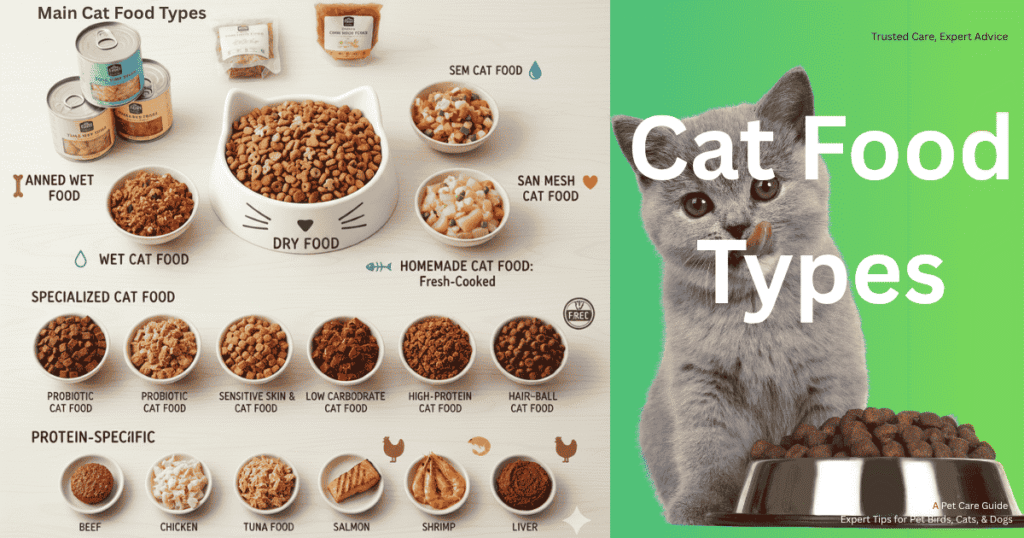
Main Cat Food Types:
The big debate: wet vs. dry cat food. Or maybe raw? This section compares the main cat food types you’ll find. Each one has good points and bad points. Let’s look at what makes them different so you can see what fits your life and your cat’s needs best.
Wet Cat Food
Wet cat food comes in cans or pouches, often as a pâté, stew, or chunks in gravy. Its biggest benefit is moisture! Cats often don’t drink enough water, and wet food helps support their kidney and urinary health. It’s also usually very tasty for picky eaters. Examples include brands that offer ‘Chicken Feast in Gravy’ or ‘Salmon Pâté’.
Dry Cat Food
Dry cat food, or kibble, is super popular because it’s convenient and affordable. You can leave it out for “free-feeding,” and it stays fresh longer. Many formulas also include a texture that helps scrape tartar off your cat’s teeth. You’ll see it in bags labelled ‘Indoor Cat Complete’ or ‘Chicken & Rice Formula’.
Raw & Fresh Cat Food
This category is growing. Raw and fresh cat food aims to mimic a cat’s natural diet. Benefits can include a shinier coat and better energy. However, the risks are real. Raw food carries a high risk of bacteria like Salmonella for both you and your cat. Fresh food is gently cooked but has a short shelf life and costs more.
Homemade Cat Food
Making the best homemade cat food gives you total control over ingredients, which is great for cats with severe allergies. The big risk? It’s extremely difficult to create a “complete and balanced” meal without a veterinary nutritionist’s help. You could easily cause nutrient deficiencies, which are very dangerous for your cat.
Fresh-Cooked Food
Different from raw, fresh-cooked food uses human-grade ingredients that are gently cooked and often delivered to your door. The benefit is high digestibility and quality. The caveat is the cost; this is usually the most expensive option and requires subscription planning and freezer space.
Semi-Moist Food
You see these as “tender” bits, often in pouches. They are softer than dry kibble, and cats love the taste. The caveat is that to stay soft, they often contain more sugar and artificial preservatives than other cat food types. Many vets suggest using these only as an occasional treat, not a main meal.
Comparison Table: Cat Food Types
| Feature | Dry Food (Kibble) | Wet Food (Canned) | Raw Food | Fresh-Cooked | Refrigerate after opening |
| Moisture % | ~10% | ~75-80% | ~70% | ~70-75% | ~25-35% |
| Typical Protein (DM) | Varies (30-45%) | High (40-50%) | High (50-60%) | High (45-55%) | Low-Moderate |
| Convenience | Very High | Moderate | Low | Low-Moderate | High |
| Cost | $ | $$-$$$ | $$$$ | $$$$ | $$ |
| Storage | Airtight, cool, dry | Refrigerate after open | Freezer; thaw daily | Fridge/Freezer | Airtight, cool, dry |
| Safety Risk | Low (storage) | Low (spoils fast) | High (bacteria) | Low | Low |
| Palatability | Good | Very High | Very High | Very High | Very High |
Understanding Specialized Cat Food
Sometimes, a standard adult formula isn’t enough. Your cat might have a specific problem, like a sensitive tummy or endless hairballs. That’s where specialized cat food types come in. They use certain ingredients to help manage these issues and get your cat feeling great again.
Probiotic Cat Food
Probiotic cat food is designed to support a healthy gut. It contains live, “good” bacteria that help balance your cat’s digestion. This is a wonderful choice if your cat has frequent diarrhea, gas, or has just finished a round of antibiotics. It helps get their system back on track.
Sensitive Skin & Stomach Cat Food
If your cat is always scratching or has an upset stomach, this food can help. It typically uses easily digestible proteins (like turkey or whitefish) and a simple list of ingredients to avoid common triggers. Many also add omega fatty acids to calm itchy skin and promote a healthy, shiny coat.
Hairball Control Cat Food
Hairball control cat food isn’t magic, but it’s very helpful, especially for long-haired cats. It works by adding extra fiber (both soluble and insoluble) to the diet. This fiber helps grab the hair in the stomach and move it safely through the digestive tract and out in the litter box, rather than up on your rug.
High-Protein Cat Food
Cats are “obligate carnivores,” meaning they must have meat. High-protein cat food honors this need. It’s great for active, muscular cats and can help with weight management by keeping them full. Look for formulas where a named meat (like ‘chicken’ or ‘salmon’) is the first ingredient.
Low Carbohydrate Cat Foods
This often goes with high-protein diets. A low-carbohydrate cat food is closer to a cat’s natural prey. It’s an excellent choice for managing weight, as cats are not built to process lots of carbs (like corn, wheat, or soy). It’s also a common recommendation for diabetic cats.
Grain-Free Cat Food
A grain-free cat food simply means it doesn’t use corn, wheat, rice, or barley. Instead, it uses other carb sources like potatoes, peas, or lentils. It’s a great option for cats with a specific grain allergy, but it is not automatically better or lower in carbs than a grain-inclusive food.
| Concern | Protein (DM) | Carb % | Fiber Type | Omegas | Moisture |
| Loose stool | 40–50 | Low–Med | Prebiotic + gentle soluble | n-3 support | Medium |
| Hairballs | 40–50 | Low | Soluble + insoluble blend | n-6/n-3 mix | Medium–High |
| Weight gain | 40–55 | Low | Modest | n-3 support | High (wet) |
| Itchy skin | 40–50 | Low | Gentle | EPA/DHA | Medium |
| Picky eating | 40–55 | Low | Light | Aroma-rich | High (wet/fresh) |
Protein-Specific Cat Foods
Walk down the aisle, and you see ‘chicken,’ ‘salmon,’ ‘beef,’ and more. You’ll see many protein-specific cat food types. Is one better? Not always, but the protein source matters! Some cats are picky, while others have allergies. Rotating proteins can be a great way to keep your cat interested and avoid developing new sensitivities.
Beef Cat Food
Beef cat food is a rich, flavorful option that many cats love. It’s high in iron and protein. However, beef is also a common allergen for some cats. It’s a great choice for a rotation, but watch for any signs of itching or an upset stomach if it’s a new food.
Chicken Cat Food
Chicken cat food is the most common protein you’ll find. It’s a lean, highly digestible, and affordable source of protein. Because it’s so common, it’s also the most frequently reported allergy, but that’s only because so many cats eat it. For most cats, it’s a fantastic, reliable staple.
Tuna Cat Food
Tuna cat food can make almost any cat come running! That strong smell is irresistible. But tuna should not be the main part of a diet. It can be low in certain vitamins (like E) and high in mercury. It’s best used as a special treat or part of a ‘mixed seafood’ blend, not as an every-meal food.
Salmon Cat Food
Salmon cat food is a powerhouse of nutrition. It’s not just a protein; it’s packed with healthy omega-3 fatty acids. These are amazing for reducing inflammation and keeping your cat’s skin and coat soft and shiny. It’s a very popular choice for cats with dull fur or itchy skin.
Whitefish Cat Food
Whitefish cat food (which can include cod, haddock, or pollock) is a wonderful alternative. It’s a lean protein that is highly digestible and less likely to cause allergies than proteins like beef or chicken. This makes it a go-to choice for many sensitive-stomach formulas.
Shrimp Cat Food
Shrimp cat food is usually found as a ‘flavor’ or a ‘topper’ rather than a main protein source. Cats adore the taste. It’s a good source of protein and antioxidants, but it’s also high in sodium and cholesterol. It’s best as a fun ‘extra’ in a balanced diet.
Liver Cat Food
Liver cat food (usually chicken or beef liver) is extremely nutrient-dense. It’s loaded with Vitamin A, iron, and B vitamins. Cats find it delicious. However, too much vitamin A can cause toxicity. In a ‘complete and balanced’ food, the amount is safe. Just don’t feed your cat plain liver every day.
Age-Based Cat Food: Kitten, Adult, and Senior
A cat’s needs change dramatically as they grows. You wouldn’t feed a baby the same as an adult, and the same goes for cats. Feeding the right food for their life stage is critical for healthy development and aging. Let’s look at the different cat food types for each age.
Kitten Food
Kitten food is a high-octane fuel for growth. It’s packed with more calories, protein, and fat to build strong muscles and bones. It also has higher levels of nutrients like DHA for brain and eye development. Kittens should eat this specific formula until they are about one year old.
Adult Cat Food
Adult cat food is all about maintenance. Once a cat is fully grown (around 1 year), their food should be balanced to maintain their ideal weight, energy, and overall health. It has fewer calories than kitten food to prevent them from becoming overweight. This is the stage they’ll be in for most of their lives.
Now Visit:
Transition from Kitten to Adult Cat Food
Difference Between Kitten food vs Cat food
Senior Cat Food
Senior cat food (for cats 7+ or 10+) focuses on healthy aging. These formulas often have fewer calories to match a slower metabolism. Many add joint-supporting ingredients like glucosamine. They also feature highly digestible protein to protect aging kidneys and antioxidants to support a weaker immune system.
Indoor vs. Outdoor Cat Food
Does your cat lounge on the sofa all day, or do they patrol the garden? Their lifestyle changes their needs. An indoor cat food is very different from one for an outdoor adventurer. The main difference comes down to one word: calories.
Indoor Cat Food
Indoor cat food is a popular choice. It’s made for a less active lifestyle. This food has fewer calories per cup to help prevent weight gain. It also often includes extra fiber. This fiber helps control hairballs (from all that indoor grooming) and keeps them feeling full.
Outdoor Cat Food
An outdoor cat food is for the active explorer. These cats burn way more energy hunting, climbing, and running. Their food has a higher fat and protein content to provide the dense energy they need. It also may include extra antioxidants to support their immune system from being exposed to the outside world.
Why & How to Preserve Cat Food
Why Do We Need to Preserve Cat Food?
We need to preserve cat food for one simple reason: to keep it safe and fresh. Without preservatives, the fats in the food would spoil (go “rancid”) very quickly. This not only tastes bad but can make your cat sick. Preservatives also stop bacteria and mold from growing.
How to Preserve Cat Food?
Nothing feels worse than tossing out an expensive bag of cat food because it went stale, right? I’ve been there, and it’s a waste of money that also disappoints your kitty. After working with pet nutrition topics for years, I’ve found the absolute best ways to protect your investment. For dry food, the big mistake many people make is pouring the kibble directly into a plastic bin. Instead, you should keep the food inside its original bag. Then, roll the top of that bag down tightly to push out the air.
Next, place the entire sealed bag into your airtight container. Why? Because those original bags have a special liner designed to protect the healthy fats and oils from oxygen, which makes food go bad. When it comes to wet food, the timer starts the second you peel back that lid. Therefore, you must cover any leftovers immediately. You can use a simple plastic wrap or a fitted silicone can lid. After that, put it straight into the refrigerator. Remember, it’s usually only good for about three days, so using it quickly is key. These simple habits keep your cat’s meals fresh, tasty, and safe.
How Do Manufacturers Preserve Cat Food?
Manufacturers use a few methods. For dry food, they often use “natural” preservatives like Vitamin E (tocopherols) or Vitamin C (ascorbic acid), or sometimes artificial ones like BHA/BHT. For wet food, the preservation method is the can itself! The food is cooked at a high temperature right in the sealed can (a process called sterilization), so no other preservatives are needed.
Safe Storage at Home (Actionable)
How you store the food matters. For dry kibble, keep it in the original bag, but place that bag inside an airtight container. This keeps it freshest. Store it in a cool, dark place. For wet food, once you open a can, immediately cover it and put it in the fridge. Use it within 2-3 days.
Visual: Storage Do/Don’t Grid
| Food Type | DO | DON’T |
| Dry Kibble | Dump it into a plastic bin (the bag has a fat barrier). | Dump it into a plastic bin (the bag has a fat barrier). |
| Dry Kibble | Keep in a cool, dark place (like a pantry). | Store it in a hot garage or a sunny spot. |
| Wet Food (Cans) | Use a silicone can lid and refrigerate immediately after opening. | Leave it sitting on the counter for hours. |
| Wet Food (Cans) | Label the can with the date you opened it. | Store in the original bag inside an airtight container. |
Which Cat Food Is Best for Cats?
The 5-Step Chooser (Adult Cats VS Kitten)
- Life stage & health (any vet-diagnosed needs?). First, talk to your vet. Does your cat have kidney issues, allergies, or dental problems? Is it a kitten, adult, or senior? This is the most important step.
- Format fit (wet, dry, raw, fresh; budget & storage). Be honest about your life. Can you afford fresh food? Do you have freezer space for raw? Do you prefer the ease of dry food? A mix of wet and dry is a great choice for most.
- Label check (complete & balanced for stage). This is non-negotiable. Look for the AAFCO statement on the bag or can. It should say the food is “complete and balanced” for your cat’s specific life stage (like “kitten” or “adult maintenance”).
- Protein-first (named animal proteins; check DM protein). Look at the first ingredient. You want to see “Chicken,” “Salmon,” or “Beef,” not “Meat By-Product” or “Corn.” This shows the food is based on quality animal protein.
Trial & monitor (stool quality, coat, energy, weight over 4–6 weeks). Once you choose, see how your cat does. Are their stools firm? Is their coat shiny? Do they have good energy? Are they maintaining a healthy weight? Give it a few weeks. If you see problems, it’s time to try something else.
Feeding Guide
The guide on the side of the bag is just a start. It’s often too much food for an average indoor cat. A better way is to ask your vet for your cat’s “ideal daily calories.” Then, you can figure out exactly how much food (wet or dry) that equals. A kitchen scale is much more accurate than a scoop! Remember to feed in meals (2-3 times a day) rather than leaving food out all day, as this helps prevent weight gain.
Cost-Saving Tips Without Compromising Nutrition
Eating well doesn’t have to break the bank. First, buy the biggest bag of dry food you can safely store; the per-pound cost is much lower. Second, consider “mixed feeding”—use a good-quality, affordable dry food for most calories, and add just a small spoonful of wet food for moisture and taste. Finally, don’t skip vet checkups. Preventing problems is always, always cheaper than treating them.
After all that information, you’re probably still asking: “What’s the one best food?” We’ve looked at so many cat food types, from wet and dry to raw, and explored formulas for everything from sensitive stomachs to indoor lifestyles. The simple truth is, there is no single “best” brand for every cat. The best food is one that is labelled Complete and Balanced for your cat’s specific life stage, supports their individual health needs, fits within your budget, and, just as importantly, is a food your cat will actually be excited to eat.