

Birds are highly sensitive animals. Many everyday human foods can be fatal for pet birds. From chocolate and avocado to salty snacks and caffeine, these items cause serious health problems. I noticed early on that toxic foods quickly lead to digestive distress, breathing difficulties, organ failure, and poisoning. Knowing which foods are unsafe keeps your feathered companion healthy. In this guide, you will learn about toxic foods for birds, warning signs of food poisoning, emergency care tips, and safe dietary alternatives recommended by avian veterinarians.
Avocado Toxicity in Birds
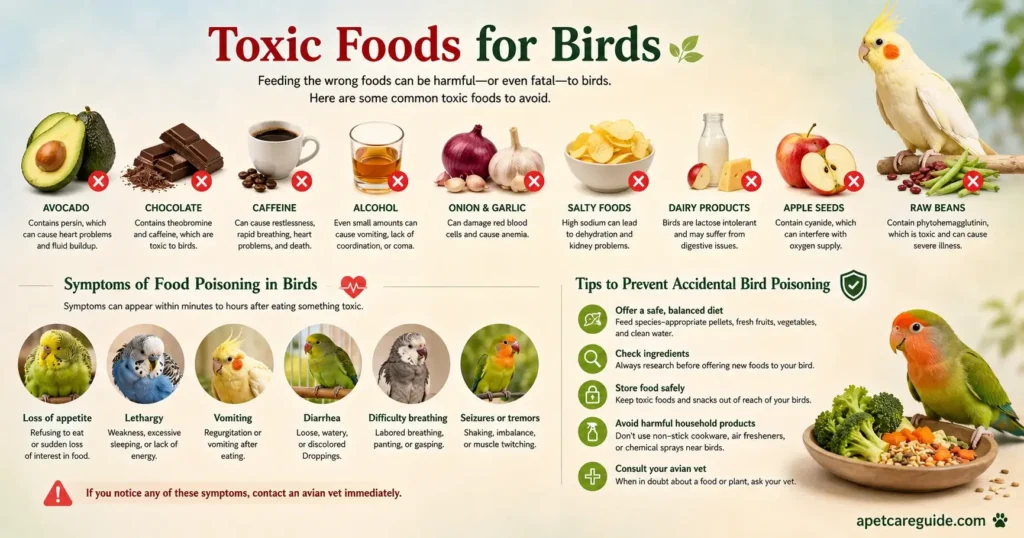
Avocados contain a fungicidal toxin called persin. This chemical makes them extremely dangerous for parrots and pet birds. Persin poisoning damages heart tissue and causes massive fluid buildup in the lungs. If a bird eats avocado, you might see them gasping for air, acting weak, or collapsing. In my experience, you have no time to wait. You must rush your pet to an avian vet immediately. Even a tiny bite of avocado leaves, skin, or fruit can be fatal.
Chocolate and Caffeine Poisoning in Birds
Chocolate contains theobromine and caffeine. Both chemicals act as deadly poisons to birds. Dark chocolate is much worse than milk chocolate because it has higher toxin levels. Never share coffee, tea, energy drinks, or soda with your feathered friend. These beverages severely overstimulate their sensitive nervous systems. Symptoms of chocolate and caffeine poisoning include rapid hyperactivity, vomiting, a racing heart, violent tremors, and seizures. Keep all caffeinated items tightly locked away.
Onion, Garlic, and Related Foods
Allium vegetables like onions and garlic destroy a bird’s red blood cells. Vets call this condition hemolytic anemia. It causes severe physical weakness and breathing problems. Onion powder and garlic powder pack even more concentrated poison. I always check ingredient labels because these hidden powders ruin many processed meals. Instead of onions, offer your bird safe vegetable alternatives. Fresh carrots, dark leafy greens, and crisp bell peppers make excellent, healthy snacks.
Salt and Salty Foods Toxic to Birds
A bird’s tiny body cannot process much sodium. Excess salt causes severe dehydration and rapid kidney failure. You must keep chips, pretzels, crackers, and processed human snacks away from your pets. One mistake many pet owners make is sharing table food without realizing the high salt content. I personally prefer feeding my flock fresh, unsalted foods. Always check labels and stick to natural, low-sodium treats like fresh fruits and raw veggies.
Sugar, Candy, and Artificial Sweeteners
Birds do not need refined sugar in their diet. Excess sugar leads to severe weight gain and long-term health problems like diabetes. Artificial sweeteners act much faster and hit harder. Xylitol, found in sugar-free candy and gum, causes a massive drop in blood sugar and instant liver damage. Never let your bird chew on gum or eat sugary treats. Stick to the natural sugars found in fresh berries and apples.
Alcohol and Toxic Beverages for Birds
Alcohol acts as a rapid poison to birds. Their small livers cannot process it, and it severely depresses their central nervous system. Birds should never consume beer, wine, cocktails, or even foods cooked in alcohol. If a bird ingests alcohol, they will show signs of poisoning quickly. Watch for trouble perching, vomiting, mental confusion, and depressed breathing. Even a tiny drop left in a glass acts as a lethal dose, so keep all household drinks covered.
Fruit Seeds and Pits That Are Unsafe for Birds
While many fruits offer great nutrition, their seeds and pits hide deadly threats. Apple seeds and the pits of cherries, peaches, plums, and apricots contain cyanide. This chemical blocks oxygen from reaching a bird’s cells. Safe fruits include bananas, mangoes, and blueberries. To prepare fruit safely for pet birds, simply wash the produce thoroughly and cut out all seeds, pits, and stems before serving. I always core apples completely before sharing.
Dairy Products and Lactose Intolerance in Birds
Birds lack the enzymes needed to digest lactose. Giving them milk or ice cream causes severe diarrhea and stomach cramps. Hard cheese has less lactose, but it still packs too much fat and salt for a daily diet. While some pet owners offer tiny, occasional crumbs of cheese, harmful amounts quickly ruin their digestion. Better calcium sources for birds include dark leafy greens, crushed eggshells, and cuttlebone.
Raw Beans and Uncooked Foods
Raw and dried beans contain hemagglutinin. This is a highly toxic lectin. Eating uncooked legumes causes severe vomiting, bloody diarrhea, and internal damage in birds. To make beans safe, you must soak them overnight and boil them thoroughly. Never slow-cook them, as this method fails to reach the high temperatures needed to destroy the toxins. If you want healthy protein alternatives for birds without the cooking hassle, try offering hard-boiled eggs or sprouted seeds.
Moldy, Spoiled, and Contaminated Foods
Mold produces deadly mycotoxins that attack a bird’s liver and immune system. Some molds also release spores that cause severe respiratory infections. You must notice signs of food spoilage quickly. Watch for weird smells, discoloration, or fuzz on their pellets and fresh food. Proper food storage keeps your bird safe. I always store dry seeds and pellets in airtight containers in a cool, dark place. Throw away uneaten fresh food after two hours.
Toxic Plants and Household Foods Around Birds
Many common household plants, like lilies, philodendrons, and pothos, act as deadly poisons to birds. Beyond dangerous kitchen ingredients, non-stick cookware poses a massive hidden threat. Teflon pans release airborne toxins when heated. These invisible fumes cause instant, fatal respiratory failure in birds. To prevent accidental poisoning at home, move your bird out of the kitchen during cooking. Replace non-stick pans with stainless steel or cast iron. Always research a plant before bringing it indoors.
Nuts and Foods With High Fat Content
While wild birds burn a lot of energy, indoor pets cannot handle extremely fatty foods. Diets high in fat lead to massive weight gain and fatty liver disease. You must completely avoid salted, roasted, or flavored nuts. The added spices and sodium ruin their kidneys. Safe nut feeding guidelines suggest offering raw, unsalted nuts like almonds or walnuts as occasional training treats. I limit my flock to just one or two small nuts a day.
Human Junk Food and Fast Food Risks
Human junk food offers absolutely zero nutritional value for birds. Processed foods carry dangerous levels of salt, fat, and sugar. Fried foods pack excess oil that ruins their digestion and liver function. Never share pizza, burgers, or french fries. These fast food items hide artificial preservatives and additives that a bird’s small body cannot filter out. Stick to fresh, whole foods to give your pet a long, healthy life.
Toxic Foods for Specific Bird Species
While all birds share similar dietary restrictions, particular species react differently to toxins. Smaller birds metabolize poison much faster than larger parrots. Understanding these unique differences helps you tailor a safe, healthy diet for your exact feathered companion.
Toxic Foods for Cockatiels
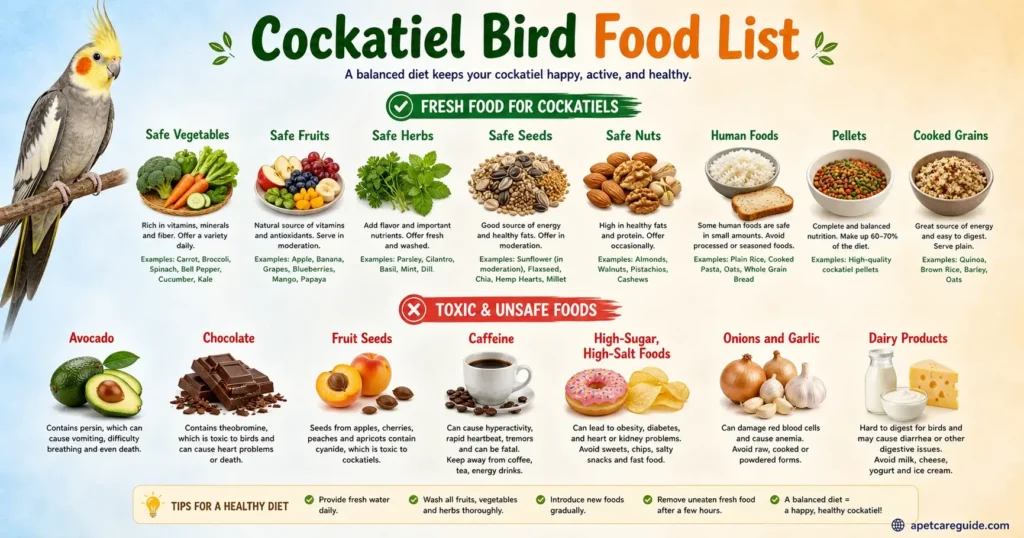
Cockatiels have highly sensitive respiratory and digestive systems. Even tiny amounts of avocado or chocolate will kill a cockatiel rapidly. They are also prone to fatty liver disease. You must strictly limit high-fat seeds and completely avoid human junk food. Keep their diet focused on high-quality pellets and fresh, leafy greens.
Toxic Foods for Budgies
Budgies are tiny. A single bite of a toxic food acts incredibly fast in their bodies. Salt acts as a deadly poison for them. Just one salty chip can shut down a budgie’s kidneys. Keep them away from all artificial sweeteners, caffeine, and fruit pits. I always double-check my budgie’s fresh fruit.
Toxic Foods for African Grey Parrots
African Greys need exact calcium levels, but feeding them dairy causes problems. Cheese and milk upset their stomachs. They are highly intelligent and will try to steal food off your plate. Never let them grab onions, garlic, or fatty meats. Instead, offer them calcium-rich vegetables like broccoli and kale.
Toxic Foods for Lovebirds and Conures
Lovebirds and conures are curious and love to chew on everything. You must keep them away from raw beans, fruit pits, and house plants. Chocolate and caffeinated drinks cause rapid seizures in these energetic birds. Always supervise them outside their cage so they do not accidentally ingest dangerous crumbs.
Species-Specific Dietary Sensitivities
Every bird species demands unique dietary care. Macaws handle slightly more fat in their diet than Amazon parrots, but neither should ever eat processed human foods. I noticed that knowing your bird’s natural diet prevents nutritional imbalances. Always consult an avian vet to understand exactly what your bird handles safely.
Foods Toxic to Birds Every Owner Should Avoid
Keeping your bird safe starts with recognizing hidden dangers in your pantry. Many items we eat safely every day pose severe health threats to our pets. Here is a closer look at the worst offenders.
Most Dangerous Human Foods for Birds
The absolute most dangerous human foods for birds include avocado, chocolate, alcohol, and anything containing xylitol. These items cause rapid organ failure or death within hours. Onions and garlic closely follow because they destroy red blood cells over time. Never take chances with these ingredients. Keep them completely locked away.
Why Some “Healthy” Foods Are Unsafe for Birds
Some foods that keep us healthy act as poisons for our pets. We eat apples for vitamins, but the seeds pack cyanide. We eat garlic for heart health, but it causes anemia in birds. Raw beans provide human protein but carry deadly lectins for parrots. You must prepare food correctly.
Understanding Bird-Safe vs. Bird-Toxic Ingredients
Reading labels saves lives. Bird-safe ingredients are whole, natural, and free from added chemicals. Bird-toxic ingredients include artificial colors, preservatives, excess salt, and refined sugars. I always tell new pet owners to avoid anything from a box meant for humans. If you cannot pronounce the ingredients, do not feed it.
How Small Amounts of Toxic Foods Can Harm Birds
Birds have incredibly fast metabolisms and tiny bodies. A microscopic crumb of dark chocolate sends a massive dose of poison into their bloodstream. The poison works in minutes. Some pets may survive a tiny bite, but the internal damage to their liver or kidneys shortens their lifespan drastically.
Symptoms of Food Poisoning in Birds
Recognizing the signs of poisoning early gives your bird the best chance of survival. Birds naturally hide their illnesses to protect themselves from predators. If you spot any of the following symptoms, treat the situation as an absolute emergency.
Vomiting and Digestive Distress
Vomiting acts as a major red flag. If your bird throws up undigested food or violently shakes their head while spitting up, they need help. You will also see digestive distress through changes in their droppings. Runny, discolored, or bloody poop indicates a severe reaction to something they ate.
Loss of Appetite and Weakness
A poisoned bird stops eating and drinking immediately. They lose their energy and look incredibly weak. You might find them sitting at the bottom of the cage with their feathers puffed up. If your usually loud and active bird suddenly becomes silent and lethargic, toxins are likely shutting down their system.
Breathing Difficulties and Neurological Symptoms
Toxins from avocados or Teflon cause severe breathing difficulties. You will see open-mouthed breathing or tail bobbing or hear clicking sounds. Neurological symptoms occur with chocolate or caffeine poisoning. The bird might lose balance, fall off their perch, suffer from violent muscle tremors, or go into full seizures.
Behavioral Changes in Sick Birds
Pay close attention to sudden personality shifts. A poisoned bird acts confused, unusually aggressive, or extremely fearful. They might refuse to step up on your finger or try to hide in dark corners of the room. These behavioral changes happen because they feel terrible pain and panic as their organs fail.
When to Contact an Avian Veterinarian
You must contact an avian veterinarian the second you suspect your bird ate something toxic. Do not wait to see if the symptoms get worse. Time acts as your biggest enemy. Call your vet or a pet poison control hotline immediately. Tell them exactly what the bird ate.
Bird Emergency Care
Accidents happen, even in the safest homes. Knowing exactly how to respond during a poisoning emergency saves lives. Your quick actions dictate the outcome, so stay calm and follow these critical medical steps to protect your pet.
Immediate Steps After Toxic Food Exposure
First, remove the toxic food from the bird’s mouth and cage right away. Place your bird in a quiet, warm, and dimly lit travel carrier to reduce their stress. Call your avian vet immediately. Write down the exact time the bird ate the poison and bring the food wrapper.
What Not to Do During Bird Poisoning
Never try to make your bird vomit. Birds lack the muscles to throw up safely on command, and forcing them causes choking. Do not offer them water, milk, or home remedies unless the vet directly tells you to do so. Trying home treatments wastes critical minutes.
How Veterinarians Treat Food Toxicity
An avian vet acts fast to stabilize your pet. They often use activated charcoal to absorb the toxins in the stomach before they reach the bloodstream. The vet gives IV fluids to flush the kidneys and prevent severe dehydration. They also provide oxygen therapy if the bird struggles to breathe.
Tips to Prevent Accidental Bird Poisoning
Creating a Bird-Safe Kitchen Environment
The kitchen holds the most dangers for a pet bird. I personally prefer keeping my birds entirely out of the kitchen area. Store all toxic foods like chocolate and onions in locked cabinets. Throw away Teflon cookware and use stainless steel. Cover your trash cans securely.
Safe Food Preparation Habits
Always wash your hands thoroughly before handling your bird. Use separate cutting boards for bird food and human meals to stop cross-contamination. Wash all fresh fruits and vegetables well to wash away deadly pesticides. I always double-check my bird’s bowl to make sure no tiny apple seeds slipped in.
Educating Family Members About Bird Safety
You must teach everyone in your house about bird safety. Children often try to share their snacks with pets. Explain to them clearly why chips, candy, and chocolate hurt the bird. Print a list of toxic foods and stick it on the refrigerator. Everyone must know the rules.
Reading Food Labels Carefully
Get into the habit of reading every single ingredient label. Onion powder, garlic powder, and xylitol hide in places you least expect. If you plan to share a safe human food with your bird, read the back first. Avoid anything with added salt, sugar, or artificial preservatives.
FAQ About Toxic Foods for Birds
Can Birds Eat Bread?
Birds can eat small amounts of whole-grain bread as a rare treat. White bread lacks nutrition and packs too much sugar. Never feed them moldy bread, as it causes severe respiratory failure.
Can Birds Eat Peanut Butter?
Yes, but only organic, unsalted peanut butter with no added sugar or xylitol. Commercial peanut butter contains dangerous additives. I offer a tiny smear occasionally to prevent unwanted weight gain.
Is Cheese Safe for Birds?
Cheese acts as an unsafe food for birds. Birds cannot digest lactose properly. Eating cheese causes severe stomach cramps and diarrhea. It also packs way too much salt and fat.
Feeding your bird the wrong food leads to rapid organ failure and severe heartbreak. Prevention always remains the safest approach. Keep your kitchen secure, read labels, and stick to natural diets. If an accident happens, act fast. Rush your bird to an avian vet immediately to save their life.