

Persian cats demand a specific feeding approach because of their long fur, flat faces, and low activity levels. I have found that feeding them right prevents massive hairballs and stops them from getting too heavy. They need high-quality proteins to keep their muscles strong, specific fats for a shiny coat, and plenty of moisture to protect their kidneys. A standard commercial kibble often falls short. You have to pick meals that match their unique physical traits to keep them thriving and out of the vet clinic. Now I describe the Persian cat diet.
Key Nutrition for Persian Cats
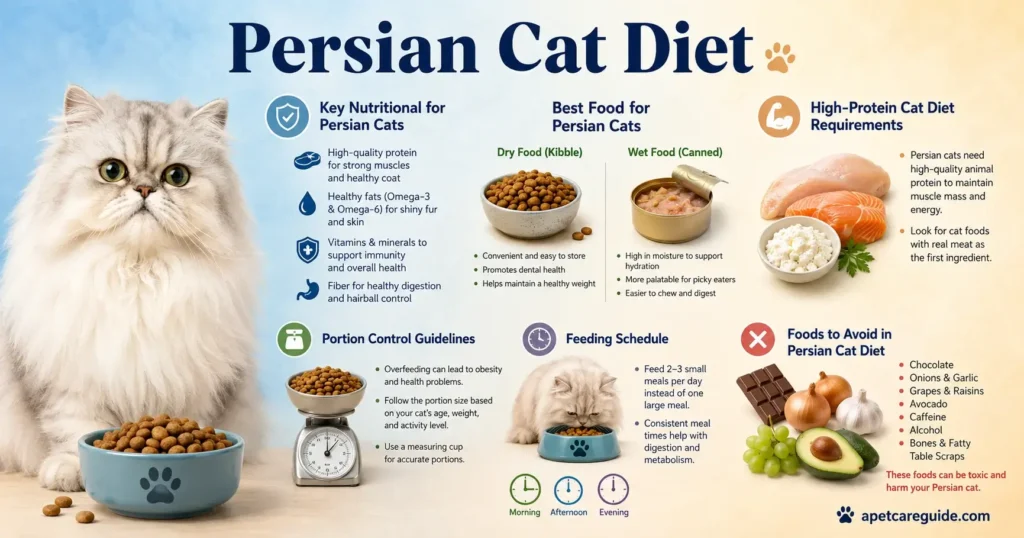
- High-quality animal protein (chicken, turkey, fish) for muscle maintenance: Real meat, like chicken, turkey, and fish, builds strong muscles and keeps your cat active.
- Healthy fats (omega-3 and omega-6 fatty acids) for skin and coat health: Omega-3 and omega-6 fats stop dry skin and keep their long fur soft and mat-free.
- Moderate carbohydrates for energy without causing weight gain: Small amounts of carbs give them energy, but keeping the portion low stops them from getting fat.
- Fiber-rich ingredients to reduce hairball formation: Fiber pushes swallowed fur through the stomach, so they throw up fewer hairballs.
- Essential vitamins & minerals like taurine, vitamin E, and calcium: Taurine protects the eyes and heart, while calcium builds strong bones and vitamin E supports the immune system.
Hydration Importance in Persian Cat Diet
Wet food and moisture-packed meals stop painful urinary blockages and protect the kidneys, because these cats rarely drink enough standing water.
Best Food for Persian Cats
Select meat-first dry kibble for indoor or long-haired breeds to control tartar and allow grazing. Add wet food to increase hydration, flush toxins, support kidneys, and ease chewing for flat faces. Any raw or homemade diet requires exact nutrient measurements, strict kitchen hygiene, and professional veterinary oversight.
Dry Food (Kibble) for Persian Cats
You need dry food that lists real meat first. Skip brands filled with cheap corn or wheat. Pick bags made just for long-haired or indoor breeds.
Benefits:
- Crunchy pieces scrape tartar off their teeth.
- You can store it without trouble and leave it out for grazing.
Wet Food (Canned Diet for Hydration)
Wet food pushes more water through the kidneys to flush out toxins.
Benefits:
- Supports kidney and urinary tract health.
- Easier chewing for flat-faced breeds.
- More palatable for picky eaters.
Raw or Homemade Diet (Veterinary-Guided)
- Requires exact measurements of bone, meat, and organs to hit nutrient targets.
- Needs a professional vet to review the recipe.
- Demands strict kitchen hygiene to stop Salmonella or E. coli infections.
High-Protein Requirements for Persian Cats Diet
Importance of Protein in Persian Cat Health
- Muscle development: Meat fuels their body and repairs torn tissue.
- Hair growth and coat shine: Amino acids from protein build strong, unbroken strands of fur.
- Immune system strength: Protein creates the antibodies needed to fight off sickness.
Best Protein Sources
- Chicken and turkey (lean and digestible): These birds offer lean meat that digests quickly without upsetting the stomach.
- Salmon and tuna (rich in omega-3): Fresh fish supplies the fats needed to stop skin flaking.
- Lamb and rabbit (alternative proteins for allergies): These novel meats stop itching and stomach pain in cats allergic to standard poultry.
Protein Balance Considerations
Too much meat without enough fiber and fat backs up their digestive tract and causes hard stools.
Portion Control Guidelines
- Based on weight: typically 24–35 calories per pound of body weight daily. Count their calories based on the scale to stop unwanted weight gain.
- Adjust for indoor activity level: Persians are usually low-activity cats. Cut back their portions if they spend all day sleeping on the couch.
Feeding Schedule For Persian Cat
- Kittens: 3–4 meals per day. Feed them small portions up to four times a day to support rapid growth.
- Adults: 2 meals per day. Give them breakfast and dinner to keep hunger away.
- Senior cats: 2–3 smaller meals, depending on health. Break their food into three tiny meals if they struggle to digest large portions.
Avoiding Overfeeding in Indoor Persian Cats
- Obesity: Extra fat builds up fast because they prefer sleeping over running.
- Joint strain: Heavy bodies crush their knees and hips, making walking painful.
- Heart problems: Excess weight forces the heart to pump much harder, risking early failure.
Foods to Avoid in a Persian Cat Diet
Toxic Foods for Cats
- Chocolate: Theobromine in cocoa speeds up their heart rate and causes seizures.
- Onions and garlic: These vegetables destroy red blood cells and trigger severe anemia.
- Grapes and raisins: Even a tiny bite causes sudden kidney failure.
- Alcohol and caffeine: Both liquids attack the nervous system and can kill a cat quickly.
Harmful Feeding Habits
- Tossing them salty or fatty scraps from your own dinner plate.
- Buying cheap grocery store bags loaded with fake colors and chemical preservatives.
- Grabbing bags off the shelf without reading the back panel to check the real meat content.
Persian Cat Coat Health and Diet Connection
Role of Omega Fatty Acids in Coat Maintenance
- Stop clumps of fur from falling out all over your house.
- Make rough hair feel like silk.
- Cure itchy, flaky spots on their back and tail.
Fiber for Hairball Prevention
Pumpkin and beet pulp drag swallowed hair right through the intestines and into the litter box.
Grooming and Diet Synergy
Brushing their fur every day pulls out the dead hair before they can lick it up and choke on it.
Special Dietary Needs for Persian Kittens and Seniors cats
Persian Kitten Diet Requirements
- Packs intense calories into small bites to fuel jumping and playing.
- Includes specific fats that build smart brains and sharp eyes.
- Features a soft texture that tiny teeth can actually crush.
Senior Persian Cat Nutrition Needs
- Drops the fat content so old cats do not get chubby.
- Adds supplements that lubricate stiff, aging joints.
- Uses pre-broken down meats so their tired stomachs do not work so hard.
Veterinary Guidance
Why Veterinary Consultation Matters
I always take my Persian cats to the vet because a doctor knows exactly how to build the perfect meal plan. They help you control your cat’s weight by figuring out the exact daily calories needed to keep them slim. Age changes everything. A good vet safely shifts your pet’s food from high-energy kitten kibble to gentle senior meals as they grow older. Regular checkups also catch hidden health conditions like kidney disease, dental pain, or digestive issues early. Catching these problems fast lets the doctor prescribe the exact right food to fix the issue.
Evidence-Based Feeding Recommendations
- Veterinary nutrition studies: Scientists test these foods in labs to prove they actually work.
- AAFCO-approved cat food standards: This label confirms the bag meets the basic nutritional laws.
- Breed-specific dietary research: Vets study flat-faced cats to see exactly what shapes of food they can pick up easily.
FAQ About Persian Cat Diet
What is the best food for a Persian cat?
Meat-first, high-moisture meals designed for flat faces and long hair work best. I always look for real chicken or fish without cheap corn fillers.
How much should I feed my Persian cat daily?
Feed them about 24 to 35 calories for every pound they weigh. Adjust this down if your cat sleeps all day.
Can Persian cats eat only dry food?
They can, but I highly discourage it. Dry kibble lacks the moisture their kidneys desperately need to function correctly.
What foods are harmful for Persian cats?
Never let them eat chocolate, onions, garlic, grapes, raisins, alcohol, or caffeine. These items cause organ failure and death.
Final Thoughts on Persian Cat Diet
Feeding your long-haired friend correctly takes a little extra effort, but it pays off massively. Give them real meat, push fluids, and control their portions. A smart feeding plan stops vet visits and keeps them happy. Keep an eye on their weight and brush them often. (Reference: Supported by guidelines from the Journal of Feline Medicine and Surgery on feline obesity and nutrition). Final Thoughts on Persian Cat Diet