

Let me tell you a terrifying truth about feeding your furry friend. Bad storage quickly spoils meals, packed with harmful bacteria and lacking nutrients. In addition, left out in warm air, the fats inside dry kibbles turn rancid quite fast. Naturally, this nasty change causes terrible tummy aches and makes kitties completely refuse their dinner. Because we love our pets dearly, keeping their meals fresh remains absolutely critical for their safety and happiness.
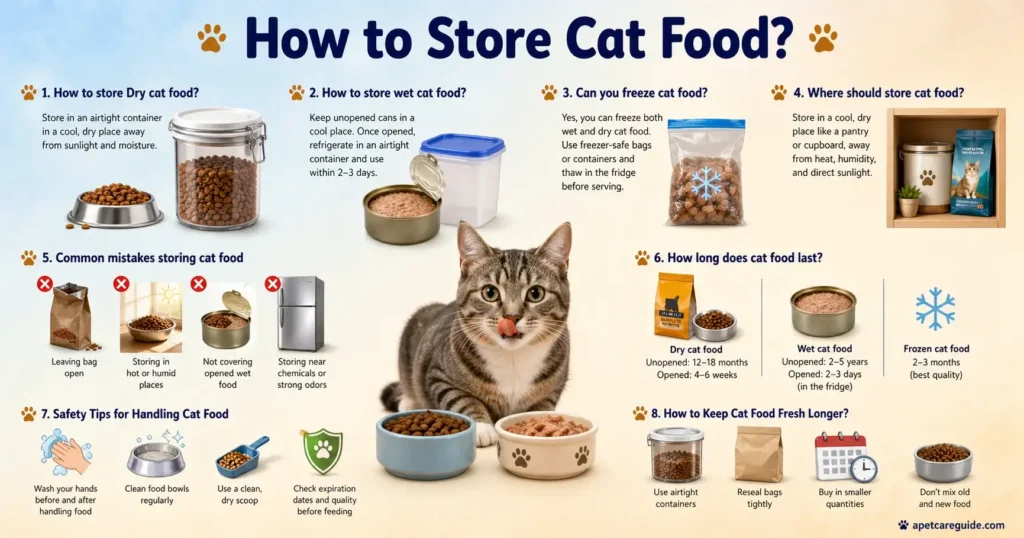
How to Store Dry Cat Food
Keeping those crunchy bites perfectly fresh feels like a big responsibility. Luckily, following a few clever habits makes everything incredibly simple.
Keep Cat Food in the Original Bag
Manufacturers actually design those thick, branded bags specifically to block harmful oxygen from ruining healthy fats. Plus, that very same package holds vital details you might need during an emergency recall, including the exact expiration date and specific batch code.
Use an Airtight Container
Placing that entire original package inside a tightly sealed box works wonders. Truly, a tight seal immediately stops wetness, sneaky bugs, and stale air from ruining the crunch. While plastic bins cost less money, metal versions offer much tougher protection against determined mice looking for a free snack.
Store in a Cool, Dry Place
Heat destroys nutrition amazingly fast. Therefore, you need a spot that stays around 70 degrees Fahrenheit with very low humidity levels. Never put these sensitive supplies inside hot garages, steamy kitchens, or right next to bright, sunny windows.
Avoid Pouring Kibble Directly into Containers
Dumping loose pieces right into a plastic tub sounds easy, but it causes huge problems later. Over the weeks, greasy oils coat those inner walls heavily. Soon enough, those old oils rot away, heavily contaminating every brand-new batch you pour inside afterwards.
How to Store Wet Cat Food
Popping open a juicy tin brings pure joy to hungry felines. However, handling leftovers demands serious attention.
Refrigerate Immediately After Opening
Do not let half-eaten tins sit on your counter all afternoon. Actually, you must move any uneaten portions straight into the chilling fridge within thirty minutes, tops.
Use airtight lids or covers.
Nobody wants their milk tasting like salmon paste. So, snapping a tight silicone cover over the tin stops strong fishy smells from escaping and keeps outside germs far away.
Transfer to Food-Safe Containers
Sometimes, leaving acidic gravy inside an open metal can tastes weird to sensitive tongues. Instead, scoop those leftovers right into a clear glass jar or a safe, BPA-free plastic dish.
How Long Wet Cat Food Last in the Fridge
Even inside a frosty refrigerator, nothing stays good forever. Generally speaking, opened cans stay totally safe for just five to seven days before they start growing dangerous mold.
Best Containers for Storing Cat Food
Picking the perfect protective gear gives peace of mind. Here is a quick breakdown of popular choices.
Plastic Containers with Tight Seals
Most families pick these lightweight options for their everyday convenience. They cost very little money and you can grab them at nearly any local grocery shop instantly.
Metal Storage Bins
Heavy-duty steel buckets survive almost any accident. Better yet, sharp little rat teeth cannot chew through thick steel walls, making them amazing against sneaky pests.
Glass Containers (For Small Portions)
For tiny treats or leftover gravy, glass works incredibly well. Because the surface remains completely smooth, nasty smells never stick around after a quick soapy wash.
Features to Look for in Storage Containers
Always check the label before buying anything new. You want sturdy latches that lock out air entirely, materials completely free from toxic BPA chemicals, and smooth shapes that wash quickly.
Can You Freeze Cat Food?
Surprisingly, the freezer acts as a magic time machine for pet supplies. Still, doing it right requires specific steps.
Freeze-Dry Cat Food
Buying giant bags saves cash, and freezing those extra pounds protects your investment. By sealing the kibble tightly inside thick freezer bags, the crunch stays perfectly safe for up to six whole months.
Freezing Wet Cat Food
Sticking pete portions into the icebox works during emergencies. Sadly, freezing changes the soft jelly texture dramatically, so only use this trick for short breaks away from home.
Proper Thawing Methods
Never leave frozen blocks melting on the warm kitchen island. Simply move the icy chunks into the regular fridge overnight so they warm up slowly without growing scary bacteria.
Where Should Store Cat Food?
Finding the exact right spot matters just as much as the box itself.
Ideal Storage Locations
Dark, boring closets work absolute wonders here. A quiet hallway pantry, a shaded lower cupboard, or any climate-controlled indoor closet offers the absolute safest environment.
Places to Avoid
Extreme weather quickly ruins expensive kibble. Keep supplies far away from unheated outdoor garages, super damp underground basements, and hot, buzzing appliances like dishwashers.
Keep Food Off the Floor
Placing heavy bags directly onto the carpet invites trouble. Setting things high on a sturdy shelf keeps crawling bugs and moisture from the dirty floor from ruining everything.
Common Mistakes Storing Cat Food
Even smart pet parents mess up sometimes. Let us fix these silly errors quickly.
Leaving Food Open or Unsealed
Forgetting to roll the top down ruins breakfast fast. Open tops invite dirty dust inside and turn crispy bites completely stale within days.
Mixing Old and New Food
Pouring a fresh bag over yesterday’s crumbs seems harmless. Truthfully, those older bits decay rapidly, poisoning the sparkling new kibbles almost immediately.
Not Cleaning Storage Containers
Skipping wash day builds a horrible, invisible danger. Greasy grime piles up along the bottom corners, growing massive colonies of nasty microbes right next to fresh meals.
Ignoring Expiration Dates
Dates printed on the box truly mean something important. Feeding extremely old supplies gives your kitty empty calories since precious vitamins fade away completely over long periods.
How Long Does Cat Food Last?
Time ticks away the second you bring groceries home. Knowing the exact limits keeps everyone healthy.
Dry Cat Food Shelf Life
Sealed factory bags sit happily on shelves for up to eighteen months. However, once you cut that plastic open, try finishing every single bite within roughly six weeks.
Wet Cat Food Shelf Life
Unopened heavy metal cans survive beautifully for two full years in a dark pantry. But again, opened leftovers sitting in the fridge only survive about five quick days.
Signs of Spoiled Cat Food
Trust your nose and your eyes completely. If the meal smells sour, feels strangely slimy, or looks slightly green, toss the garbage out right away without hesitation.
Safety Tips for Store Cat Food
The FDA officially recommends strict cleanliness to stop awful Salmonella outbreaks. Honestly, you must wash your own hands thoroughly with warm soap both before and right after serving dinner. Also, scrubbing dirty feeding plates daily stops illness fast. Always pick up a dedicated plastic scoop instead of using random dirty cups. Keeping raw meats completely separate from crunchy treats prevents dangerous cross-contamination issues entirely.
How to Keep Cat Food Fresh Longer
Big bulk bags seem great, but buying smaller sacks guarantees superior crunchiness. Keep those packages hiding away from bright light and sneaky oxygen streams. After scooping breakfast, lock the zipper down intensely hard every single morning. Watching indoor humidity meters helps protect against soggy, ruined dinners.