

Seeing a bright red cardinal or a tiny chickadee land on your porch brings instant joy. However, filling your feeder involves more than just picking a random bag at the store. Selecting the correct Types of Bird Food changes everything for your backyard visitors. Proper nutrition improves their health and makes their feathers shine with color. It also helps them succeed during breeding season and stay alive during harsh winters.
Many people start feeding just for enjoyment. While watching them is fun, you should aim to feed responsibly. Giving them the wrong snacks can actually hurt them. Because different species have unique needs, you must match the meal to the guest. Seed-eaters, insect-eaters, fruit-lovers, and nectar-sippers all look for different things. This guide gives you a complete breakdown of what to buy. You will also find feeding tips and safety advice to keep your flyers happy.
Explained Different Types of Bird Food
1. Sunflower Seeds
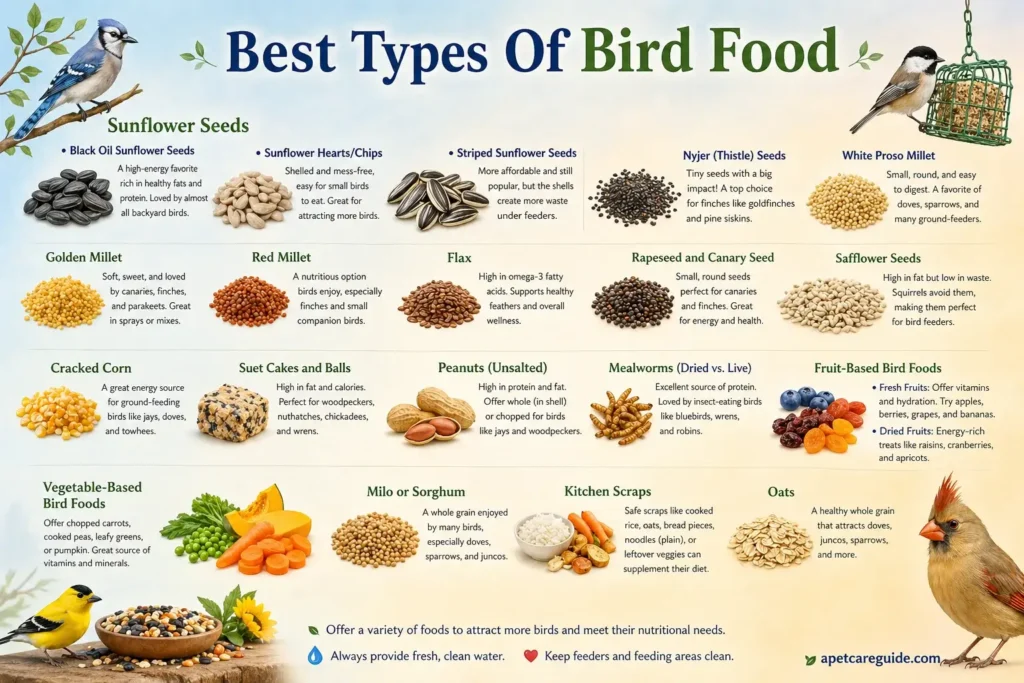
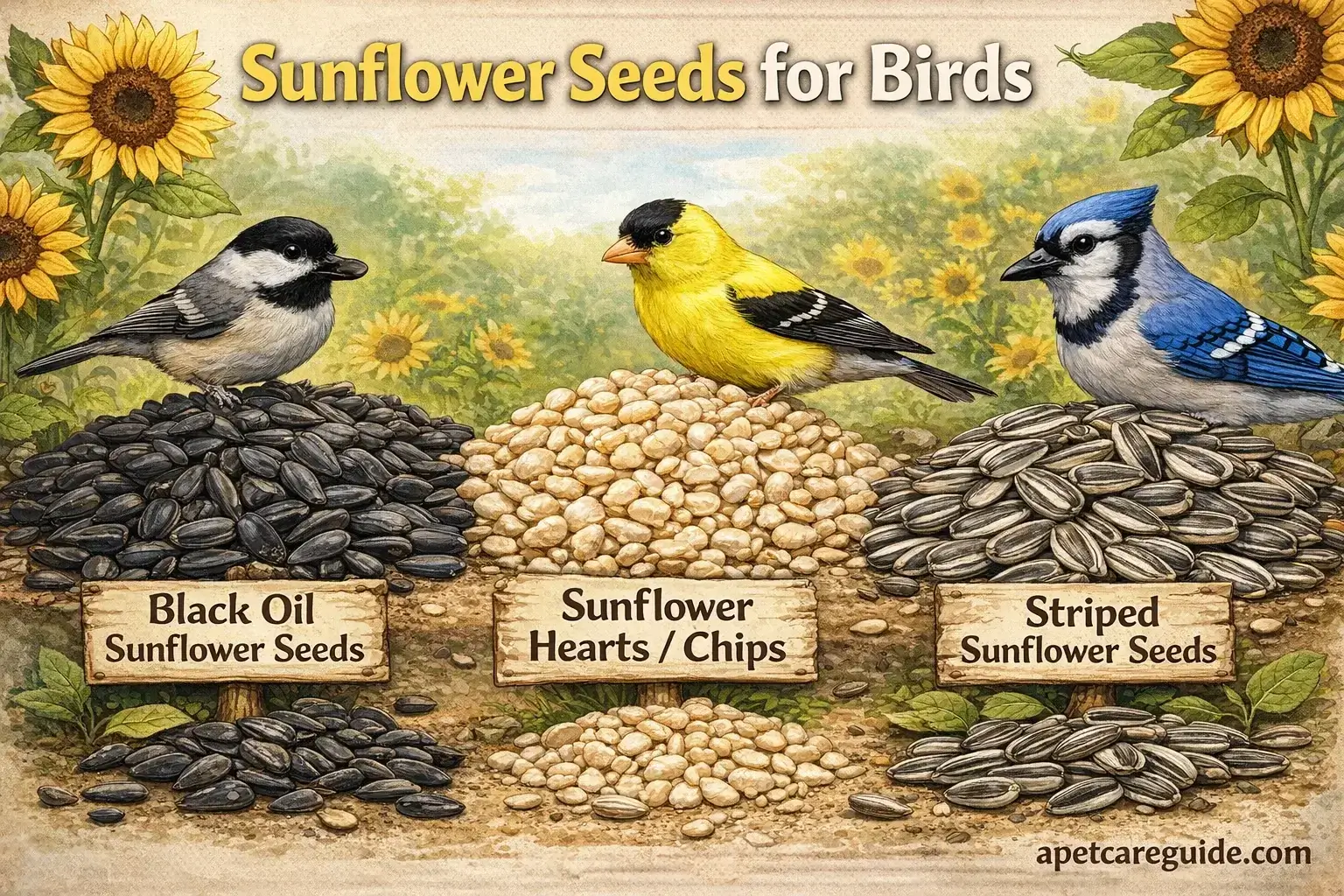
Sunflower seeds give backyard birds quick energy from their high fat and protein content. Birds crack the shells to reach the rich kernel inside. They attract dozens of species year-round. Pick fresh seeds and enjoy the busy feeders.
Black Oil Sunflower Seeds
Birds love black oil sunflower seeds for their high oil content—often 38-50% fat. They deliver around 15-20% protein plus vitamins E and B, calcium, iron, and potassium. The thin shells crack easily, so small birds like chickadees and finches eat them fast for steady winter energy.
Sunflower Hearts/Chips
Sunflower hearts and chips come without shells, offering pure nutrition with 30-50% fat and 19-27% protein. They pack more calories per ounce and create no mess. Tiny birds such as finches, nuthatches, and chickadees devour them quickly, getting maximum energy with zero waste.
Striped Sunflower Seeds
Striped sunflower seeds have thicker shells and lower oil content than black oil types. They still supply good protein and fat, but birds spend more effort cracking them. Larger species like cardinals and blue jays handle them best when you want to attract bigger visitors.
2. Nyjer (Thistle) Seeds
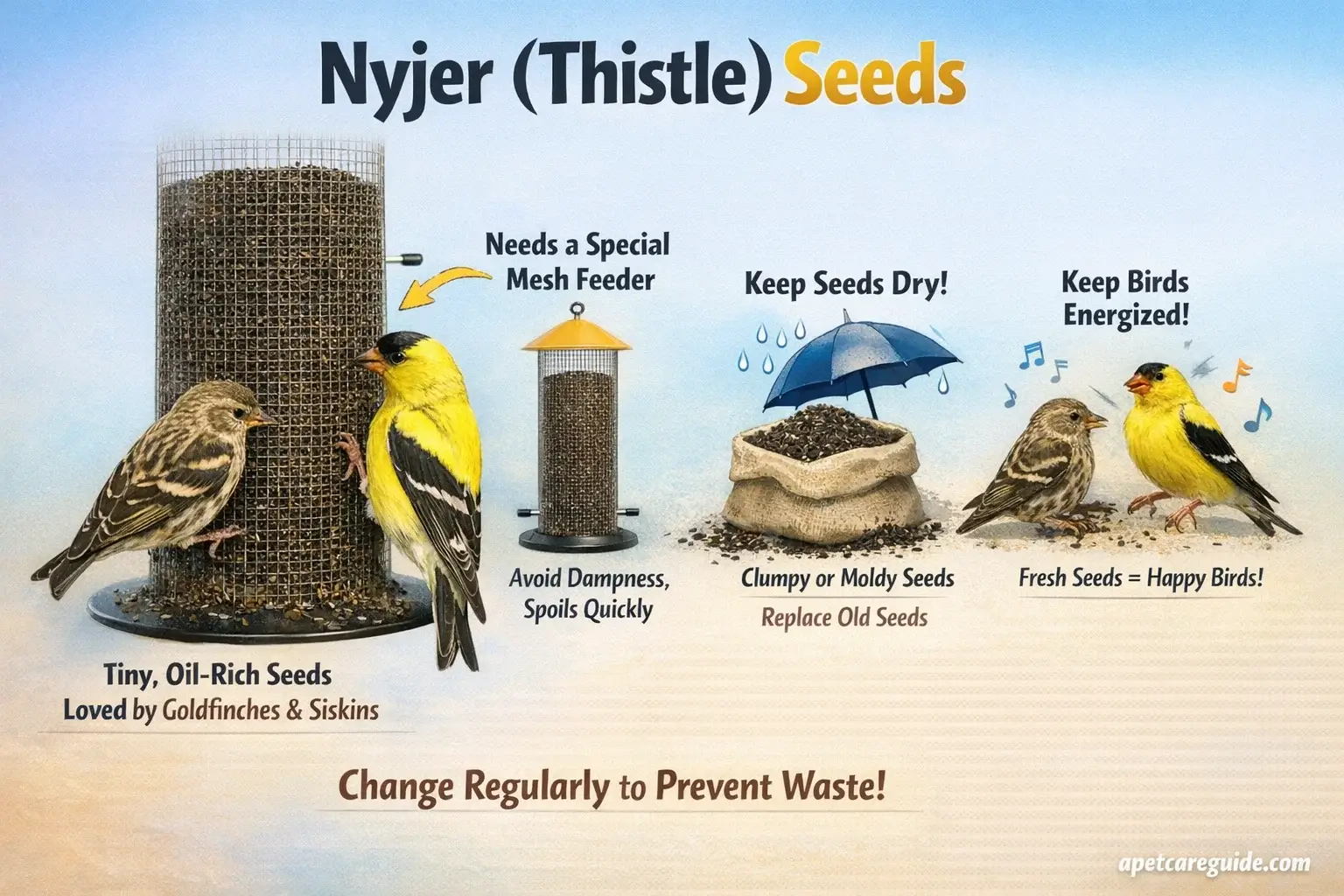
Nyjer seeds are tiny, black, and oily. They contain roughly 35% fat and 20% protein, giving finches a massive energy boost. Use a special mesh feeder to hold them. Since suppliers heat-treat these seeds, they won’t grow into messy weeds in your yard.
3. White Proso Millet
White proso millet is the best energy source for ground feeders. It packs about 12% protein and plenty of carbohydrates. Sparrows, juncos, and towhees love eating it off the ground. This high-quality grain keeps small birds full and active all day long.
4. Golden Millet
Golden millet is a nutritious grain full of B vitamins. It looks like white millet but has a deeper color. Doves, quail, and sparrows enjoy these round seeds. They provide easy-to-digest energy and work perfectly in tray feeders or scattered directly on the grass.
5. Red Millet
Red millet has a tough outer shell and contains healthy starch and fiber. While many birds prefer white millet, red millet still attracts buntings and doves. It adds variety to seed mixes, ensuring different bird species find something they like at your feeding station.
6. Flax
Flax seeds are small but mighty. They contain about 40% fat and lots of Omega-3. These nutrients help birds grow strong, shiny feathers. Mix them into your feeder to keep your feathered friends healthy and beautiful throughout the changing seasons.
7. Rapeseed and Canary Seed
These small seeds provide a balanced diet. Rapeseed is high in fat, while canary seed offers 13% protein. Finches and juncos love this mix. It gives them the stamina to fly long distances and stay active during chilly mornings.
8. Safflower Seeds
Safflower seeds have a bitter taste that squirrels and blackbirds hate. However, cardinals and chickadees love them. With a fat content of 38%, they offer great energy. Use these seeds to stop pests from stealing food while keeping your favorite birds happy.
9. Cracked Corn
Cracked corn is an affordable way to feed ground birds like doves, quail, and turkeys. It consists mostly of starch and fiber, offering quick energy. Only put out a little at a time because corn spoils quickly if it gets wet.
10. Suet Cakes and Balls
Woodpeckers and nuthatches love suet for its high-calorie animal fat. It provides the massive energy boost they need to survive winter. Many cakes include nuts or fruit. Use “no-melt” versions if the weather stays above 70°F to keep your feeders clean.
11. Peanuts (Unsalted)
Peanuts are a superstar snack for blue jays and titmice. They contain nearly 50% fat and 25% protein. Always use unsalted peanuts, as salt is toxic to birds. Offer them in a mesh feeder so birds don’t fly off with the whole bag!
12. Mealworms (Dried vs. Live)
Bluebirds and robins love mealworms for their 50% protein content. Live worms provide extra moisture, while dried ones are easier to store. Soak dried worms in water to create a soft, juicy treat. This helps mother birds feed their growing chicks during the spring.
13. Fruit-Based Bird Foods
These mixes combine seeds with bits of fruit. They attract colorful birds like orioles and waxwings that crave natural sugars. Fruit-based foods provide vitamins that keep birds healthy. They work best in tray feeders where birds can easily pick out their favorite pieces.
Fresh Fruits
Sliced apples, grapes, and oranges attract fruit-eating birds. These snacks provide hydration and quick energy from natural sugars. Put out fresh fruit in the morning, but remove leftovers at night. This keeps your feeding station clean and prevents unwanted pests from visiting.
Dried Fruits
Raisins and dried cranberries are great for mockingbirds and catbirds. They offer concentrated sugar for a fast energy boost. Always soak dried fruit in warm water first. This makes the fruit soft and easy for small birds to swallow safely.
14. Vegetable-Based Bird Foods
Some birds enjoy chopped broccoli, peas, or carrots. These vegetables provide essential vitamins and minerals. While not as popular as seeds, they add variety to a bird’s diet. Always chop them into tiny pieces so birds can eat them without any trouble.
15. Milo or Sorghum
Milo is a large, reddish grain often found in seed mixes. While many small birds skip it, ground-feeders like doves and pheasants enjoy it. It is a hardy seed that lasts a long time, providing a steady source of carbohydrates for larger visitors.
16. Kitchen Scraps
Offer birds healthy leftovers like plain cooked pasta or rice. Avoid any food with salt, sugar, or seasoning, as these harm birds. Keep portions small so the scraps stay fresh. This simple habit turns your kitchen waste into a helpful meal for wildlife.
17. Oats
Uncooked oats are a simple, cheap treat for many ground-feeding birds. They offer good fiber and carbohydrates. Avoid using “instant” oats with added sugar. Simply scatter raw rolled oats on a tray to help birds stay full and energized throughout the day.
Nectar for Hummingbirds
Making your own hummingbird fuel is incredibly easy and much safer than buying store versions. You just need to mix four parts water with one part white granulated sugar. Boil the water to help the sugar dissolve, then let it cool completely.
Safety Tip: Never use red food coloring! It can actually harm the tiny flyers. The red color on the feeder itself is enough to attract them.
You must clean your nectar feeders every few days, especially in the heat. If the water looks cloudy, it has spoiled and could make the hummingbirds sick. Regular cleaning keeps these tiny gems coming back to your garden all summer long.
Foods to Avoid Completely
- Bread: It has almost no nutritional value and fills up their stomachs with “empty” weight.
- Salty foods: High salt levels can be deadly for small creatures.
- Processed snacks: Chips and crackers contain chemicals that aren’t safe for wildlife.
- Moldy leftovers: Fungus and bacteria can spread disease through your local population.
- Large whole peanuts for chicks: Young ones can easily choke on big pieces during the spring.
Seasonal Feeding Guide
Winter Feeding
During the cold months, flyers need massive amounts of fat to stay warm. High-fat options like suet and black oil sunflower seeds are crucial now. You should also make sure your water sources don’t freeze, so they can stay hydrated while they eat.
Spring and Summer Feeding
This is the time for babies! Protein is the most important thing during the breeding season. Offer plenty of mealworms and high-quality seeds to help parents feed their growing chicks. Insects are the natural choice for most young flyers.
Fall Feeding
As many species prepare to fly south, they need to bulk up. Offer high-energy seeds and nuts to help them store fat for their long journeys. Keeping your feeders full during this time provides a vital “pit stop” for migrating friends.
How to Store Bird Food Properly
To keep your supplies fresh, you must keep them in a cool, dry place. Using airtight metal or plastic containers is the best way to stop moisture and pests from getting in. Moisture leads to mold, which can create dangerous toxins like aflatoxin. Always check your bins for signs of moths or beetles. Most seeds have a shelf life of about six months, so try to buy only what you can use in that time.
Bird Feeder Hygiene and Disease Prevention
A dirty feeder can spread sickness very quickly. You should wash your stations at least once every two weeks using a weak bleach solution (one part bleach to nine parts water). Scrub away all the old droppings and crusty seeds. If you see a sick-looking flyer, take the feeders down for a week to let the group disperse. Rotating your feeder locations also helps prevent waste from building up in one spot on the lawn.
How to Attract Specific Birds with the Right Food
- Cardinals: They love safflower and sunflower seeds on platform feeders.
- Finches: Use Nyjer seeds in mesh tubes to see these acrobats.
- Woodpeckers: Hang suet cages or offer whole peanuts in a tray.
- Doves: Scatter white proso millet or cracked corn on the ground.
By creating a station with different heights and meal types, you turn your yard into a diverse sanctuary for everyone.
Common Bird Feeding Mistakes to Avoid
Many people overfeed, which leads to rotting piles on the ground. Instead, put out only what can be eaten in a day or two. Also, avoid those cheap “filler” bags that are mostly Milo if you don’t have ground-feeders. Ignoring cleanliness is the biggest mistake, as it puts your visitors at risk. Finally, don’t just offer one type of meal. Diversity is the secret to a lively and healthy backyard ecosystem.
Budget-Friendly Bird Feeding Tips
You can save a lot of money by buying your seeds in bulk from farm supply stores. To reduce waste, use “no-mess” blends so every penny you spend gets eaten. You can also make your own DIY suet using lard and kitchen scraps. Choosing cost-effective items like cracked corn or black oil sunflower gives you the most “bang for your buck” while still keeping the local wildlife very happy.
Conclusion: Types of Bird Feed
Providing the right Types of Bird Food is a wonderful way to connect with nature right outside your window. By matching your snacks to the species you want to see, you create a thriving environment. Remember to focus on diversity, keep your stations clean, and prioritize safety above everything else. Responsible feeding ensures that our feathered neighbors stay strong for years to come.
FAQ: Types of Bird Food
What is the best all-around bird food?
Black oil sunflower seeds are the top choice because they attract the widest variety of species.
Can birds eat bread?
No, bread offers very little nutrition and can cause health problems. It is better to offer seeds or fruit.
How often should I refill feeders?
You should refill them whenever they get low, but try to clean them every time you do.
Is it okay to feed birds year-round?
Yes! Providing a steady source of nutrition helps them through every season and life stage.
How do I stop squirrels from eating bird food?
Use baffles on your poles or switch to safflower seeds, which squirrels find bitter and unpleasant.