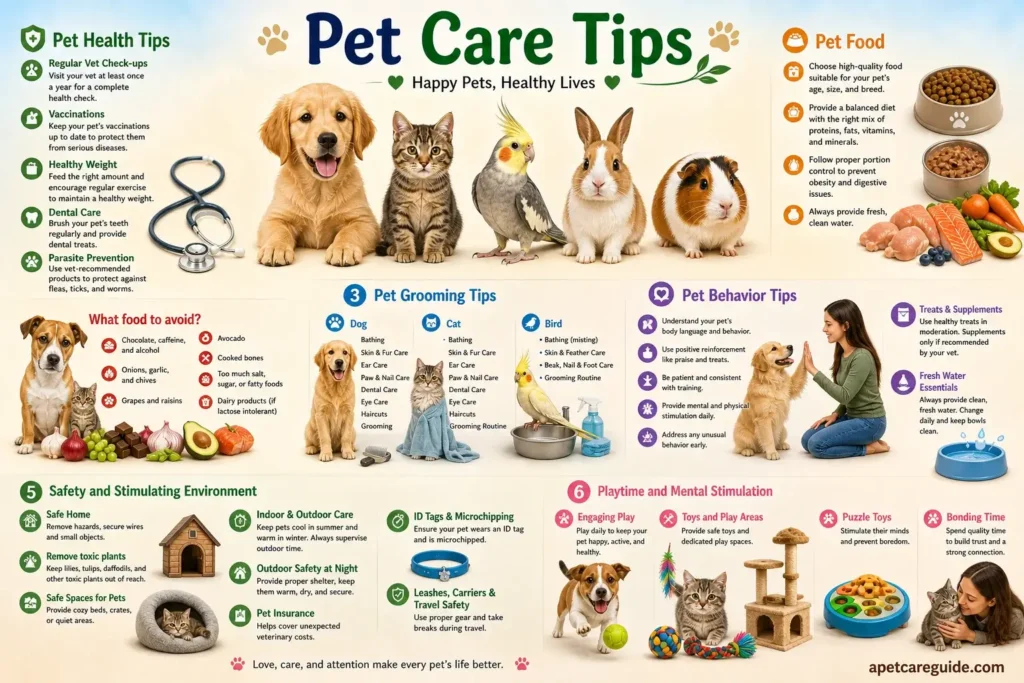


There is a unique and heart-warming magic in the bond shared with a pet bird, a friendship built on trust, communication, and cheerful companionship. This special connection, however, depends entirely on the quality of care provided. Thoughtful and consistent pet birds care is the absolute foundation for their physical health, their sharp mental state, and their overall emotional happiness.
This article is designed to be your comprehensive guide from my own experience, leading you through the most important aspects of caring for your feathered friend to build a wonderful, healthy life for you both.
Choosing the Right Pet Bird for Your Lifestyle
Picking a bird depends entirely on your schedule. Some breeds demand constant attention, while others play happily alone. Match your living space and free time to the animal’s needs before bringing one home.
Best pet birds for beginners
Budgies and cockatiels make wonderful first pets. They learn tricks quickly and adapt well to human homes. These smaller breeds forgive beginner mistakes better than large parrots do. You can easily teach them to step onto your finger. Their friendly nature makes the learning curve much smoother for first-time owners.
Small birds vs large parrots
| Feature | Small Birds (Budgies, Finches) | Large Parrots (Macaws, Cockatoos) |
| Size | Takes up little room | Needs massive space |
| Noise | Quiet chirps | Loud screams |
| Lifespan | 5 to 15 years | 30 to 80+ years |
| Cost | Low budget | Highly expensive |
Noise level, space, and time commitment
Think about your neighbors first. Conures scream, while finches softly peep. Large parrots need huge enclosures that take up half a room. Every parrot needs at least two hours of outside-the-cage interaction. If you work long shifts, a demanding bird will become lonely and frustrated fast.
Lifespan and long-term responsibility
Buying a bird is a lifelong promise. Some small species live 10 years, but bigger parrots outlive their human owners. I had to set up a care plan for my African grey. You must plan for their future in case anything happens to you down the road.
Bird Cage Setup and Habitat Essentials
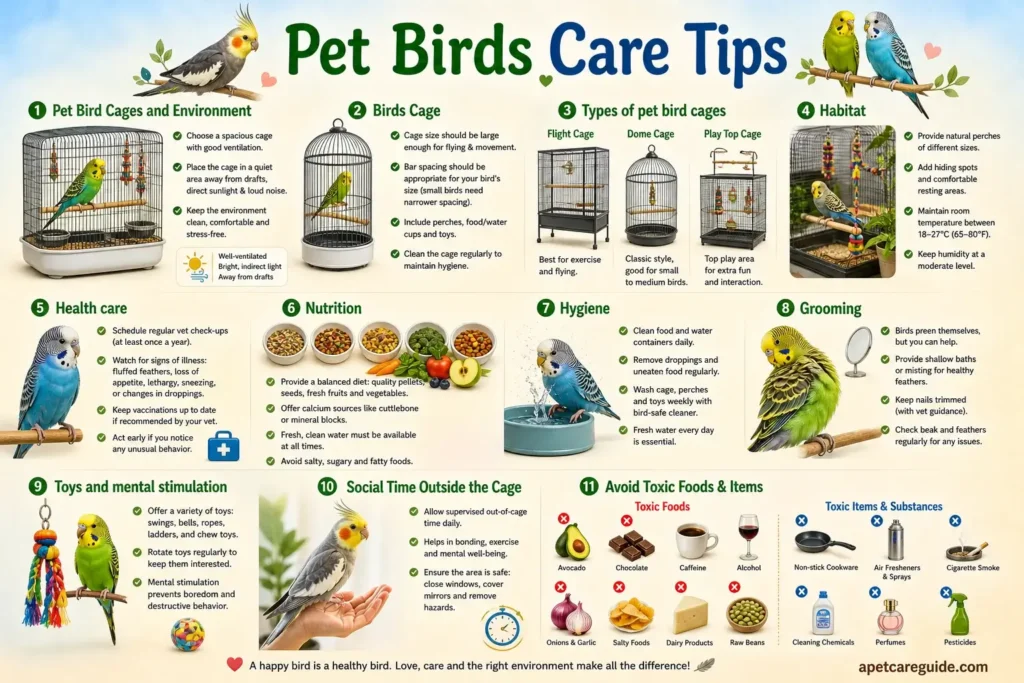
Your bird’s cage acts as its safe zone. It needs plenty of room, sturdy metal, and a quiet spot away from household dangers. Make sure they can fully stretch their wings. Now I share some steps for pet bird cages and the environment for your pet birds.
Choosing the right cage size
A bird cage acts as your pet’s safe bedroom. I always pick strong metal cages with tight locks to keep my budgies secure and comfortable inside.
Recommended Cage Size: The cage you choose should be as large as your home and budget will allow. For small birds like budgies and finches, a minimum size is 24x18x18 inches, with bar spacing no wider than 1/2 inch to prevent injury. Medium birds like cockatiels require at least a 24x24x24-inch space with 1/2- to 3/4-inch bar spacing. For large birds such as grey parrots and macaws, you need a cage at least 36x48x60 inches with 3/4- to 1.5-inch bar spacing. These are starting points for good pet bird care.
Safe cage material and bar spacing
Look for stainless steel or powder-coated metal. Cheap wire often contains zinc or lead, which poisons animals quickly. Bar spacing stops escapes and stuck heads. Use half-inch spacing for budgies. Macaws need one-inch spacing, so their strong beaks cannot snap the metal apart.
Best cage placement in the home
Place the enclosure in a busy room so your pet feels included, but avoid the kitchen due to cooking fumes. Keep it away from drafty windows.
I once put my budgie near a sunny window, and he overheated fast. I moved him to a shaded living room corner, and he calmed down instantly.
Essential cage accessories for comfort
Every home needs sturdy stainless steel bowls for food and water. Add a cuttlebone for calcium and beak trimming. Do not overcrowd the living area. Leave open space in the middle so your pet can jump around without bumping into dishes.
Perches, swings, ladders, and resting areas
Skip the smooth plastic dowels. Natural wood branches strengthen feet and help prevent arthritis. Offer different thicknesses so their toes get a workout. Swings provide fun physical activity. Avoid fabric snuggle huts, as threads can tangle around toes or block their stomachs if swallowed.
A pet care guide always recommends you create a metal cage for the safety of your pet birds.
Ideal Location for the Cage
Environmental Conditions: A stable environment is key. Keep the cage away from drafts, windows, or vents. Most companion birds thrive in temperatures between 65 and 80°F (18-26°C). They also need a natural light cycle to regulate their sleep and hormones, so a room with a window is ideal, but avoid placing the cage in constant, direct sunlight.
Balanced Diet and Bird Nutrition
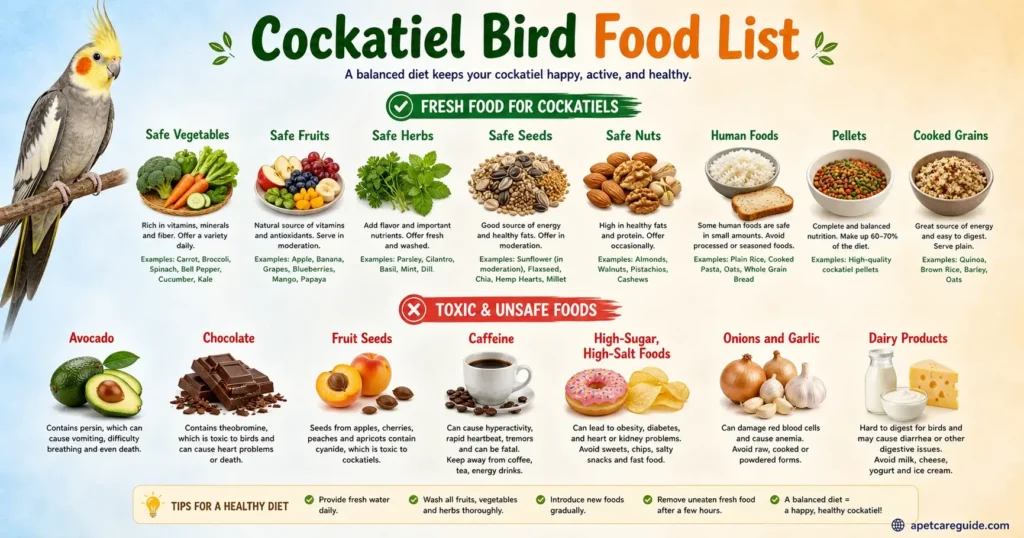
Feeding your flock correctly stops sickness. A seed-only bowl leads to fatty liver disease. You need to offer a mix of formulated food, fresh greens, and safe fruits to keep them strong.
What pet birds should eat daily?
Formulated nuggets should make up most of their meals. Serve fresh greens every morning. Seeds act as treats, not the main course. I chop vegetables into their morning bowl to get them excited about eating right away.
Pellets, seeds, grains, and fresh food
Formulated nuggets pack all the needed vitamins into one bite. Seeds carry too much fat, so limit them. Cooked grains like quinoa add healthy carbs.
My cockatiel refused anything but millet when I first got him. I slowly crushed pellets into his seeds, decreasing the seeds over a month. Now, he happily eats his greens and grains every single morning.
Safe fruits and vegetables for birds
Fresh produce mimics what they eat in the wild. Wash everything thoroughly to remove pesticides.
- Apples (no seeds)
- Carrots
- Broccoli
- Bell peppers
- Leafy greens
Cut these into small pieces so your pet can hold them easily.
Foods to avoid for pet birds
Never feed your bird avocado, chocolate, caffeine, or onions. These items cause organ failure quickly.
My experience: A friend once let her parrot nibble an avocado slice, and the bird rushed to the emergency vet. Since then, I have kept a strict “no human junk food” rule in my house.
Fresh water and hydration tips
Change the drinking bowl at least twice a day. Birds drop food and poop into their cups, creating bacteria traps. Wash the bowl with soap and hot water every morning. Some parrots prefer drinking from a water bottle, which stays cleaner than open dishes.
Maintaining Hygiene and Health
A clean environment is the best defense against disease. Meticulous hygiene is a non-negotiable part of good pet birds care.
Daily Cleaning Routine
Cage Liner & Dishes: Every day, you must change the liner at the bottom of the cage. This also gives you a chance to monitor their droppings for any signs of illness. At the same time, wash the food and water dishes thoroughly to prevent bacterial contamination.
Weekly Deep Cleaning
- Thorough Cage Cleaning: Once a week, the entire cage and all its contents need to be deep cleaned. Move your bird to a safe, secure location and scrub the bars, base, perches, and toys with hot, soapy water.
- Disinfection: After washing and rinsing, you can use a bird-safe disinfectant to kill any remaining germs. A simple solution of one part white vinegar to two parts water works well. Rinse everything completely and let it dry before returning your bird to its home.
Hygiene Practices for Humans
- Handwashing Protocol: It is very important to wash your hands with soap and water both before and after handling your bird or its supplies. This prevents the transfer of germs from you to your bird and from your bird to you.
Veterinary Care and Check-Ups
- Avian Vet Visits: A veterinarian who specializes in birds has the expert knowledge needed to properly care for your pet. You should schedule a “new bird” exam and then have an annual check-up. These regular visits are a cornerstone of preventative pet birds care.
- Common Bird Diseases: Be watchful for common issues. Respiratory infections can be caused by poor ventilation or hygiene. Feather plucking can be a sign of a medical issue or deep psychological distress from boredom or stress.
Bathing
Bathing is essential for keeping feathers clean and skin hydrated. You can offer your bird a shallow dish of water, mist them gently with a spray bottle, or let them join you in the shower on a special perch.
Monitoring your pet bird’s health
Birds instinctively hide signs of sickness. Because of this, you must be a careful observer. Watch for any subtle changes in their posture, energy level, appetite, or droppings. Knowing what is normal for your bird is key to catching problems early.
Common health problems and symptoms in pet birds
Any labored breathing or bobbing of the tail with each breath is a sign of respiratory distress. Changes in the color or consistency of droppings can signal a digestive or liver problem. Sitting fluffed up at the bottom of the cage is a sign of a very sick bird needing immediate vet care.
Behaviour
A bird’s behavior is a direct reflection of its health and happiness. A happy bird will be active, curious, and vocal. A sudden change to being quiet, aggressive, or listless is often the first sign that something is wrong. Good pet birds care means paying attention to these signals.
Body Language in Pet Birds
Learning your bird’s body language is a rewarding part of ownership. A soft beak grinding sound means they are content and relaxed. Pinning their eyes (pupils quickly getting larger and smaller) shows excitement or arousal. A raised crest on a cockatiel can mean curiosity or alarm.
Flying
Flying is a natural behavior that is crucial for a bird’s physical and mental health.
- Secure the space: Before letting a bird out, make the room safe. Close all windows and doors, turn off fans, cover mirrors, and remove other pets.
- Provide enrichment: Set up a play stand or other safe places for them to land and play on.
- Don’t forget about food and water: Have some fresh water and healthy treats available for them during their out-of-cage time.
- Watch them closely: Never leave a bird unsupervised when it is out of its cage. This is a critical safety rule.
Habitat
Your bird’s habitat is the air in your entire home. Their respiratory systems are incredibly sensitive. You must avoid using non-stick cookware, scented candles, air fresheners, and other products with strong fumes, as they can be toxic and even deadly.
Related Post:- Expert Tips For Your Pet Care
Socialization and Exercise: The Key to a Happy Bird
Your time and affection are the most important things you can give your bird. This is the heart of compassionate pet birds care.
Daily Interaction with Your Bird
- Socialization Needs: Parrots and other companion birds are extremely social. In the wild, they are never alone. When you bring a bird into your home, you become their flock. They depend on you for social interaction and can suffer from loneliness and depression without it.
- Vocalization and Communication: Talk to your bird throughout the day. Sing to them, whistle with them, and tell them about what you are doing. This verbal interaction reinforces your bond and provides them with comforting social contact.
Allowing Out-of-Cage Time
- Supervised Free Flight: Time outside the cage is essential for exercise and mental stimulation. Aim for at least one to two hours of supervised out-of-cage time every day. This is their chance to be a bird and is a vital part of good pet birds care.
- Safe Space: Dedicate one room in your house as the “bird safe” room. This means removing any potential hazards so they can explore and play without you having to worry.
Training and Bonding
- Positive Reinforcement: The best and only way to train a bird is through positive reinforcement. This means you reward the behaviors you like with a treat or praise. This method builds a relationship based on trust and cooperation, not fear.
- Why you should train your pet bird: Training is a fun way to interact with your bird and challenge their intelligent mind. It also makes handling vet visits or nail trims much less stressful for them. This is A Pet Care Guide for a happier pet.
- Bird training tips: Keep your training sessions short and fun, around 5-10 minutes is perfect. Always end on a positive note when they do something right.
- Building Trust: Earning a bird’s trust can take time and patience. Start by just sitting near the cage and talking softly. Offer a favorite treat through the bars. Let them make the choice to come to you.
Sessional pet birds care
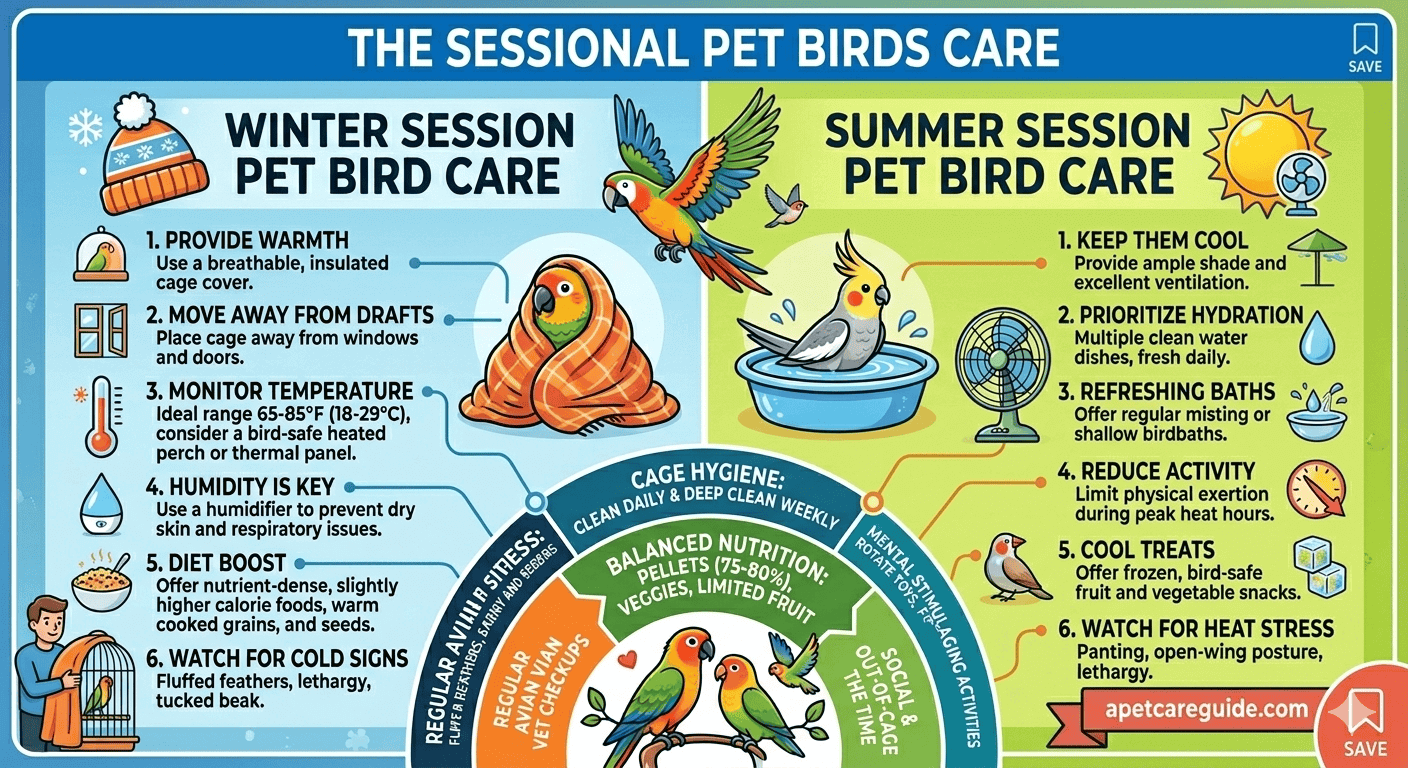
Your pet birds care routine should adapt to the changing seasons to keep your companion comfortable.
Winter pet bird care
During colder months, you must protect your bird from cold drafts. Dry indoor heating can also be an issue.
- Cockatiel care in winter: Cockatiels are prone to night frights; a small night light can offer security during the long winter nights.
- finch care in winter: These small birds lose heat quickly. Make sure their cage is in a consistently warm part of the house.
- Grey parrot care in winter: A stable temperature is important, as fluctuations can stress their immune system.
- Conure care in winter: A fleece snuggle hut or a heated perch can provide a cozy spot for them to stay warm.
- Macaw care in winter: Even though they are large, these tropical birds need to be kept away from chilly windows and doors.
- Lovebird care in winter: Lovebirds will appreciate a warm, covered place to sleep and huddle together.
- Dove bird care in winter: Doves are most comfortable in a calm, consistently warm room.
- ringneck parakeet care in winter: Keep them out of drafts to protect their sensitive respiratory systems.
- Budgie care in winter: Covering their cage at night with a warm blanket can help these small birds retain body heat.
Summer pet bird care
The primary danger in summer is overheating. Birds cannot sweat, so they rely on you to help them stay cool.
- Cockatiel care in Summer: They love to bathe. Offering a shallow dish of cool water is a great way to help them cool down.
- Finch care in Summer: Good air circulation is important, but never point a fan directly at their cage.
- Grey parrot care in Summer: A light misting with a spray bottle can provide wonderful relief on a hot day.
- Conure care in Summer: Conures are playful and will enjoy the chance to splash around in a bird bath.
- Macaw care in Summer: These large parrots enjoy a good drenching and can be taken into the shower for a cooling bath.
- Lovebird care in Summer: Misting their feathers with cool water can help them feel more comfortable in the heat.
- Dove bird care in Summer: Always make sure they have access to a shaded area and fresh, cool water.
- Ringneck parakeet care in Summer: Offer them water-rich foods like cucumber or melon to help with hydration.
- Budgie care in Summer: Clipping a piece of wet lettuce or kale to the side of the cage gives them a fun, cooling snack.
- Of course. Here is the next section of your SEO-friendly content on pet birds care, written with deep research and following your outline and all instructions precisely.
Parakeet Care
The term “parakeet” covers a huge, colorful family of small to medium-sized parrots. My own journey with pet birds care started with a parakeet, and they hold a special place in my heart. Generally, these birds are intelligent and social, so they need plenty of toys and interaction to stay happy. A good quality seed mix or pellet diet, fresh water, and a clean cage are the basics for them to thrive.
Finch Bird Care
Finches are like tiny, living jewels. They are incredibly social little birds, so keeping them alone is a sad thing. They always do best with a friend. Also, they prefer to fly around, so a wider cage is much better than a tall, narrow one. Giving them space to zip back and forth is a true joy to watch.
Care for Zebra Finches
I remember my first pair of Zebra Finches; their constant, happy “beeps” filled the room. These little guys are hardy and active. Besides a good seed mix, they absolutely love a shallow dish of water for bathing. They splash around with so much happiness, it’s impossible not to smile. Providing them with a small nest also gives them a wonderful sense of security.
Caring for Gouldian Finches
Gouldian Finches are breathtakingly beautiful, with their vibrant patches of color. They are a bit more delicate than Zebra Finches, especially with temperature. You need to keep their space consistently warm and free from drafts. It’s a small extra step, but watching their brilliant colors shine in a comfortable home is a magnificent reward.
Cockatiel Bird Care
Oh, the charming cockatiel! If you’re looking for a companion who will whistle along with you, this is your bird. I found that my cockatiel, Sunny, was incredibly affectionate and loved head scratches. They form strong bonds with their people. Beyond a healthy diet of pellets and some fresh veggies, they truly need your time and affection. A lonely cockatiel is a very sad sight.
Care for African Grey Parrot
The African Grey is not just a pet; it’s a family member with the intelligence of a young child. From my experience talking to other owners, I’ve learned their need for mental stimulation is huge. You must provide them with puzzles, toys, and lots of conversation. They can learn an amazing number of words, and a happy Grey will fill your home with chatter and love. This is a long-term commitment, but the connection you build is incredibly deep.
Conure Bird Care
Conures are the clowns of the bird world. They are full of playful energy and can be incredibly cuddly. However, they are also known for being a bit noisy at times, so they are not the best choice for apartment living. They love to hang upside down, play with toys, and just be part of the action.
Caring for a Green Cheek Conure
The Green Cheek Conure is one of the quieter members of the family, which I always appreciated. They are known for their big personalities in small bodies. They love to snuggle into your shirt or hair. In addition to a varied diet, make sure they have plenty of wooden toys to chew on; it keeps their beaks healthy and their minds busy.
Caring for a Sun Conure
A Sun Conure is like a living, flying rainbow. Their colors are absolutely stunning. They are also one of the loudest conures, something you must be prepared for. Their call can be piercing, but it’s often a call for your attention and love. They are incredibly loving birds that bond deeply with their chosen person.
Care for Lovebirds
Lovebirds get their name for a reason; they form incredibly tight bonds. While they can be kept singly if you give them a ton of attention, I’ve always found they are happiest and most content with a partner. Their loving interactions are beautiful to observe.
Rosy Faced Lovebird Care / Peach Faced Lovebird Care
The Rosy-faced, also called the Peach-faced Lovebird, is the most popular type. They are feisty, curious, and bold. One thing I learned quickly is that while they look sweet, they can be quite territorial about their cage. It’s important to give them their space, but also provide lots of out-of-cage time for play and bonding. Their antics are endlessly entertaining.
Macaw Bird Care
Welcoming a macaw into your home is a life-changing decision. These are magnificent, large, and incredibly intelligent birds. Because of their size, they need a very large cage and, ideally, a dedicated play area. Their beaks are extremely powerful, so you must provide tough, safe toys. A macaw is a friend for life, as they can live for over 50 years, so this is a serious commitment.
Pet Dove Care
For those seeking a gentle and calming presence, a pet dove is a wonderful choice. Their soft cooing is one of the most peaceful sounds I know. Doves are generally less demanding than parrots. They need a clean, spacious cage and a good diet of seeds and grains. They are not big climbers, so cage floor space is important for them. Their sweet, gentle nature makes them a truly lovely companion.
Ringneck Parakeet Care
Indian Ringnecks are sleek, intelligent birds known for their amazing ability to talk. Their voices are remarkably clear. From what I’ve seen, they are very smart and can get bored easily, so a steady rotation of new toys is a great idea. They can sometimes go through a bluffing stage when they are young, but with patience and gentle handling, they become fantastic and interactive pets.
Budgie Bird Care
The budgie, or budgerigar, is often someone’s very first pet bird, and for good reason. They are small, inexpensive, and packed with personality. I think they are one of the most underrated talkers in the parrot world. With patience, you can teach them many words. A proper pet birds care routine for a budgie includes a healthy diet, a clean cage with different perches, and daily interaction to keep them tame and happy. They are small birds with huge hearts.
Safety Tips for Outdoor Pet Birds
Taking your bird outside for some fresh air and natural sunlight can be a wonderful experience for them. I love seeing my birds chirp with excitement at the real sights and sounds of nature. But this must be done with extreme caution. You are their only line of defense against a world they are not equipped to handle.
Weather Protection
Birds are sensitive creatures. Direct, scorching sun can cause heatstroke, while a sudden cold wind can make them sick. So, whenever you take your bird outside, even in a secure cage, you must make sure there is a shady spot for them to retreat to. Also, never leave them out in the rain or strong winds. A comfortable bird is a happy bird.
Protection Against Predators
This is a fear that has kept me up at night. Hawks, cats, and other predators are unbelievably fast. A standard cage offers very little protection. If you build an outdoor aviary, you must use strong, small-gauge wire and a double-door system. For simple outdoor time, a sturdy travel carrier is much safer than their regular cage. Never, ever leave them unattended, not even for a second.
Avoiding Pathogens
Wild birds can carry mites, lice, and diseases that can be devastating to our pets. So, you should never allow your bird’s cage to be in a spot where droppings from wild birds can fall into it. It’s a simple but very important step to protect their health.
Space Needs
If you are building a permanent outdoor aviary, space is a gift. The cage should be large enough for them to fly from one end to the other. Flight is their instinct, and giving them the ability to do it safely is one of the best things you can do for their physical and mental well-being.
Budgie Egg Care
The sight of that first tiny egg is incredibly exciting! If you have a pair of budgies, you might experience this. My advice from experience is to trust the parents. The mother bird knows what to do. You just need to support her by providing a high-calcium diet, like cuttlebone, and a safe, quiet environment. Avoid handling the eggs unless you absolutely must, as your scent can cause the parents to abandon them.
Baby Bird Care / Newborn Budgie Care
Watching newborn budgies is a truly special thing. They are so tiny and helpless. For the first few weeks, the parents will do all the work, feeding and keeping them warm. Your job is to keep the cage clean and provide the parents with plenty of soft food, like egg food and soaked seeds, so they can feed their babies. It’s a beautiful process to witness.
Nestling Bird Care
A nestling is a baby bird that has started to grow its feathers but is still in the nest. At this stage, they are growing incredibly fast. The parents are working overtime to feed them. You must continue to provide high-quality, abundant food for the parent birds. It’s also a good idea to check the nest box for cleanliness without disturbing the family too much. A clean nest helps prevent sickness.
Parakeet Care for Beginners
If you are just starting your journey, a parakeet (like a budgie) is a fantastic choice. The most important thing I can tell a new owner is to be patient. Your new friend is in a strange place and needs time to trust you. Talk to them softly, offer them treats like millet spray from your hand, and spend time near their cage. A good diet, a clean cage, and your gentle company are the simple keys to winning their little hearts.
Safety and Precautions
A bird’s curiosity is a charming quality, but it can also get them into trouble inside the house. Making your home a safe space is a continuous process of love and attention.
Bird-Proofing the Home
- Identifying Hazards: I once had a scary moment when my cockatiel started chewing on an electrical wire. Luckily, I caught him in time. Now, I always use cord protectors. You must look at your home from a bird’s point of view. Open water in toilets or kitchens, ceiling fans, hot stovetops, and toxic house plants are all serious dangers.
- Safe Exploration: Your bird needs time outside the cage every day. I made one room in my house completely bird-safe. I removed all risky plants, covered outlets, and made sure windows and doors were securely closed. This gives them the freedom to fly and explore without me hovering in constant worry.
Preventing Contact with Wild Birds
- Disease Prevention: It’s so important to keep your pet bird indoors, away from direct contact with wild birds. I know it seems harmless, but wild birds can carry illnesses, like avian flu, that are deadly. Screened windows and porches are a great way to let your bird enjoy the sounds of nature without the risk.
General Pet Bird Care Guide / General Pet Bird Care Tips
Great pet birds care comes down to a steady, loving routine. Every day, you should change their food and water. Spend time talking and playing with them. Once a week, you need to do a thorough cage cleaning. Monthly, it’s a good idea to deep clean all the toys and perches. Watching your bird’s droppings, appetite, and behavior daily is also the best way to spot signs of illness early.
Final Thoughts About Pet Birds Care Guide
Providing a loving home for a bird is about so much more than just a cage and some seed. It’s about creating a safe environment, offering a healthy diet, maintaining good hygiene, and giving them your time and affection. The bond you build with a happy, healthy bird is a truly special connection that brings immense joy. I encourage you to use these tips to make your feathered friend’s life the best it can be. Please share this with other bird lovers, and always talk to an avian vet if you feel something is wrong.
FAQ about pet birds care tips
How to take care of a small bird?
Provide a clean, spacious cage, fresh water, and a high-quality seed or pellet mix daily. Also, offer small amounts of fresh vegetables and give them your attention every day to build a bond.
How often should I clean my bird’s cage?
You should change the cage liner and clean the food and water dishes every day. A full cage cleaning, where you wash the bars, perches, and toys, should be done at least once a week.
What is the best diet for my pet bird?
The best diet is a formulated pellet diet supplemented with a high-quality seed mix. You should also offer fresh, bird-safe vegetables and fruits a few times a week.
How can I tell if my bird is sick?
Look for changes in behavior. Signs of sickness include being fluffed up, sitting at the bottom of the cage, changes in droppings, loss of appetite, or being unusually quiet.
How much out-of-cage time does my bird need?
Most pet birds need at least one to two hours of supervised out-of-cage time each day to stay happy and socialized.
How can I bond with my pet bird?
Spend quiet time near their cage, talk to them softly, and offer their favorite treats from your hand. Be patient and consistent, and let the bird set the pace.
What should I do if my bird is not eating?
If your bird stops eating for more than 24 hours, it is an emergency. Contact an avian veterinarian immediately, as birds can get very sick very quickly.
How to keep a bird happy?
Keep them happy with a clean home, a healthy diet, plenty of fun toys, and lots of social interaction with you. They are social creatures and need to feel like part of the family.
What does a bird need?
A bird needs a safe and clean cage, proper nutrition and fresh water, toys for mental stimulation, your time for socialization, and regular check-ups with a vet.