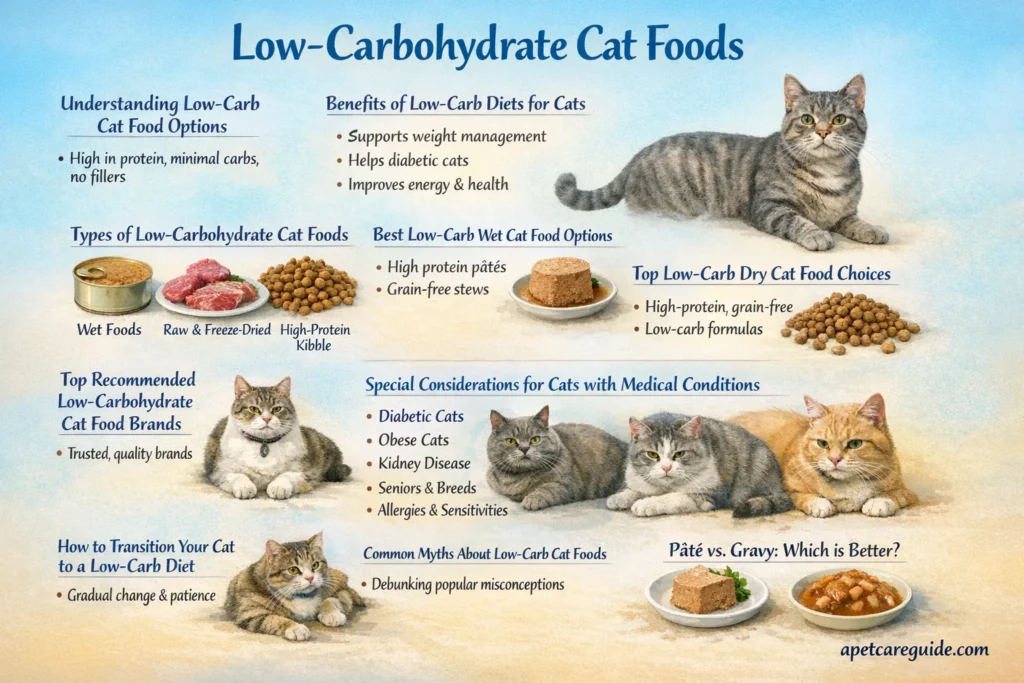


As a cat owner, I’ve learned that our feline friends are not just small dogs; they are special animals with very specific needs. Cats are obligate carnivores, which is a scientific way of saying their bodies are built to run on meat, not plants. A diet low in carbohydrates and high in protein mirrors what they would eat in the wild. Switching to low carbohydrate cat foods can be a game-changer for their health. These diets are fantastic for weight management, helping keep your cat lean.
They are also critical for managing feline diabetes and supporting their overall well-being. The problem is, many common cat foods are packed with carb-heavy fillers like corn and wheat, which can lead to serious health issues like obesity and diabetes. This is why reducing carbs matters so much. Before making any big changes to your cat’s meals, I always suggest chatting with your veterinarian. They can give you professional advice to find the perfect food for your unique cat.
Understanding Low-Carb Cat Food Options
What qualifies as low-carb cat food?
So, what does “low-carb” even mean for a cat? Basically, a food is considered low-carb if it gets less than 10% of its calories from carbohydrates. Cats have no real nutritional need for carbs, so the goal is to get this number as low as possible. When you start reading labels, you’ll be looking for foods that put protein and healthy fats first, keeping those fillers and starches to an absolute minimum.
Carbohydrate Content in Cat Foods
It’s shocking when you first compare the labels. Many regular dry foods on the shelf can be 30%, 40%, or even 50% carbohydrates. They use these grains and starches as cheap fillers and to hold the kibble shape. In contrast, high-quality low carbohydrate cat foods, especially wet foods, keep that carb content way down, often sitting between 1% and 10%. This massive difference is right at the center of managing your cat’s health.
Ingredients to Look For
When you’re scanning the ingredient list, you want to see real, named meats at the very top. Look for high-protein, low-carb ingredients like chicken, turkey, lamb, and fish. Things like “chicken meal” are also good, as they are concentrated protein sources. What you want to avoid are ingredients like corn, wheat, soy, and potato, especially if they are listed in the first few ingredients, as these are all high-carb fillers.
Difference between wet and dry foods
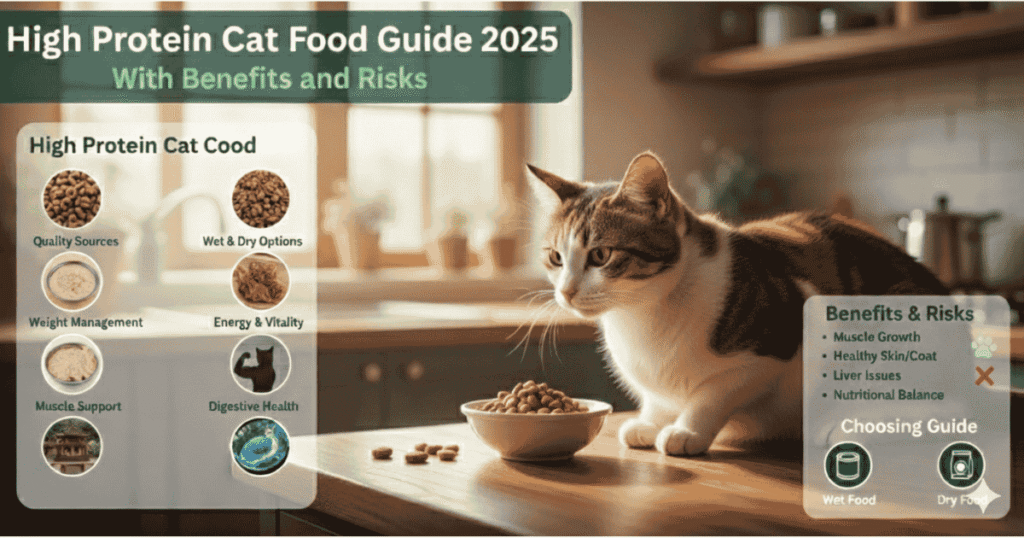
When it comes to low-carb diets, both wet and dry foods have their place. Wet food is often the champion because it’s naturally higher in protein and moisture and much lower in carbs. Dry food, however, is convenient and can be more budget-friendly. The good news is that some amazing brands now make low-carb dry options, so you don’t have to sacrifice quality for convenience.
Benefits of Low-Carb Diets for Cats
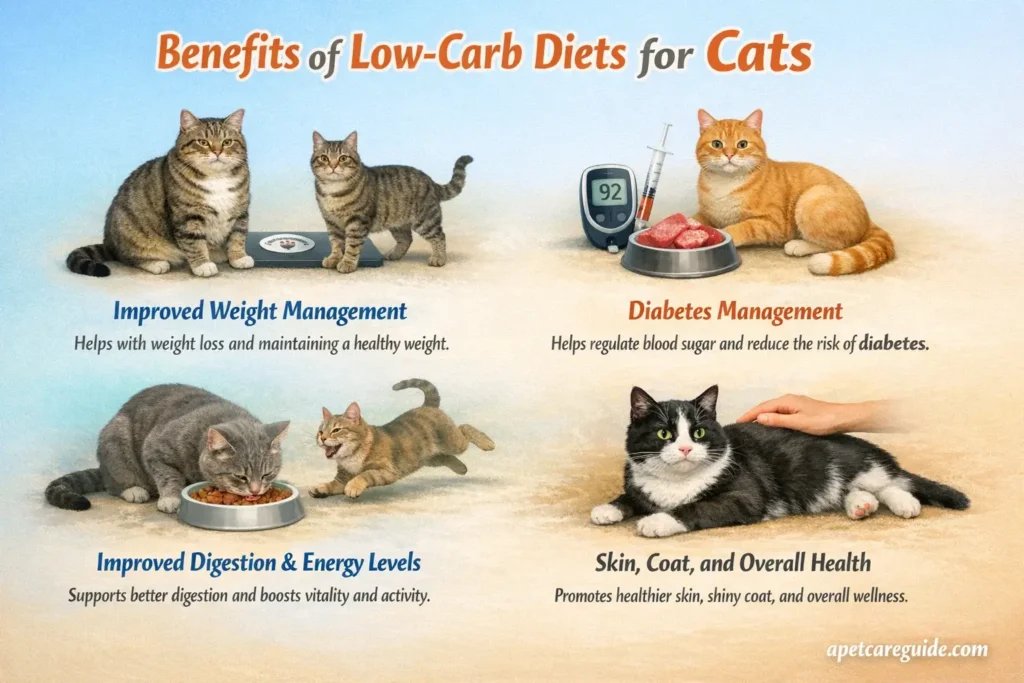
Improved Weight Management
One of the biggest benefits I’ve seen is in weight management. A low-carb, high-protein diet helps cats feel full and satisfied. More importantly, it provides their bodies with fuel they burn for energy, rather than carbs, which they tend to store as fat. This makes these diets incredibly effective for helping an overweight cat safely slim down or helping a healthy cat stay active and lean.
Diabetes Management
For cats with diabetes, a low-carb diet is not just helpful—it’s essential. High-carbohydrate meals cause a cat’s blood sugar to spike. A low-carb diet provides a steady source of energy from protein and fat, helping keep glucose levels more stable. Many owners find that with the right diet, their diabetic cat’s need for insulin can be reduced, which is a huge win.
Improved Digestion and Energy Levels
I often hear from people that their cats just seem better after switching foods. Because cats are designed to digest protein, a low-carb diet is much easier on their system. This can lead to better digestion, less stomach upset, and smaller, less smelly stools. You might also notice your cat has more sustained energy for playing and exploring, rather than the quick energy bursts and crashes that come from sugary carbs.
Skin, Coat, and Overall Health
The benefits aren’t just on the inside! The high-quality proteins and healthy fats in low carbohydrate cat foods do wonders for a cat’s skin and coat. You’ll often see a reduction in dry, flaky skin and a big improvement in the softness and shine of their fur. It’s a clear outward sign that their body is getting the high-quality nutrition it was always meant to have.
Types of Low Carbohydrate Cat Foods
Wet Cat Foods
Wet cat foods are a fantastic choice for a low-carb lifestyle. Their biggest benefit is the high moisture content, which is vital since cats naturally have a low thirst drive and need to get water from their food. This hydration is great for kidney and urinary health. The best wet food options are typically pate-style, as these usually have fewer starches than foods in gravy.
Dry Cat Foods
While dry foods have historically been high in carbs, some great brands have changed the game. The pros of dry food are its convenience, lower cost, and the fact that it can be left out for free-feeding. The cons are that it’s low in moisture. If you choose a low-carb dry food, make sure it’s one of the new formulas designed to be high in protein and free of grains and starches.
Raw and Freeze-Dried Foods
Raw and freeze-dried foods are another excellent path. These diets are designed to be as close as possible to a cat’s natural, ancestral diet. As a result, they contain minimal to zero carbohydrates. Freeze-dried options offer the nutritional benefits of raw food but with the convenience and safety of dry food, making them a popular choice for dedicated owners.
Best Low-Carb Wet Cat Food Options
Tiki Cat After Dark Chicken
This food is a fan favorite for a reason. Its texture is shredded chicken, not a processed pate, so you can see the real meat. It has an extremely low-carb profile, making it a wonderful option. For cats struggling with weight issues or managing diabetes, the high-protein, near-zero-carb formula provides exactly the kind of fuel their bodies need without any of the fillers.
Fancy Feast Savory Centers Pate with Salmon
You might be surprised to see a common brand, but some of its lines are quite good. This pate-style food with salmon is a solid budget-friendly choice. It has a lower carb content than many other grocery store wet options. Its key highlight is its accessibility and the salmon-based protein, making it suitable for many cats who need to cut back on carbs without a massive change in brands.
Feline Natural Chicken & Lamb Feast
This brand is all about quality. It uses high-quality proteins from chicken and lamb in a smooth pate form that many cats love. This food is a star for cats on a low-carb diet, especially those who might have sensitive stomachs or are known to be picky eaters. The simple, clean ingredient list means you’re giving them pure nutrition.
Smalls
Smalls is a subscription-based service that has really shaken up the pet food world. They offer fresh, high-protein, and very low-carb meals tailored to your cat. Their unique features are the freshness of the food (it’s gently cooked), the customizable plans that adjust to your cat’s needs, and the variety of textures and proteins you can get.
Caru
Caru offers wonderful stews that are very different from typical cat food. They are exceptionally high in moisture and very low in carbs, making them perfect for cats that need a major hydration boost along with their low-carb diet. The key ingredients look like human-grade stew, which can be very appealing to picky cats, helping them get the hydration and nutrition they need.
Top Low-Carb Dry Cat Food Choices
Blue Buffalo Wilderness High-Protein Grain-Free
This is a very popular high-protein, grain-free option. It uses high-quality animal protein and avoids the grains that spike carb levels. It also includes benefits like hairball control. Its nutritional highlights are its focus on being grain-free and using real, deboned meat as the first ingredient, making it a solid choice for a low-carb dry diet.
Dr. Elsey’s Clean Protein
This food is a hero in the low-carb world and is highly recommended, especially for diabetic cats. Its formula is incredibly low in carbohydrates and starches. The most important thing about it is that it uses gelatin for binding the kibble instead of starches like potato or pea. This makes it much more appropriate for a cat’s digestive system and a top choice for a true low-carb diet.
Young Again ZERO
As the name suggests, this formula aims for virtually zero carbohydrates. It’s an extremely low-carb, high-protein food designed specifically with diabetic cats in mind. It pays special attention to balancing high levels of protein and fat while keeping starches at an absolute minimum. This is a very specialized food that has delivered great results for many cats with serious health needs.
Solid Gold Indigo Moon High Protein with Chicken & Eggs Holistic Grain-Free
This food focuses on holistic health benefits, which I appreciate. It’s grain-free and high in protein, using chicken and eggs as its primary sources. This makes it a great all-around choice for supporting your cat’s overall health, from shiny fur to strong muscles, while still providing the low-carb nutritional support their bodies crave.
Wet vs. Dry Low-Carb Foods: Which is Better for Your Cat?
Here is a simple breakdown to help you compare:
| Feature | Low-Carb Wet Food | Low-Carb Dry Food |
| Moisture Content | Very High (70-80%) | Very Low (Around 10%) |
| Carb Content | Typically very low (1-10%) | Low (10-20%, but some are <10%) |
| Protein Content | High | Very High |
| Urinary/Kidney Health | Excellent (due to hydration) | Can be a concern; requires extra water |
| Convenience | Needs refrigeration after opening | Excellent; can be left out |
| Cost | Generally higher per calorie | Generally lower per calorie |
Choosing the Right Option
So, how do you choose? I tell people to think about their cat’s specific needs. If your cat is overweight, diabetic, or has kidney or urinary issues, the high moisture and ultra-low-carb profile of wet food is almost always the best choice. If your cat is healthy, you have a strict budget, or you need the convenience of free-feeding, a high-quality, protein-focused, low-carb dry food (like the ones mentioned) is a great solution.
Pate vs. Gravy: Which is Better for Low-Carb Diets?
Understanding the differences
When you’re shopping for wet food, you’ll see two main styles: pate (or loaf) and “bits in gravy.” It’s important to know that the gravy-based foods almost always have more carbohydrates than the pate-style foods. To create that thick, rich gravy, companies need to use a thickener. That thickener is usually a starch, like tapioca, potato starch, or wheat flour, which adds hidden carbs to the meal.
Why pate is the better option for low-carb diets
Pate-style foods are the better option for a strict low-carb diet because they don’t need those starchy binders. A pate gets its texture from the meat, fats, and binders like xanthan gum or guar gum, which do not add carbs. By choosing a pate, you are cutting out that unnecessary starch, which is a simple and very effective way to lower your cat’s carb intake and stick to your nutritional goals.
Top Recommended Low Carbohydrate Cat Food Brands
Based on my research, here are five brands that truly stand out in the world of low carbohydrate cat foods.
- Brand 1: Tiki Cat
This brand, especially its After Dark line, is a champion of low-carb feeding. Its ingredients are often shredded or whole meats, making it clear you are feeding real food. Pros: Extremely low-carb, high moisture, and visible, high-quality ingredients. Cons: It’s a premium product, so it comes with a higher price tag.
- Brand 2: Dr. Elsey’s Clean Protein
This dry food is exceptional. Its carb content is one of the lowest on the market for a kibble, at less than 10%. It uses high-quality proteins like chicken. Customer reviews often praise it for helping manage feline diabetes. The key is its use of gelatin instead of starches, making it a truly unique product.
- Brand 3: Young Again ZERO
This dry food is often recommended by vets for cats with specific health issues, particularly diabetes. Its formulation is 59% protein and 28% fat, with the “ZERO” referring to its near-zero starch content. It’s designed to be the sole food for your cat and is a powerful tool for managing health.
- Brand 4: Feline Natural
This brand focuses on wet and freeze-dried raw options. Their canned foods are simple, high in protein from sources like chicken and lamb, and have a very high water content. They support a low-carb diet by providing nutrient-dense, species-appropriate food that is fantastic for cats with sensitivities.
- Brand 5: Smalls
This brand offers a unique service: fresh, gently-cooked cat food delivered to your door. Their recipes are high in protein and moisture and very low in carbs. This is a great choice for owners who want the benefits of a homemade diet without the guesswork, offering a truly fresh approach to feline nutrition.
Veterinary-Recommended Low-Carb Cat Foods
Prescription options for diabetic or health-compromised cats
Sometimes, an over-the-counter food isn’t enough, especially for a cat with a serious medical diagnosis. In these cases, your vet may prescribe a special therapeutic diet.
- Hill’s Prescription Diet m/d: This is a well-known therapeutic diet. It’s specifically formulated by nutritionists and veterinarians to be high in protein and very low in carbohydrates. It’s clinically tested to help manage glucose levels in diabetic cats and can also help overweight cats burn fat while keeping muscle.
- Purina Pro Plan DM (Diabetic Management): This is another top vet-recommended option. The DM formula provides low-carb, high-protein nutrition to support the unique needs of diabetic cats. It’s designed to help support stable blood glucose and promote a healthy body condition.
Why a veterinarian’s advice matters
For any cat, but especially one with a health concern, your vet is your most important partner. They can run tests to see exactly what’s going on with your cat’s health. They can rule out other issues and make sure the low carbohydrate cat foods you choose are the right fit. For conditions like diabetes or kidney disease, their guidance is critical.
Special Considerations for Cats with Medical Conditions
Diabetic Cats
For diabetic cats, a low-carb diet is the cornerstone of their management. You need to look for foods that are not just low-carb but also provide consistent, high-quality protein. This helps avoid blood sugar spikes and can make their insulin treatment much more effective. Consistency in feeding times and portions is also very important.
Obese Cats
A low-carb diet is a powerful tool for weight loss in cats. By cutting out the carbs, you’re removing the main source of empty calories that their bodies store as fat. The high-protein content helps them feel full, so they aren’t begging for food, and it also helps them maintain their lean muscle mass as they lose fat.
Cats with Kidney Disease
This is a tricky one, and I cannot stress this enough: talk to your vet. Cats with kidney disease need to have their phosphorus levels carefully managed. While many low-carb foods are high in protein, they can also be high in phosphorus, which is bad for failing kidneys. Your vet will help you find a food that balances protein, phosphorus, and carbs.
Age and breed-specific needs
A growing kitten, a playful adult, and a slowing-down senior all have different needs. While a low-carb diet is good for all of them, the exact balance of fat and protein might change. Some breeds may also be more prone to certain issues, like urinary crystals, where the high moisture of wet food is a huge help.
Taste and texture preferences
Let’s be honest: cats are picky! You can find the most nutritionally perfect food in the world, and your cat might just sniff it and walk away. Some cats love pate, others only want shreds. You may have to try a few different brands and textures of low carbohydrate cat foods before you find the one your cat happily eats.
Allergies and sensitivities
Just like people, cats can have food allergies. The most common culprits are actually proteins, like chicken or fish. When switching to a low-carb food, you’re often introducing high levels of new proteins. Keep an eye out for signs of an allergy, like itchy skin or an upset stomach, and be prepared to try a different protein source.
How to Transition Your Cat to a Low-Carb Diet
Gradual transition methods
You must never switch a cat’s food cold turkey. This can cause a major digestive upset, or worse, the cat could refuse the food entirely. The best way is a slow, gradual transition over 7 to 10 days. Start by mixing just a little (maybe 10-20%) of the new food in with the old food. Every couple of days, increase the new food and decrease the old, until you’re at 100% new food.
Signs of food intolerance
As you make the switch, watch your cat closely. Look for signs of trouble, like diarrhea, vomiting, or constipation. A little bit of digestive change can be normal at first, but if it’s severe or lasts more than a day or two, slow down the transition or talk to your vet. It could be that the food just doesn’t agree with them.
Monitoring your cat’s health
Once your cat is fully on their new diet, keep up with regular vet visits. This is especially important for diabetic or overweight cats. Your vet will want to track their weight, check their blood sugar, and make sure the new diet is working as planned. At home, you can watch for positive changes, like more energy, a shinier coat, and healthy weight.
Common Myths About Low-Carb Cat Foods
Myth: Cats Can’t Eat Low-Carb Foods
This is completely false. In fact, it’s the opposite! Cats thrive on low-carb diets. As obligate carnivores, their bodies are designed to get energy from protein and fat, not carbohydrates. A low-carb diet is the most species-appropriate diet you can feed them, outside of a raw, natural one.
Myth: Low-Carb Diets are Too Expensive
While it’s true that a bag of high-quality, low-carb food can cost more than a cheap, grain-filled one, you have to look at the big picture. You’ll often feed less of the nutrient-dense food. More importantly, feeding a good diet now can save you thousands of dollars in vet bills later, especially in treating preventable issues like diabetes and obesity.
Myth: Cats Won’t Like the Taste
This one makes me laugh because so many cats love the taste of high-protein foods. Cats are driven by a desire for meat. While some picky cats might resist the change in texture at first, most of them will be very happy with the meaty, savory flavors of a high-quality, low-carb meal.
Expert Tips for Choosing the Best Low-Carb Food for Your Cat
This is A Pet Care Guide section I share with everyone.
- Consult a Veterinarian
I know I’ve said it a lot, but it’s the most important tip. Your veterinarian knows your cat’s
personal health history. They are your best resource for navigating health conditions and picking a food that will support, not harm, your cat. Please, always start this journey with a phone call to your vet.
- Read Labels Carefully
Don’t just trust the pretty pictures on the front of the bag. Turn it over and read the ingredient list. Look for meat as the first ingredient. Check the “guaranteed analysis” for high protein and low carbohydrates (you may need to use an online calculator to find the true carb content). Avoid foods full of corn, wheat, soy, and mystery “meat by-products.”
- Consider Your Cat’s Preferences
You are the expert on your own cat. You know what they like. If your cat hates pate, a pate-only diet will be a battle. If they despise fish, don’t buy a salmon-based food. You need to find a food that is both nutritionally excellent and something your cat will actually eat. Don’t be afraid to buy a few single cans to test before committing to a case.
Conclusion: Choosing the Best Low-Carb Cat Food for Your Pet
Choosing the right food for your cat is one of the most important things you can do for their health. I truly believe that. Switching to one of the many great low carbohydrate cat foods available can make a massive difference in their life, especially for maintaining a healthy weight and managing diabetes. It’s all about getting back to basics and feeding them the protein-rich diet they were born to eat. So, as you shop, always remember to prioritize protein, check the ingredients for hidden carbs, and keep your vet as part of your team.