

Let us talk about a very helpful topic today. Specifically, fiber is simply the part of plant-based foods that the body cannot fully break down. Interestingly, fiber is not an essential nutrient for little cats. However, it can still play an incredibly helpful role in digestion when used correctly. Because these babies have very sensitive, developing digestive systems, you absolutely must use this ingredient carefully and in remarkably small amounts. Throughout this article, expect to read about safe, practical, and vet-conscious ways to use this tool. Truly, this helper is not for replacing a beautifully balanced diet. Now, a pet care guide shares all things about fiber for kittens.
Can Kittens Eat Fiber?
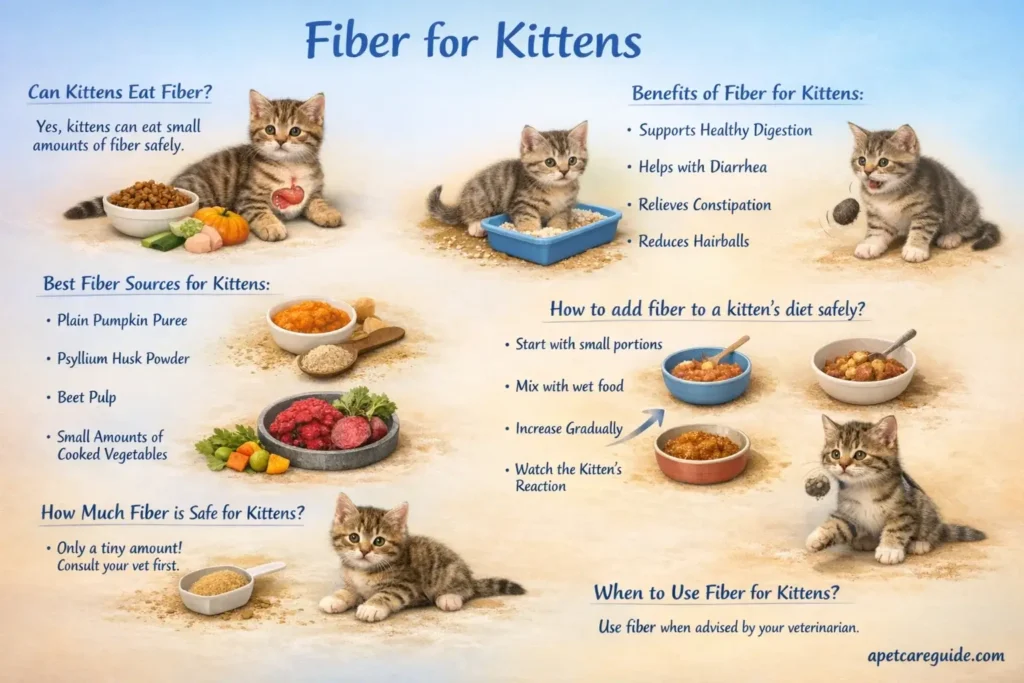
Yes, kittens can definitely eat small amounts of fiber safely! Naturally, you might feel anxious about changing your tiny pet’s meals. Fortunately, adding the correct types of roughage will not hurt them. Therefore, moderation always stays incredibly important to keep their sensitive stomachs perfectly happy.
When Fiber Is Helpful vs. Unnecessary?
Sometimes, you really need this gentle remedy. Essentially, it becomes extremely helpful for specific digestive issues. Conversely, extra roughage remains completely unnecessary for healthy kittens living happily on properly balanced diets.
Benefits of Fiber for Kittens
Adding a tiny pinch of plant material brings some wonderful advantages for your furry friend.
Supports Healthy Digestion
A little bit of it wonderfully supports healthy digestion. Actually, it gently helps regulate bowel movement.
Helps with Diarrhea
Seeing your pet feel sick feels utterly heartbreaking. Thankfully, the right kind perfectly helps with diarrhea because it firmly binds and firms loose stool.
Relieves Constipation
On the flip side, it wonderfully relieves painful constipation. Specifically, it quickly adds needed bulk and greatly improves natural movement downwards.
Reduces Hairballs
Little cats constantly lick their coats. Unsurprisingly, fiber heavily reduces nasty hairballs. It naturally moves ingested fur safely right through the gut.
Best Fiber Sources for Kittens
You obviously want only the safest options for your precious pet. Here are the absolute best choices.
Plain Pumpkin Purée
Plain pumpkin purée stands out as an amazing, gentle choice. Truly, it stays incredibly safe and digests super easily. Therefore, it remains completely ideal for quick stool regulation.
Psyllium Husk Powder
Psyllium husk powder acts as a highly concentrated fiber source. Because it packs a massive punch, always use it strictly in truly tiny amounts.
Beet Pulp
You will frequently spot beet pulp inside commercial cat food. Interestingly, it serves as a wonderfully balanced fiber source.
Small Amounts of Cooked Vegetables
You can certainly share small amounts of cooked vegetables like tender carrots or green beans. However, they absolutely must be very soft and thoroughly mashed first.
Fiber in Commercial Kitten Food
Many highly rated brands already include some roughage directly in the bag.
Reading Ingredient Labels
Whenever you shop, always practice reading ingredient labels closely. Specifically, look directly for high-quality, natural fiber sources.
Choosing a Balanced Kitten Diet
Choosing a totally balanced kitten diet easily takes top priority. You must strongly emphasize healthy protein, good fat, and vital vitamins. Ultimately, roughage should always remain a very minor component.
How Much Fiber Is Safe for Kittens?
Giving the exact correct dose easily prevents terrible stomach aches.
Safe Fiber Range
The safe limit stays surprisingly low. Typically, it sits right around 1–3% of their total diet.
Factors That Affect Fiber Needs
Several specific things change how much they actually need. You must consider their exact age, current weight, specific health condition, and daily diet type.
How to Add Fiber to a Kitten’s Diet Safely
If you decide to try this, you must proceed very carefully.
Start With Small Portions
Always purposely start with surprisingly small portions. Just begin with truly tiny amounts, like a ¼ to 1 full teaspoon of pumpkin.
Mix With Wet Food
Next, thoroughly mix it directly with their wet food. Surprisingly, this heavily improves both flavor acceptance and smooth digestion.
Increase Gradually
Please increase the daily amount incredibly gradually. You absolutely must avoid any sudden dietary changes.
Watch the Kitten’s Reaction
Always carefully watch the little one’s reaction. Pet owners definitely need to strictly observe stool consistency, daily energy level, total appetite, any unexpected vomiting, and obvious signs of tummy discomfort. Honestly, if bad symptoms actually worsen, your chosen fiber source may simply not be suitable.
Importance of Hydration With Fiber
Water plays a genuinely massive role in making this process work correctly.
Why Water Is Essential
Why is water so incredibly essential here? Simply put, fiber aggressively absorbs moisture inside the gut like a thirsty sponge.
How to Keep Your Kitten Hydrated
You definitely need to know exactly how to keep your kitten well hydrated. Frequently offer juicy wet food, guarantee constant fresh water access, and wash those clean bowls regularly.
When to Use Fiber for Kittens
Let us look at some extremely practical use cases right now. Typically, owners add fiber for kittens to treat specific digestive problems rather than giving it routinely to completely healthy babies.
Diarrhea
When battling messy diarrhea, soluble fiber heavily helps firm up the stool fast.
Constipation
For tough constipation, insoluble fiber actively aids downward movement.
Hairballs
Nobody likes finding hairballs. Thankfully, roughage reliably helps cleanly pass any swallowed fur.
Signs a Kitten May Be Getting Too Much Fiber
Too much of a seemingly good thing quickly causes terrible problems.
Digestive Issues
Watch out closely for nasty digestive issues. Specifically, overfeeding can suddenly cause fresh diarrhea or an overly hard stool.
Reduced Appetite
You might quickly notice a reduced appetite. Because this material swells up, they start feeling too full way too quickly.
Poor Growth or Weight Gain
Sadly, overfeeding plant matter directly leads to poor growth or terrible weight gain. It strongly creates severe nutrient absorption issues.
Fiber Sources to Avoid for Kittens
You must fiercely avoid certain highly unsafe choices. Sadly, some human foods are completely unsuitable and highly dangerous for baby cats.
Sweetened or Spiced Pumpkin Products
Never buy sweetened or spiced pumpkin pie fillings. Unfortunately, this dangerous stuff heavily contains toxic sugar and bad additives.
Flavored Fiber Supplements
Stay extremely far away from any flavored supplements. Frighteningly, these human products may easily include incredibly harmful artificial ingredients.
High-Fiber Human Foods
Skip the heavy grain breads entirely. High-fiber human foods are absolutely not suitable for tiny kittens.
When to Talk to a Veterinarian
Sometimes, simple home remedies just cannot fix the underlying issue alone.
Warning Signs
Please aggressively watch for scary warning signs. Call the doctor immediately if you spot persistent diarrhea, stubborn constipation, violent vomiting, or scary weight loss.
Why Professional Advice Matters
Why does professional medical advice matter so heavily? Simply, a trained doctor perfectly ensures a proper health diagnosis and strictly safe diet adjustments.
Expert Tips for Using Fiber Safely
Follow these wonderfully smart strategies to keep your beloved pet incredibly safe.
Focus on Balanced Nutrition First
Always intensely focus on providing balanced nutrition first. Extra plant material should never ever replace essential meat-based nutrients.
Monitor Your Kitten Closely
Always monitor your little buddy very closely. Carefully watch their daily stool quality, total food appetite, and playful energy.
Use Natural Sources Over Supplements
Try hard to use pure natural sources over processed powders. Whenever possible, strongly prefer whole, food-based options.
Vet-Friendly Tips for Choosing the Right Fiber Approach
Let us discuss choosing exactly between whole food options and powdered supplements. Honestly, high-quality, vet-recommended kitten foods are frequently the absolute safest starting point. From there, strongly suggest focusing heavily on their specific digestive tolerance and overall ingredient quality. Additionally, always prioritize their rapid growth needs, steady hydration support, and incredibly gradual dietary changes.
Final Thoughts on Fiber for Kittens
Let us quickly summarize the absolute main takeaway here today. Small, controlled amounts of fiber for kittens can truly be incredibly helpful, but these babies naturally do best on a perfectly balanced growth diet first. Always strongly reinforce strict moderation, heavy daily hydration, and smart veterinary guidance. Ultimately, use these remedies only when genuinely needed, constantly choose completely safe sources, and always monitor the kitten extremely carefully. A Pet Care Guide can totally save the day, but nothing beats your own loving attention!