

Have you ever wondered what the true secret is to a long and joyful life for your pet bird? Based on my years of experience, I can tell you that it all starts in the food bowl. A bird’s diet is the single most critical factor for its lifespan and overall well-being. A very common mistake that loving owners make is feeding only seeds, often from poor-quality mixes, which is simply not enough. This guide is my personal promise to you. It covers everything for budgies, parrots, and other pet birds, with exact food types, quantities, feeding tips, and species-specific notes.
The Principles of a Balanced Bird Diet
Building the right diet is like building a strong house; you need a solid foundation and the right materials. A balanced diet is the cornerstone of your bird’s health, directly affecting its energy, appearance, and longevity. It’s not about finding one “perfect” food, but about creating a wonderful mix of nutrients. This section will show you the simple, expert-recommended formula for a diet that helps your feathered friend live its best possible life.
Why Balance is Critical
Imagine eating only potato chips every day. You wouldn’t feel very good! It’s the same for birds. To truly be healthy, they need a thoughtful combination of pellets, vegetables, fruits, seeds, and proteins. Poor diets can sadly lead to problems like obesity, feather loss, and a shorter life. A complete diet provides all the building blocks for strong bones, beautiful plumage, and a happy disposition.
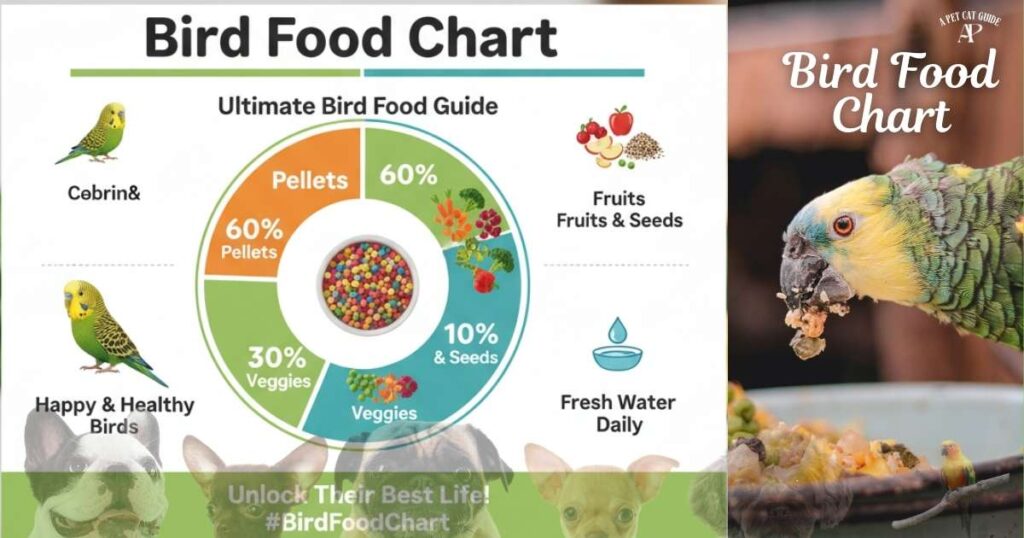
The General Diet Ratio (RSPCA recommendation)
A great way to think about your bird’s diet is with a simple ratio. Animal welfare groups like the RSPCA suggest a plan like this:
- 60% pellets: This should be the main part of their diet. Formulated pellets are made to be a complete food.
- 25% fresh vegetables: These are bursting with essential vitamins and minerals.
- 10% Seeds & fruits = treats: These should only be given in small amounts, making up about 10% of their total food.
- 5% Protein: Foods like mealworms, egg food, and suet are special additions for times when your bird needs extra support.
Pellets – The Base of a Healthy Bird Diet
So, why are pellets so much better than a diet of only seeds? Pellets are specially designed to be nutritionally complete. This means every single bite has a balanced mix of vitamins, minerals, and proteins that your bird needs to flourish. In comparison, seeds are very high in fat but lack many key nutrients.
For different birds, you can find excellent pellet brands like Harrison’s, Zupreem, or Roudybush. They make pellets in sizes perfect for everyone, from tiny budgies and cockatiels to large African greys and macaws.
Switching a bird from seeds to pellets requires some patience, but it’s completely possible. You can start by mixing a small amount of pellets into their current seed mix. Then, over a few weeks, slowly increase the pellets while decreasing the seeds. Another trick is to grind up the pellets and sprinkle them over their favorite fresh vegetables.
Vegetables – The Powerhouse of Bird Nutrition
Fresh vegetables are one of the most exciting and beneficial parts of your bird’s diet. They are packed with the vitamins, minerals, and fiber that processed foods just can’t match. Offering a rotating selection of colorful veggies not only keeps mealtime interesting but also provides a wide spectrum of health benefits. Think of this section as your guide to the garden, showing you the best produce to keep your companion cheerful and strong.
Best Vegetables for Birds
Here are some fantastic vegetable choices that most pet birds love:
- Carrots, broccoli, spinach, kale, bell peppers, peas, sweetcorn, and zucchini.
- Each of these offers something special. For instance, carrots are loaded with Vitamin A for good eyesight, while dark leafy greens like kale are a great source of calcium.
Safe Preparation
Getting vegetables ready for your bird is very easy. First, you must wash them well to remove any dirt or chemicals. Next, chop them into small, manageable pieces that your bird can easily hold and eat. You can serve them raw or lightly steamed. It is very important to never add any salt, spices, or oil.
Rotation & Variety
To keep things interesting and nutritionally diverse, you should rotate the vegetables you offer every week. This also prevents your bird from getting too much of one thing. For example, spinach is healthy, but it contains compounds called oxalates, so it is best served in moderation as part of a varied assortment of greens.
Fruits – Tasty Treats in Moderation
Fruits are like nature’s candy for birds—sweet, hydrating, and full of wonderful nutrients. They can be a fantastic way to add excitement to your bird’s day and provide a boost of Vitamin C and antioxidants. At the same time, because they are high in natural sugars, they must be treated as a special snack, not a main meal. Here, we’ll look at the best fruits to offer and how to serve them responsibly.
Best Fruits for Birds
Many fruits are safe and delicious for your feathered friend. Some of the best ones include:
- Apples (just be sure to remove all seeds), bananas, grapes, mango, papaya, melon, and all kinds of berries.
- These fruits are great for hydration and provide a healthy dose of antioxidants and Vitamin C.
Feeding Guidelines
Because fruits are high in sugar, you should only offer them in small amounts. Think of fruit as a treat to be given a few times a week. It’s always best to use fresh fruit. You should avoid canned fruits, which are often packed in sugary syrups.
Dried Fruits
Unsweetened dried fruits like banana chips, dried apple, or papaya can be a fun and chewy snack. They are safe in very tiny quantities. You just need to carefully check the label to make sure there is no added sugar or preservatives like sulfur dioxide.
Seeds – Natural but Limited
Seeds are a natural food for birds in the wild, so it feels right to offer them. They provide energy and healthy fats, which are important. However, the seeds available in commercial mixes are often much higher in fat than what a bird would find in nature. From my own experience, relying only on seeds can lead to health problems. This part explains how to include seeds in a healthy way—as a small part of a much larger diet.
Why Seeds Are Not Enough
A diet that consists of only seeds is one of the biggest causes of health issues in pet birds. This kind of diet can lead to obesity and serious vitamin deficiencies. Seeds are very high in fat, and birds will often just pick out their favorites (usually the fattiest ones), creating an even more imbalanced meal.
Best Seeds for Birds
When used as a treat, some seeds are better choices than others. Good options include hulled sunflower seeds, black oil sunflower seeds, safflower, canary seed, and millet. Each one provides a different mix of fats and proteins for a good energy source.
Budgie Seed Mix Guide
When you look for a budgie seed mix, a quality blend will contain a variety of seeds, like different types of millet and canary seed. A lower-quality mix is often padded with fatty sunflower seeds and other fillers. The price of budgie seed can vary, from budget options to premium organic mixes. Investing in a better mix is always a good choice.
Protein & Grains – Boost During Stress & Growth
There are certain times in a bird’s life when its body needs extra fuel. During periods of growth, stress, breeding, or molting, a boost of protein and healthy grains can make all the difference. These foods provide the essential building blocks for new feathers, strong eggs, and a quick recovery. Think of them as the support system in your bird’s diet, ready to be called upon when they need it most.
High-Protein Foods
Your bird may need more protein during special times like nesting, molting, or recovering from an illness. Some excellent protein sources are:
- Mealworms (you can buy them live or dried)
- Suet & fat balls
- Egg food (available commercially, or you can make your own at home)
Grains for Birds
Certain grains can be a healthy part of the diet. For example, raw oats are a great source of fiber. A little cracked corn can also be a nice occasional treat. One thing to avoid is cooked porridge, as its sticky texture can be problematic for a bird’s crop and digestive system.
Nectar (For Nectar-Eating Birds)
Some special birds, like lorikeets and hummingbirds, eat nectar. You can make a safe homemade nectar by mixing one part plain sugar with four parts boiled water. Always let it cool down completely before serving. You must never use honey or any artificial sweeteners, as they can be dangerous for these birds.
Foods to Avoid (Toxic or Risky for Birds)
Keeping your bird safe is the number one priority. Many foods that are perfectly fine for people can be very toxic to birds. It’s critical to know this list and make sure these items are never accessible to your pet.
- Avocado
- Chocolate, caffeine, and alcohol
- Apple seeds and cherry pits
- Onion and garlic
- Iceberg lettuce (it contains very little nutrition)
- Processed human foods like chips, sweets, and fried items
- Myths Clarified: Some people worry about feeding birds uncooked rice. You don’t have to worry—uncooked rice is perfectly safe for them!
Feeding Schedule & Daily Quantities
Creating a predictable feeding routine helps your bird feel secure and manages their nutrition effectively. Knowing how much to feed and when to offer different types of food prevents overfeeding and waste. A good schedule also makes sure that fresh foods are only available when they are safe to eat, reducing the risk of spoilage. This section provides a simple framework for daily feeding that you can adapt to your bird’s specific needs.
How Much Do Birds Eat Per Day?
The amount of food a bird needs depends on its size and activity level. Here are some general guidelines:
- Budgies: Need about 2–3 teaspoons of food in total per day.
- Cockatiels: Require a little bit more than a budgie.
- Macaws & African greys: Need much larger portions of both pellets and vegetables to match their body size.
How Often to Feed
A consistent schedule is a great idea.
- Pellets: Can be left in their bowl for most of the day.
- Vegetables: Should be offered once a day. Be sure to remove any uneaten portions after 2–3 hours to prevent bacteria from growing.
- Fruits/seeds: These are treats, so they should be given in small amounts just a few times per week.
Water Needs
Fresh, clean water is essential for your bird’s health. You should provide a clean bowl of water every day and change it at least once a day, or more often if it gets messy with food or droppings.
Special Feeding Situations
Life isn’t always straightforward, and sometimes your bird’s dietary needs will change. Whether they are feeling under the weather, getting ready to breed, growing new feathers, or gracefully aging, adjusting their diet can provide immense comfort and support. Understanding what to offer during these special times is a key part of being a responsive and caring bird owner. This is your guide to handling those unique situations.
Birds with Diarrhea
If your bird has loose droppings, certain foods can help. Offer them things like grated carrots, a small amount of cooked rice, oats, and their regular pellets. You should avoid watery foods like cucumber and melon until their droppings are back to normal. If the issue lasts for more than a day, it is time to call your veterinarian.
Nesting or Breeding Birds
Birds that are breeding use up a lot of energy. They need more protein, which you can provide with egg food, mealworms, or fat balls. A calcium boost from a cuttlebone or a mineral block is also very important for strong eggshells.
Molting Birds
Growing a whole new set of feathers is hard work! During a molt, your bird will benefit from extra protein and foods that are high in vitamin A, such as carrots and sweet potatoes.
Senior Birds
As birds get older, they may become less active. A diet lower in fat can help them maintain a healthy weight. If their beak becomes weaker, softer foods like steamed veggies or soaked pellets can make mealtimes much easier for them.
Healthy Snacks & Treats for Birds
Treats are a wonderful way to interact with and reward your bird. Here are some healthy and exciting snack ideas:
- Millet sprays (an absolute favorite for budgies and other small birds)
- Nuts (almonds and walnuts are great for larger parrots to crack open)
- Sprouted seeds
- Bird-safe herbs (a little fresh parsley, basil, or cilantro can be a delightful treat)
Cooking Foods for Your Bird
Yes, you can cook for your bird! Simple preparations are best. Lightly steaming vegetables or making a small scrambled egg are great options. The most important rule is to keep it plain. Never use any oil, spices, salt, or butter when you prepare food for your feathered companion.
Supplements in Bird Diet
If you feed a balanced diet, your bird should get most of the nutrients it needs. Still, some supplements are useful.
- Calcium supplements: You should always have a cuttlebone or a mineral block in the cage.
- Vitamin drops: These should only be used if they are specifically recommended by your vet.
- It is possible to give too many supplements, which can be harmful. Always follow the advice of a professional.
Budgie Food Chart (Sample Weekly Plan)
Here is a sample weekly feeding plan to give you an idea of what a balanced bird food chart for a budgie looks like.
- Monday: Pellets available all day. Morning meal of chopped broccoli and carrots.
- Tuesday: Pellets available all day. Morning meal of shredded kale and bell pepper.
- Wednesday: Pellets available all day. A small slice of apple (seeds removed) for a treat.
- Thursday: Pellets available all day. Morning meal of peas and sweetcorn.
- Friday: Pellets available all day. A tiny sprinkle of a quality seed mix as a treat.
- Saturday: Pellets available all day. Morning meal of chopped zucchini.
- Sunday: Pellets available all day. A small millet spray for a fun foraging activity.
Feeding Other Popular Pet Bird Species
Different birds have their own unique needs. Here are some quick tips.
Cockatiel
Their diet should be a mix of pellets and seeds. Cockatiels can gain weight easily, so you need to watch how many fatty seeds they eat.
Budgerigar
Similar to cockatiels, budgies do well on pellets and seeds. They are also prone to becoming overweight, so treats should be given sparingly.
Lovebird
Lovebirds enjoy a diet with plenty of varied vegetables and fruit. You should limit fatty seeds to help them maintain a healthy weight.
Conure
These birds often have a sweet tooth and love fruit. Their diet, however, must be based on pellets and vegetables to remain balanced.
African Grey
This smart species has a higher need for vitamin A. It’s also important to monitor their calcium levels to prevent deficiencies.
Macaw
Macaws need larger food items they can work with, like whole nuts, big pieces of fruit, and root vegetables. Avoid feeding them too many high-fat nuts.
Ringneck & Cockatoo
For these birds, a poor diet can sometimes be connected to behavioral problems. They are also at risk for obesity, so a balanced, low-fat meal plan is key.
General Bird Feeding FAQs
What is a bird’s favorite food?
This really depends on the individual bird! Many small birds like budgies adore millet spray. In contrast, larger parrots often love the challenge of cracking open a walnut or almond.
What vegetables can budgies eat?
Budgies can eat a wide assortment of vegetables. Some great choices are carrots, broccoli, kale, spinach (in moderation), bell peppers, and peas.
What is the best fresh food for budgies with diarrhea?
Grated carrot is excellent. A small amount of plain cooked rice can also help firm up their droppings. You should avoid watery foods until you are better.
How many times should I feed my bird a day?
It is best to have pellets available for them most of the day. Then, offer a serving of fresh vegetables once daily.
How much seed does a budgie/parrot eat daily?
Seeds should be considered a treat, not a meal. For a budgie, this means less than half a teaspoon per day as part of an otherwise balanced diet.
Can birds eat human food (rice, bread, biscuits, milk, etc.)?
Small bits of plain, cooked rice or whole-grain bread are usually okay. You should completely avoid processed biscuits and milk, as birds cannot digest lactose.
Final Thoughts About Bird Food Chart
So, what have we learned on this journey? The real secret to a healthy bird is a beautiful balance. The foundation is pellets, decorated with a rainbow of fresh vegetables, a few sweet fruits, a tiny sprinkle of seeds, and an occasional protein boost. Your bird will give you feedback every day through its droppings and its behavior; you just have to watch. My final thought for you is this: Healthy food = happy songs, brighter feathers, and a longer life.